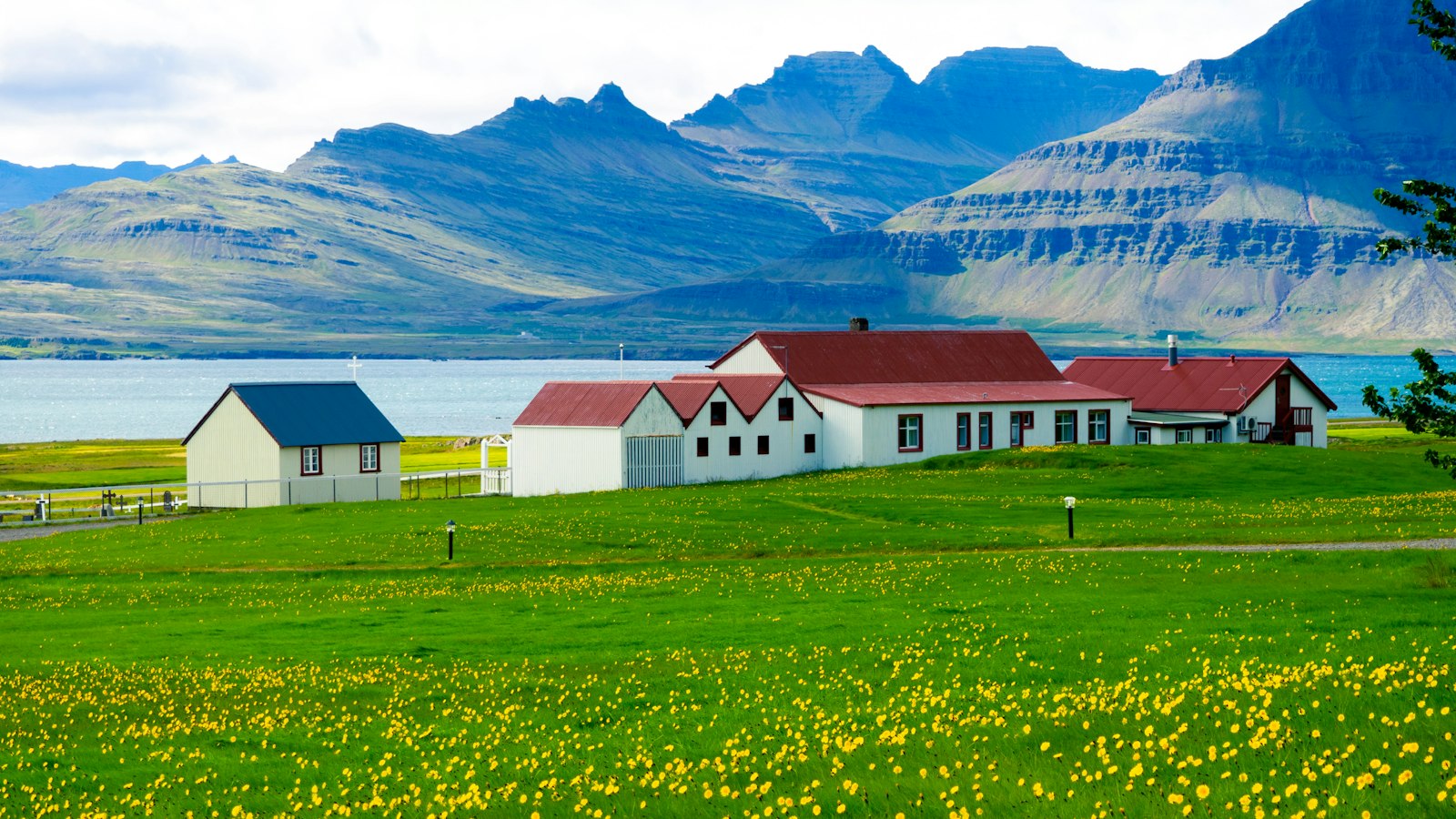
On the rocky shore of Norðfjörður in eastern Iceland, Neskaupstaður sits apart from most other Icelandic towns. Set against the Norwegian Sea, this community of just under 1,500 people has built a distinct identity over the past century.
Geography and daily life by the fjord
Neskaupstaður stretches out along the coastline, with the town clinging to a six-kilometre strip by the sea and climbing about 100 metres up the hillside. Its geography largely explains its relative isolation: until 1949, arriving required either a challenging journey over the Oddskarð mountain pass or a trip by boat. Today, the town is linked to the rest of Iceland by the Norðfjarðargöng tunnel, a 7,542-metre two-lane passage completed in 2017.
Life here is marked by close community ties and strong institutions. The town hosts East Iceland’s regional hospital, which serves a broad area, and also supports cultural life with its music school and brass band. There’s even an active sports scene, including a volleyball club notable for its successes and a local football team competing jointly with neighbouring villages.
History of hardship and resilience
Neskaupstaður’s origins trace back to a farm called Nes, first settled by Egill Rauði (“the red”). The area’s development into a town began in the early 20th century, gaining full trading rights on 1 January 1929. Over time it was consolidated with nearby fishing villages, and in 1998 became part of the larger Fjarðabyggð municipality along with Eskifjörður and Reyðarfjörður.
Avalanches have marked local memory. The most deadly occurred in December 1974, when snow swept down the mountain above, claiming twelve lives. Protective barriers have since been constructed to guard the community. Smaller avalanches were recorded in 1885 and 1894, one of which also caused fatalities.
Neskaupstaður has been shaped by both its isolation and its economy. Its principal employer is the fishing company Síldarvinnslan h/f, whose cutting-edge processing plant is noted as one of the most advanced in Europe. Along with partners, it operates in several countries and provides hundreds of jobs. This stability, and the impact of regional projects such as the 2003 expansion of the aluminium and hydroelectric industries, has helped anchor the town’s economy.
Culture, traditions and distinctiveness
In the 20th century, Neskaupstaður earned the nickname “Little Moscow” due to the local dominance of socialist politics. This background gives the town a unique political flavour within Iceland.
Cultural life is vibrant for such a small place. The Museum House (Safnahúsið) combines art, natural history and maritime heritage under one roof, including works by notable native artist Tryggvi Ólafsson. The town’s music calendar features the Neistaflug holiday festival in August and the renowned Eistnaflug music festival in July, which began as a one-day metal event in 2005. The latter draws visitors from across the country.
Neskaupstaður’s nature is significant too. The rare Seltulauf lichen grows here, one of its few known sites in Iceland. In 1972, nearby Nordfjardarnipais became Iceland’s first official national park, separating Norðfjörður from Mjóifjörður.
Through decades of change and challenge, this isolated fjord town continues to balance tradition, industry and local pride, all against the backdrop of the Norwegian Sea.
Sources
- Wikipedia
- Wikipedia (Icelandic) in Icelandic


