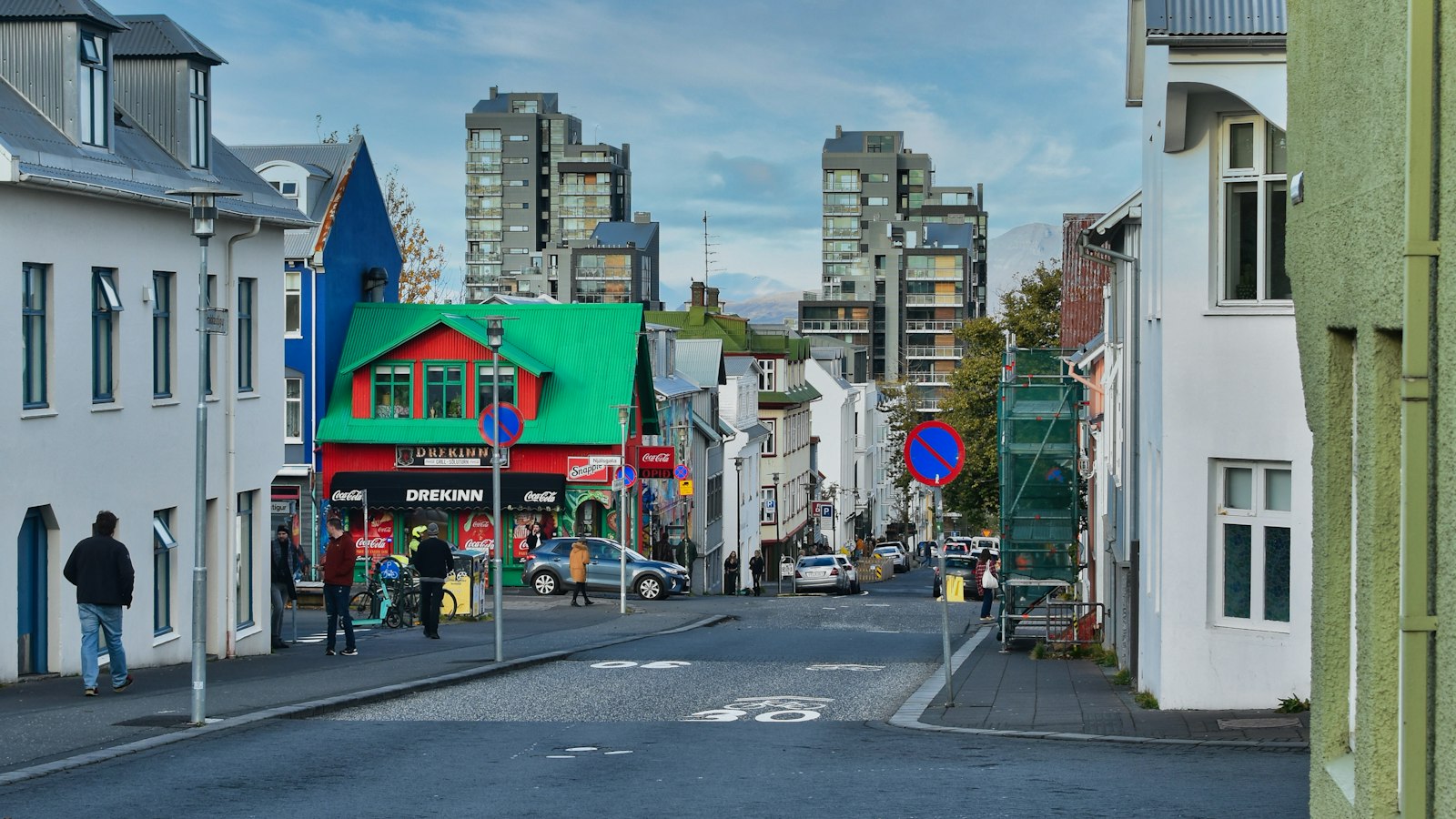
Beneath the busy thoroughfare of Bankastræti in central Reykjavík lies an unexpected tribute to Iceland’s music history: the Icelandic Punk Museum, or Pönksafn Íslands. Housed in a disused men’s public toilet, this unconventional space commemorates the rise and impact of punk rock in Iceland, focusing on the first 15 years after the genre arrived on the island.
Transforming Bankastræti 0 into an underground archive
The location itself holds a quirky significance. The former public convenience served the city from 1930 until 2000, largely because of its position near the pub-lined street of Austurstræti. Over the decades, it became so familiar to locals that it earned the nickname Núllið, or “The Zero,” after its address at Bankastræti 0. After closing, the space sat empty for 16 years before a group of punk musicians and enthusiasts decided to give it new life. In 2016, it was reopened as the Icelandic Punk Museum, officially launched by Sex Pistols vocalist John Lydon and curated by Svarti Álfur Mánason, an Icelandic punk musician.
The museum’s interior design embraces the punk movement’s distinctive do-it-yourself spirit. Visitors follow a one-way route through exhibits presented chronologically, recounting the history of Icelandic punk from 1978 to 1992. Scrapbook-style decoration covers the walls, with punk clothing, musical instruments, newspaper cuttings, banners, fake plants and polaroid snapshots creating an atmosphere reminiscent of the genre’s early rehearsal spaces and nightlife.
Tracing punk’s Icelandic journey
Globally, punk emerged in the early 1970s in North America, the UK and Australia, spreading rapidly across Europe. Iceland’s punk chapter is generally considered to have begun in 1978, when the band Fræbbblarnir formed. The museum documents the rapid evolution of the subculture in the country’s capital, drawing to a close with the 1992 disbanding of The Sugarcubes. During these influential years, punk became a platform for self-expression, social critique and the development of an independent music scene distinctively Icelandic in its attitude and sound.
Since opening, the museum has become a landmark for locals and visitors interested in music history. What began as a practical underground stop for nightlife is now an archive, scrappy, authentic and reflective of the counterculture it celebrates.


