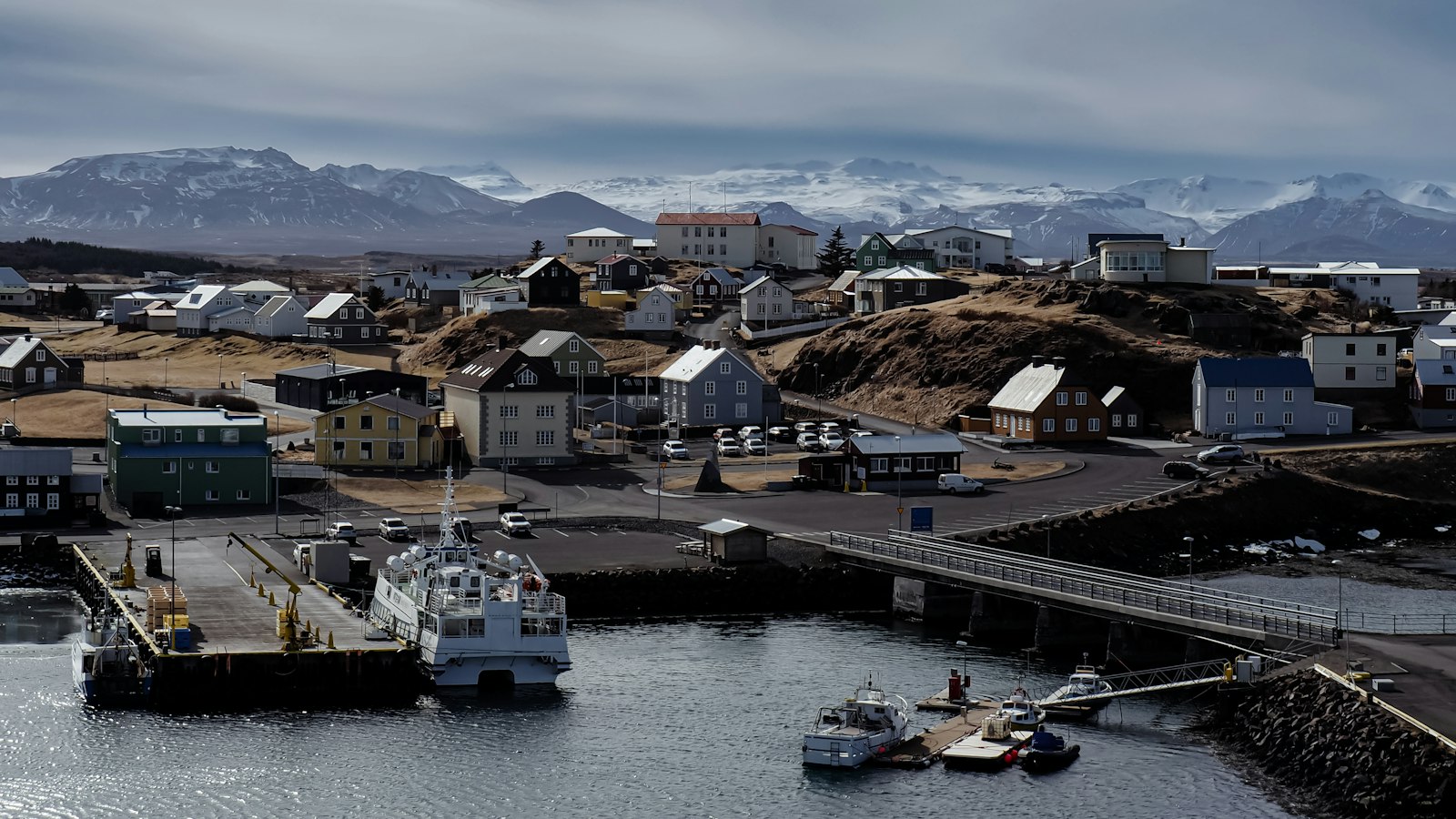
Along the northeastern coast of Iceland, the small village of Bakkafjörður nestles in the fjord of the same name. With just 72 inhabitants, it forms part of the Langanesbyggð district and serves as a snapshot of the slow-changing rural life that has characterised much of the country’s history.
From settler roots to trading post
The landscape around Bakkafjörður bears traces of early settlements. Hróðgeir hvíti Hrappsson was the first to inhabit the area, living near Skeggjastaðir and Sandvík. Today, Bakkafjörður sits at what was once called Sandvík, though the neighbouring Sandvíkurheiði plateau still keeps the older name. The largest historical farm in Sandvík was Höfn, built in the 1800s, setting the foundation for the future village. More homes followed, centred on Hafnartangi, though almost all original buildings have been replaced except for one.
Among the remaining structures, Halldórshús stands out. Built in 1900 by Halldór, whose shop was a commercial centre until his death in 1920, this building, still known as the merchant’s house, embodies Bakkafjörður’s early links to trade. After Halldór’s passing, his business contacts brought new commercial activity when Jakob Gunnlaugsson’s Store from Copenhagen set up a branch in the village.
Evolution of infrastructure
Daily life in Bakkafjörður relied on fishing, with most residents living on small farms, places like Steinholt, Lindarbrekku, Bjarg and Bergholt, while also depending on the sea. In the early 1900s, port facilities were basic. Boats were moored at Hafnartangi, close to the houses, and catches were hauled directly ashore. It was not until around 1945 that work began on a proper harbour pier, using cast concrete over skerry rocks by the shore. The pier was lengthened in 1970 with assistance from the Icelandic Coast Guard.
Bakkafjörður’s connection to the wider world developed gradually. The village got its first telephone link to Vopnafjörður in 1916, and improved road access only materialised after years of construction, especially with the road over Brekknaheiði, finished in 1949, linking Bakkafjörður to Þórshöfn and the national road system for the first time. The road over Sandvíkurheiði to Vopnafjörður followed in the late 1950s.
For a period, a small airport operated near the village. Lacking a proper hangar, locals acquired and repurposed an emergency fund house to shelter planes, something done without national aviation oversight. The airport served the community until its closure in the early 2000s.
Echoes of the past
While Bakkafjörður is quiet, reminders of its historical and cultural significance remain. The nearby Skeggjastaðakirkja church dates back to 1845 and is considered the oldest church in eastern Iceland. Inside, much of the woodwork comes from local driftwood, and the site is closely linked with Iceland’s early Christian heritage. The Digranes lighthouse, built between 1943 and 1947, also stands as a mark of the enduring relationship between the community and the sea.
Sources
- Wikipedia
- Wikipedia (Icelandic) in Icelandic


