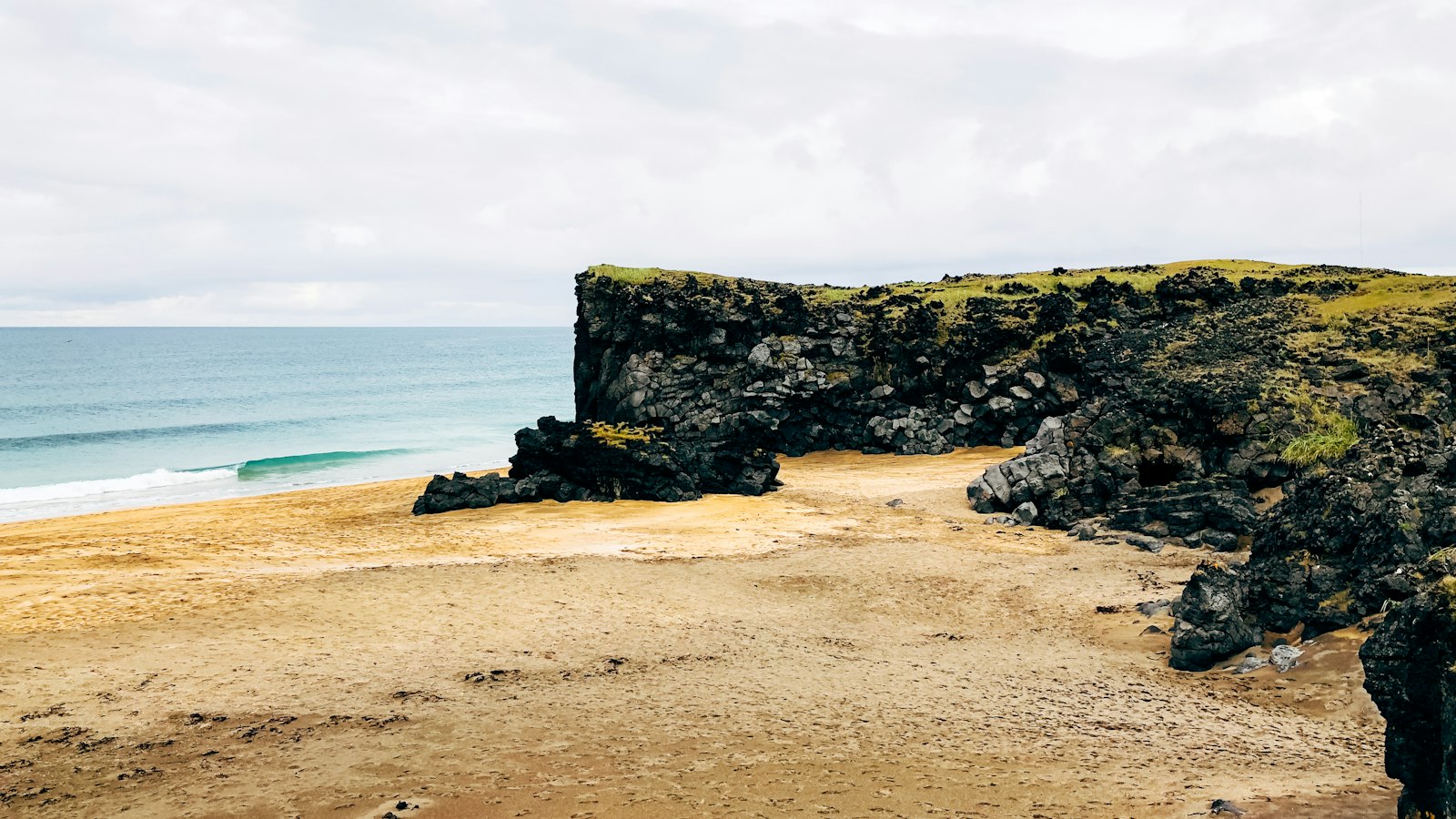
Hellnar sits near the western tip of the Snæfellsnes peninsula, close to Arnarstapi. Today, it is a quiet settlement, but centuries ago, Hellnar was a centre of fishing activity, one of the most significant on Snæfellsnes. Its role as a port is firmly recorded as far back as 1560, and evidence suggests connections to seafaring and fishing can be traced to the Middle Ages.
In earlier times, Hellnar’s community grew around the rhythms of fishing seasons and the migration of seafarers. By 1703, national census records list 194 people living in Hellnar. The settlement then consisted of 38 buildings and farms, including agricultural holdings, fisheries, and numerous seasonal lodgings for workers who came and went with the catch. Eleven of these sites supported fisheries and their related tasks, while seven were agricultural farms. Twenty provided temporary housing for labourers and displaced people, highlighting the transient nature of life by the sea.
Farming and fishing existed side by side in Hellnar, feeding the local population and creating a network of activity that once made this village the busiest fishing centre on the peninsula. The old houses and cottages scattered near the shoreline stand as a reminder of the generations that relied on the ocean for survival.
Shifting landscapes and local folklore
Hellnar’s coast is marked by volcanic landscapes and dramatic rock features. One notable formation is Valasnös, an outcrop stretching into the sea. Within this promontory is a celebrated cave, called Baðstofa. The cave is known for vivid changes in colour and shade as the light and tides shift, sometimes turning the interior walls almost luminous. Such natural spectacles made the location memorable to those living and working nearby.
Springs bubble from the edge of the lava field at Hellnar. Among them are Gvendarbrunnur, also known as Maríulind, and Ásgrímssbrunnur, a spring named for the priest Ásgrímur Hellnaprestur, who lived from 1758 to 1829. Legend holds that Ásgrímur struck this spring into the rock in a spot where no water had previously flowed.
Present-day Hellnar is not far from the boundary of Snæfellsjökull National Park, keeping it connected to both the peninsula’s cultural history and its remarkable natural setting. Projects for new holiday homes have appeared over the years, but the village still evokes memories of those who once made their living by the shifting seasons and the rocky Icelandic shore.
Sources
- Wikipedia
- Wikipedia (Icelandic) in Icelandic


