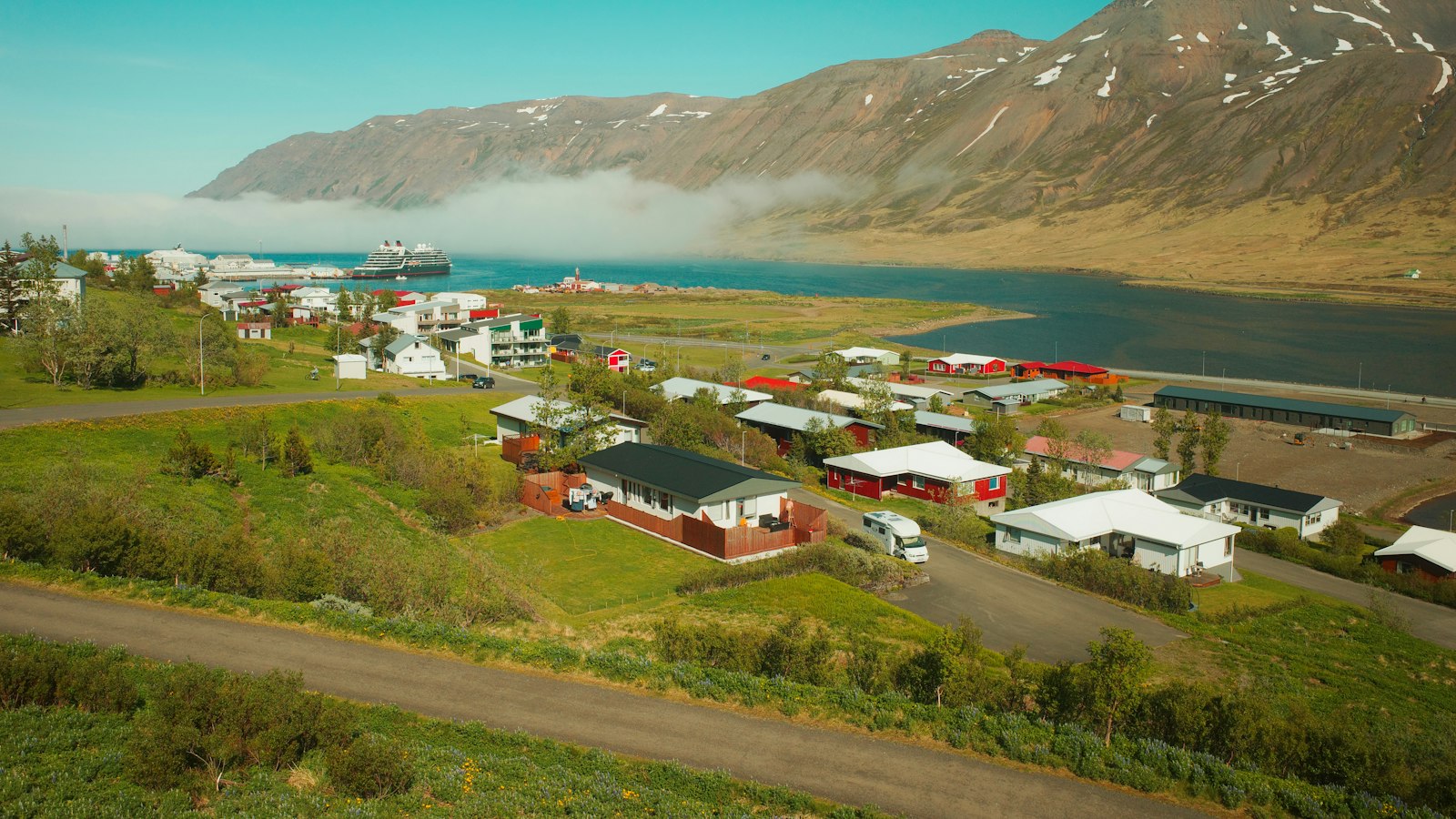
In the far south of the Westfjords, where mountains meet the sea and the weather shapes daily routines, the village of Patreksfjörður sits near the end of Iceland’s inhabited world. About 400 kilometres from Reykjavík, it is the westernmost community in the country, linked to the outside by winding roads and a shifting history tied to both the ocean and the land.
A name with ancient roots
The village’s name, meaning ‘Patrick’s fjord’ in Icelandic, traces back to a figure in early Norse settlement. According to medieval sources, Örlygur Hrappson, who arrived from the Hebrides, took guidance from Bishop Patrick of the islands and named the fjord in his honour. Such stories reflect deep-rooted ties between early Icelandic settlers and the broader North Atlantic world.
Fishing, change and life on the fjord
Communities around Patreksfjörður have known farming since the 9th century, but the village only grew significantly in the late 18th century, a period when boom times for fishing transformed quiet stretches of coast into busy trading ports. The small settlement at Vatneyri was once centred on a low gravel spit beside a natural lagoon, a site that would later see its waters dredged in 1946 to create a port. Over the years, the built-up area expanded mainly onto Geirseyri, with the whole growing settlement at times referred to as “the Eyrarnar” (the spits).
Trade and fishing shaped daily life for generations, but sweeping changes came late in the 20th century when a national fishing quota system took effect in 1990. This policy, aimed at conserving fish stocks, left many in the region without work. Before these changes, the village population was near 1,000 in 1981. By 2022, it had fallen to just over 700. Nevertheless, the ocean remains vital. Fishing and fish processing still provide most local jobs, with salmon fishing gaining in prominence. The service sector is also growing, reflecting another chapter in the village’s adaptation.
A landscape marked by isolation and beauty
Patreksfjörður’s position makes it not only remote but close to some of the Westfjords’ most dramatic natural sights. Towering cliffs at Látrabjarg, stretches of red-gold sand at Rauðisandur beach, and the Dynjandi waterfalls all lie within reach. The weather is cold much of the year, with a tundra climate pervasive across the region. Buildings in the village date mostly to a building wave from the 1950s through the 1970s, giving Patreksfjörður an architectural style shaped by the needs and materials of the postwar era.
Though small, the village maintains community institutions including a local branch of an upper secondary school, while its most famous native may be Leiknir Jónsson, known for representing Iceland as an Olympic swimmer. Today, scheduled transport links the village to nearby Bíldudalur Airport and neighbouring settlements, after the local Patreksfjörður Airport closed in 2011.
Sources
- Wikipedia
- Wikipedia (Icelandic) in Icelandic


