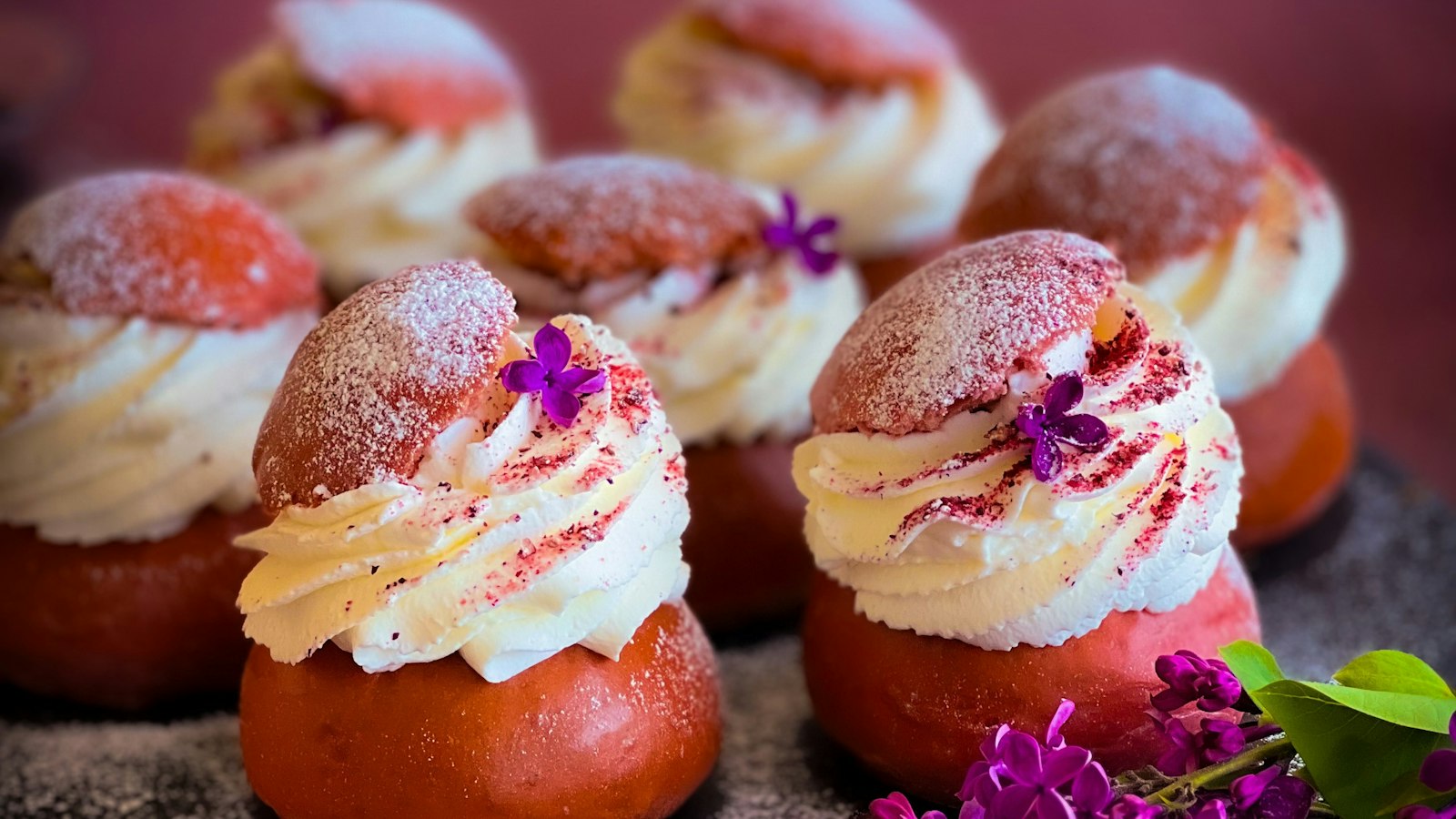
Each year, the arrival of Bolludagur brings a burst of anticipation to Icelandic homes and bakeries. Known in English as “Bun Day,” Bolludagur always lands on the Monday before Lent begins. At its centre is the bolla, a pastry with deep regional and historical connections, and a treat that links Iceland to a longstanding Nordic and North European tradition.
A shared, shifting heritage
The concept of the semla, under various names, spans from Latvia to the Faroe Islands, with every region putting its own spin on the sweet roll. In Iceland, the bolla is closely linked to Bolludagur, and differs from its Scandinavian and Baltic cousins. Rather than being made with wheat bread, as is common in Sweden and Finland, the Icelandic version usually uses choux pastry. This gives the bolla a character more akin to an éclair or profiterole, especially since it is often filled with whipped cream or vanilla cream, sometimes jam, and typically topped with chocolate icing.
Bolludagur is not an isolated phenomenon. The celebration echoes throughout Scandinavia, under the names fastelavnsbolle in Norway and Denmark, vastlakukkel in Estonia, and laskiaispulla in Finland. The roots of the word semla itself reach back through Middle Low German and Latin, ultimately meaning “fine wheat flour,” hinting at an earlier period when the treat was simpler.
Tradition, transformation, and playful festivity
Though Iceland adopted Christianity’s calendar centuries ago, the customs around bolla and other similar pastries have developed in playful and varied ways. Across Scandinavia, these buns were originally plain and often eaten in a bowl of hot milk (in Sweden, this version is called hetvägg). While Sweden, Norway, and Finland’s versions are frequently spiced with cardamom, filled with almond paste, jam or cream, and topped with powdered sugar, Icelandic bakeries favour the airiness of choux pastry and a strong presence of cream.
Elsewhere, such as in Finland and Estonia, pre-Christian customs accompanying this time of year involved children sledding downhill on fest days, with the fun traditions later incorporated into Lenten observance. In both countries, the superstition was that the child who slid the longest would ensure the best crop, or, among Estonians, a longer flax crop for higher-quality textiles.
In recent years, experimentation has continued: some bakeries invent new variants, from chocolate or marzipan fillings to entirely new shapes like the “semmelwrap.” But at heart, Bolludagur in Iceland retains its original charm, marking a turning point in winter with an airy, cream-filled bun that links the country to neighbours near and far.


