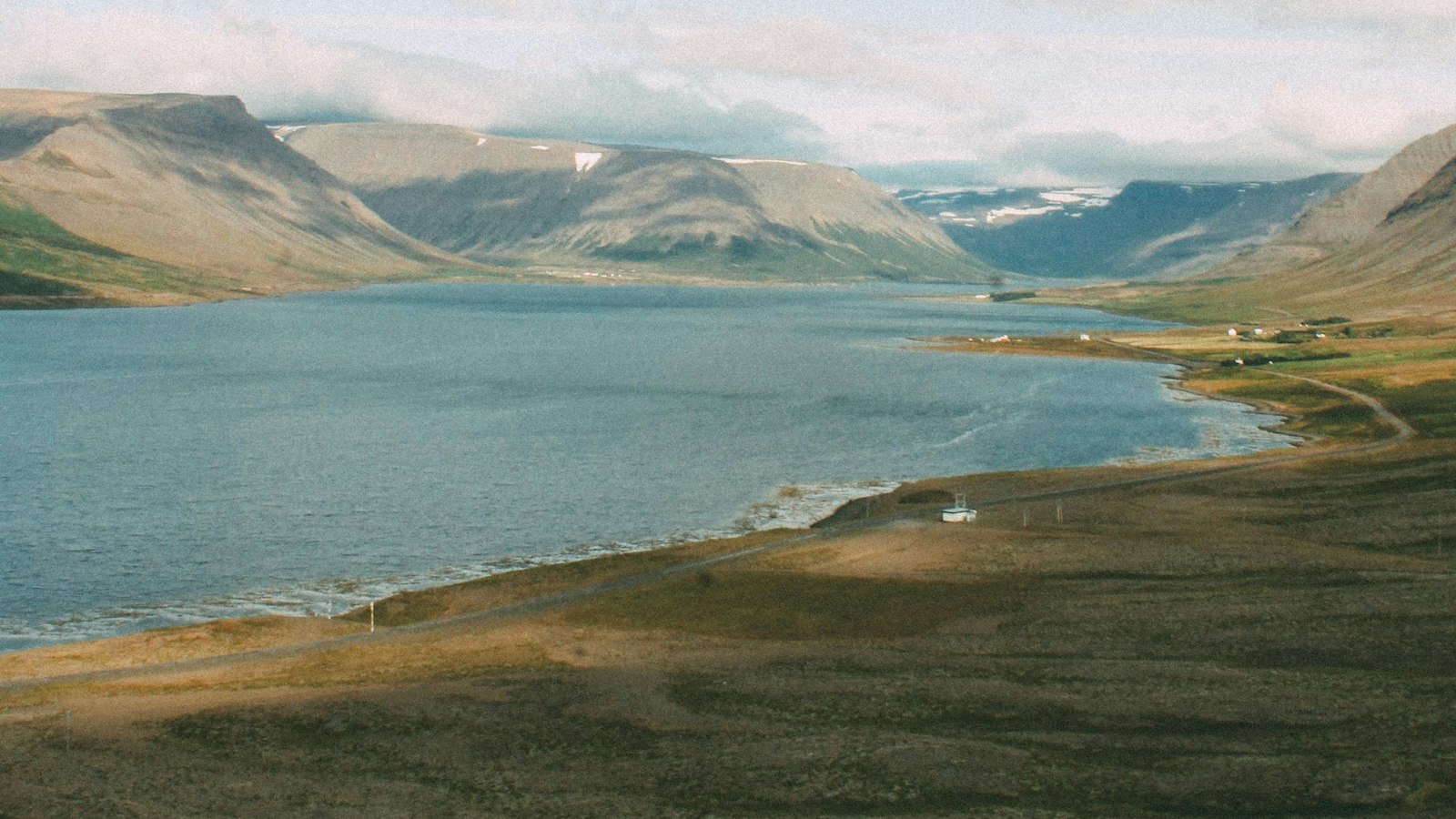
The Westfjords, or Vestfirðir in Icelandic, form a rugged peninsula in the country’s northwest, meeting the Denmark Strait and facing Greenland across cold seas. With steep mountains, winding fjords and remote settlements, this region is among the country’s wildest and least populated, with just over 7,100 inhabitants as of 2024.
The only land bridge between the Westfjords and the rest of Iceland is a narrow isthmus, just seven kilometres wide, between Gilsfjörður and Bitrufjörður. This geography has historically set the region apart, giving rise to distinct communities and ways of life shaped by the challenges of isolation and mountainous terrain.
The mountains and deep valleys were carved by Ice Age glaciers, leaving behind dramatic landscapes. The coastline is deeply indented with dozens of fjords, flanked by steep, often snow-covered hills. In these valleys, agriculture is limited by a lack of lowland, so small-scale sheep farming is found only near the fjords.
Remote harbours and changing settlements
Life here has always been defined by the sea. Good natural harbours line many fjords, and fishing remains the backbone of the economy in villages large and small. From the main town Ísafjörður, population 2,679, to smaller communities such as Bolungarvík, Bíldudalur and Hólmavík, most Westfjords settlements hug sheltered coasts.
The Westfjords have long been divided into several districts and municipalities, though efforts to merge some local councils in the early 21st century met limited success. Today, the region contains a patchwork of eight municipalities, reflecting its complex geography and tight-knit communities.
Wildlife and stories at the Atlantic’s edge
Steep cliffs tower over the sea in the southern Westfjords, with Látrabjarg marking Iceland’s westernmost point. These cliffs, the longest bird cliffs in the northern Atlantic, are among Europe’s most important seabird nesting sites. Puffins, Arctic terns, black-legged kittiwakes and guillemots thrive here in their thousands. Inland, the Arctic Fox population is extraordinary, with some of the highest global densities in the Hornstrandir nature reserve at the north of the peninsula.
The region’s climate is shaped by the East Greenland Current, making it the coldest part of Iceland at sea level. Ice and snow regularly block roads for months, though the Vestfjarðagöng tunnel, opened in 1996, has improved local connections.
The Westfjords have also seen their share of historical drama. In 1615, a violent episode led to the death of 32 shipwrecked Basque whalers, prompting the local magistrate to declare an infamous law that any Basque person found in the region should be killed on sight. This antiquated law remained on the books until its repeal in 2015.
Despite its challenges, the Westfjords’ stark beauty and remarkable wildlife continue to draw interest from beyond Iceland’s shores. The region is certified by the EarthCheck Sustainable Destinations programme, reflecting efforts to balance preservation and daily life on this remote peninsula.
Sources
- Wikipedia
- Wikipedia (Icelandic) in Icelandic


