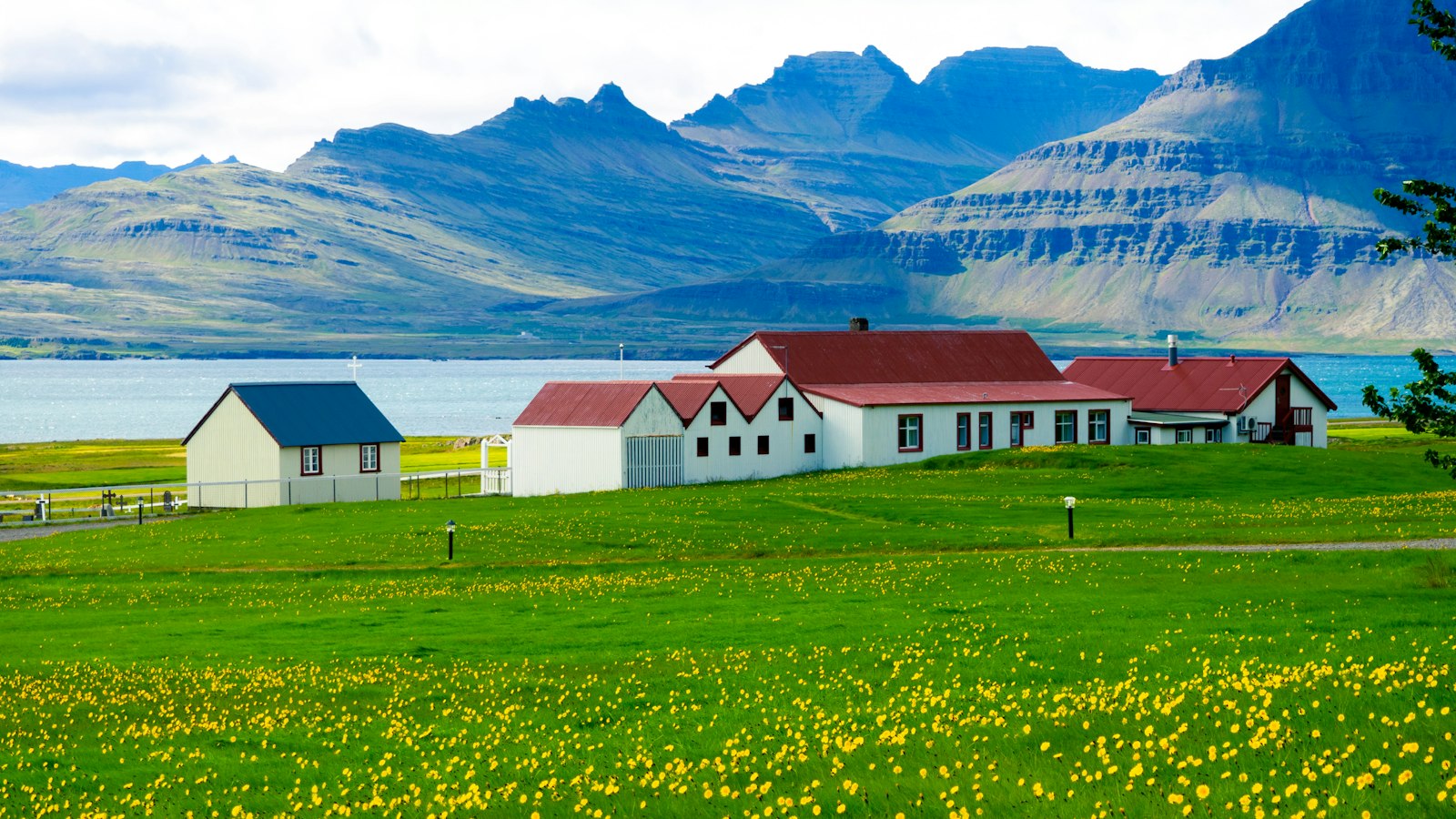
Vopnafjörður, meaning “Weapon Fjord” in Icelandic, is a remote municipality nestled on a peninsula in the mountainous bay of the same name in Northeast Iceland. Today, the population numbers around 650, with just over 500 residing in the main village. The area’s landscape and past remain deeply intertwined, telling stories of Viking settlers, hardship, and lasting cultural influence.
A landscape forged by ice and rivers
The coastline of Vopnafjörður stretches around the Tangi peninsula, where black sand beaches alternate with cliffs, islets and river mouths. The region’s defining features were carved by the massive glacier that covered it during the last Ice Age. As the glacier retreated thousands of years ago, it sculpted jagged mountains such as the Krossavík Mountains, reaching 1,077 metres above the bay, and valleys like Hofsárdalur and Vesturárdalur, now dotted with farms.
Several rivers, most notably Hofsá and Selá, are renowned for their salmon runs. These rivers have attracted artists, writers, and even royalty to the region. The untouched land and exclusive fishing rights preserve both the economy and the ecological character of the area.
Layers of history and cultural memory
Settlement began in the late 9th century, led by Vikings such as Eyvindur vopni, whose nickname, meaning ‘weapon’, gave the fjord its name. The area quickly became the setting for intense disputes among chieftains, which are recounted in the 13th-century “Vopnfirðinga saga.” As one of the classic Sagas of Icelanders, this text captures the clan feuds and social complexities that characterised early life in the region.
Through the centuries, Vopnafjörður was a vibrant trading port. In the 17th and 18th centuries it was one of just three official trade points in East Iceland, hosting both Icelandic and foreign merchants. The Danish firm Ørum & Wulff established significant operations here in the 19th century, only to see local cooperatives become major employers in the 20th century and into the modern day.
The late 19th century brought great changes. Poverty forced families from the lowlands to establish new homesteads on the highlands above Vopnafjörður. These harsh lives directly inspired Halldór Laxness’s novel “Independent People,” which earned him the Nobel Prize in 1955 and placed the realities of Icelandic rural life on the global literary stage.
Vopnafjörður also played a central role in emigration. In the late 1800s and early 1900s, it served as the largest port for Icelanders leaving for America. Many of their descendants remain in North America today, tracing their roots back to these valleys and rivers.
Life in Vopnafjörður today balances tradition with modernity. Its main industries remain fish processing and agriculture, with companies like Brim, the country’s largest fishing firm, sustaining the community. The area hosts local schools, a health clinic, and even its own airport connecting it to Akureyri. Sporting life thrives around the Einherji team, while local museums such as Bustarfell preserve turf house heritage and celebrate notable cultural figures.
Sources
- Wikipedia
- Wikipedia (Icelandic) in Icelandic


