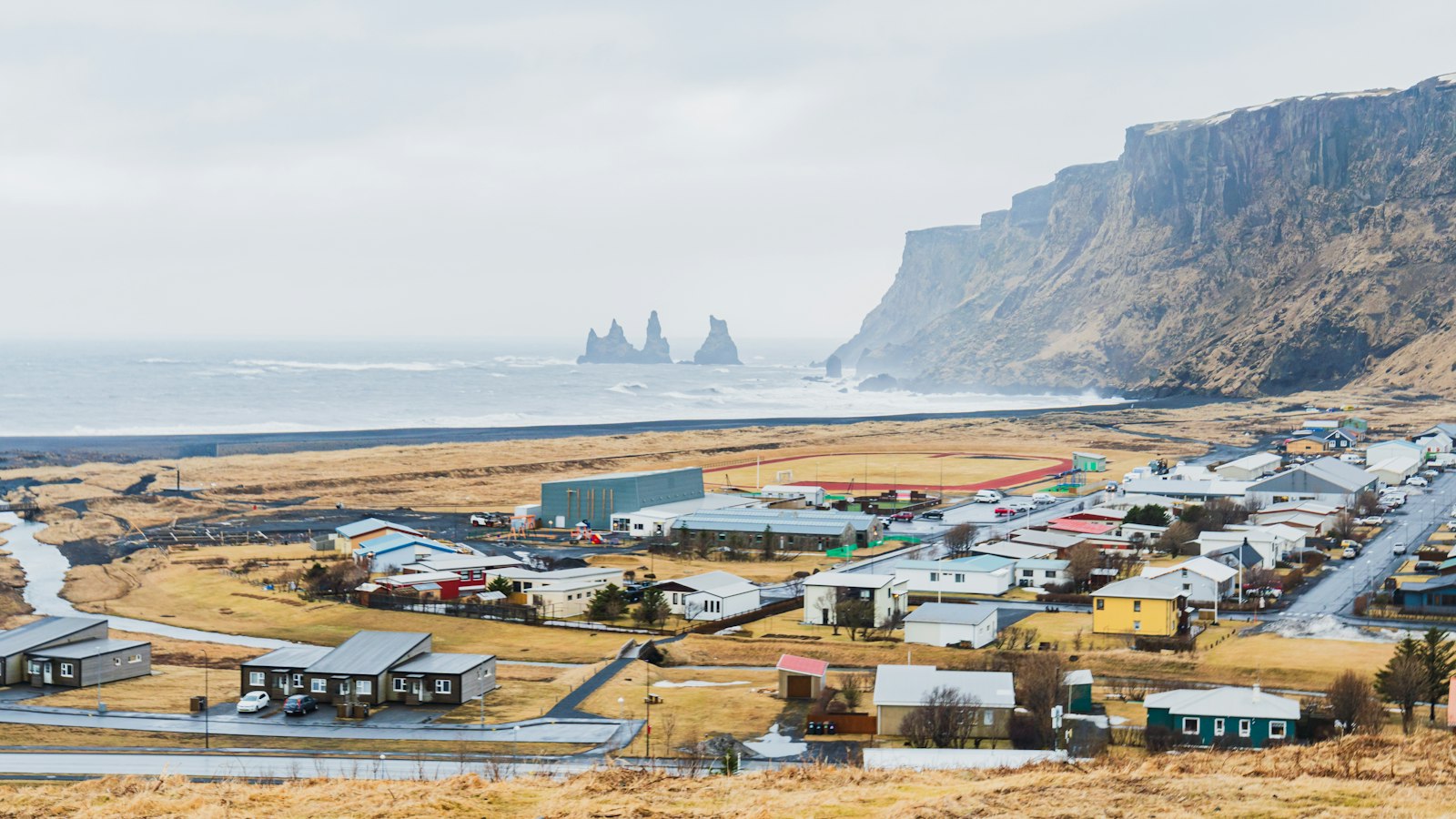
Far from Iceland’s capital and perched along the southern coastline, Vík í Mýrdal stands as the country’s southernmost inhabited village. Though surrounded by dramatic black sands and wild sea, Vík is more than a scenic waypoint. Its role as a service centre for the sparsely populated coastal regions has shaped daily life here, balancing tradition, risk and resilience.
A village grows from isolation
Long before paved highways connected Iceland, travel between communities could take weeks. In the late 19th century, residents in the Vík area began receiving goods shipped directly from Britain, a shift that made life significantly easier and encouraged commerce. Local farmers banded together for these orders, sidestepping the older practice of trading livestock for necessities elsewhere. This marked the start of Vík’s emergence as a local trading post.
As shops appeared and schools were established in the early 20th century, the village gradually coalesced around its new economic centre. By 1905, roughly 80 people lived here, clustered in just over a dozen homes. Today, while Vík itself had a population of 639 in 2024, it serves as the home base for nearly 900 people in the wider municipality of Mýrdalshreppur.
Nature’s influence: beauty and threat
South of the imposing Mýrdalsjökull glacier, Vík’s environment is shaped by both water and fire. The nearby Katla volcano lurks beneath the ice cap, quiet since 1918 but never far from local minds. Contemporary safety plans note villagers may have only minutes to reach shelter atop the hill at Víkurkirkja, the local Lutheran church believed to stand above potential floodwaters produced by a sudden eruption. Scientists and visitors are routinely made aware of this unique danger.
Despite the volatility below ground, nature offers remarkable sights above it. Vík’s black-sand shore was ranked among the world’s most beautiful in 1991. The coastline and ocean stacks are home to nesting puffins and a host of sea birds. Folklore in the area tells of trolls turned to stone by sunrise, their forms now visible off Reynisfjara beach, and memorials on the shore honour those lost to the hazards of the stormy Atlantic.
The climate in Vík is among Iceland’s mildest, relatively speaking. Winters are less harsh here, with temperatures hovering a few degrees above freezing. However, this moderation comes at the cost of persistent dampness; the village receives over three times Reykjavík’s annual rainfall, setting records for wetness along Iceland’s coasts.
Building community under the clouds
Vík’s architecture tells its own story of adaptation and care. Its church, designed by Guðjón Samúelsson in the 1930s, holds stained glass referencing religious motifs and contains features such as a distinctive pipe organ. As the largest settlement for many kilometres, Vík also hosts factories, a knitting industry and a local brewing operation, reflecting a mix of industry and creativity that endures today.
Sources
- Wikipedia
- Wikipedia (Icelandic) in Icelandic


