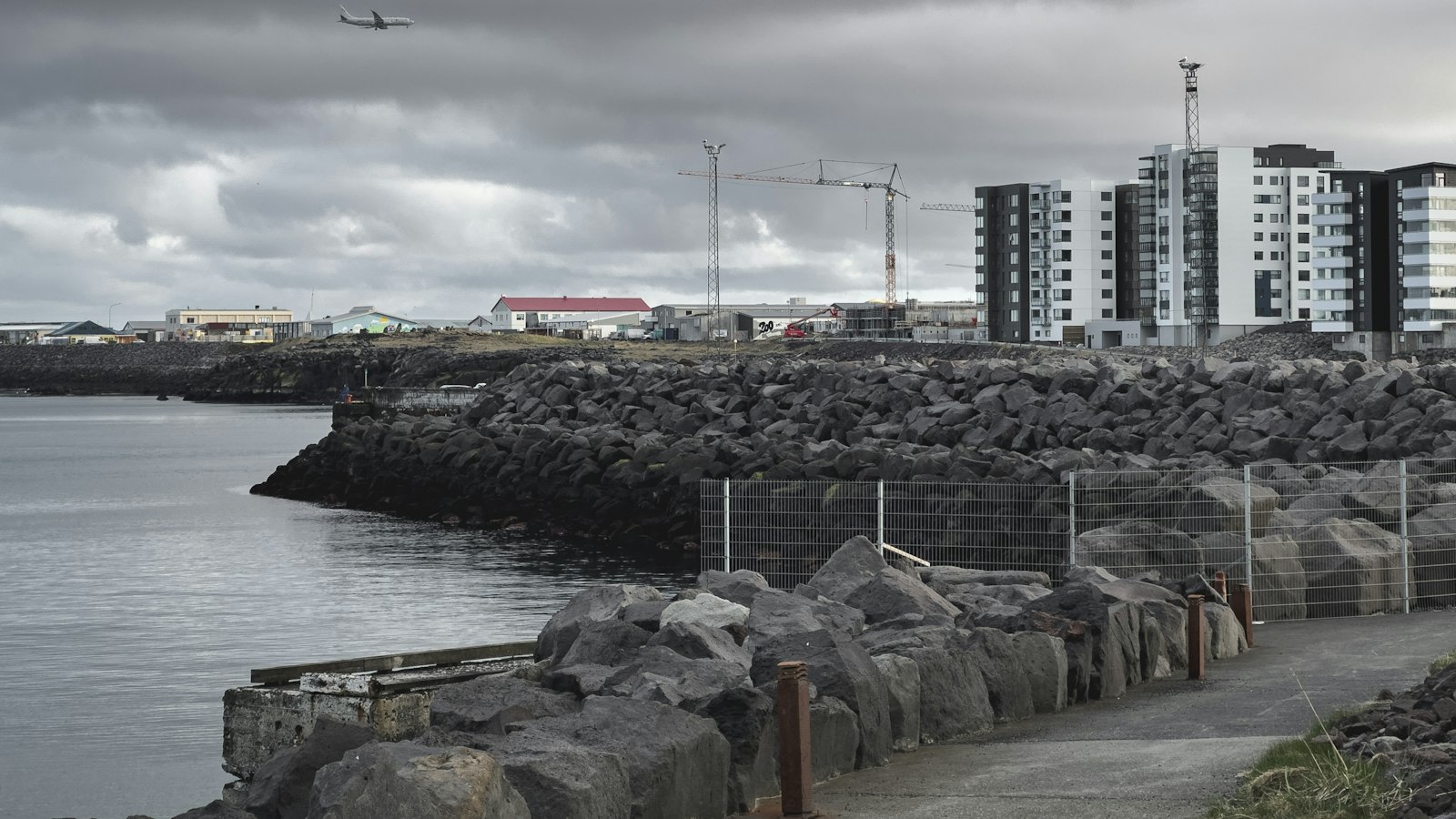
In the coastal town of Njarðvík in Reykjanesbær, Viking history finds a distinctive modern expression at Viking World (Víkingaheimar). This museum, which opened in May 2009, is a place where centuries-old Norse craftsmanship and contemporary curiosity meet.
A ship that sailed the Atlantic twice
At the heart of Viking World stands the Íslendingur, a faithful replica of the celebrated Gokstad Viking ship. What sets Íslendingur apart is not only its finely detailed construction, but the fact that it retraced legendary routes: in the year 2000, its crew sailed from Iceland across the Atlantic Ocean. The voyage concluded in L’Anse aux Meadows, Newfoundland, mirroring the journey of Leif Ericsson a thousand years earlier and marking the millennium of Norse exploration in North America.
After its return to Iceland and an initial period displayed outdoors, the Íslendingur, suspended one and a half metres above the museum floor, became Viking World’s centrepiece. This display allows for rare perspectives, guests walking under the upraised hull can appreciate the traditional woodworking and shipbuilding skills. An elevated walkway and steps also give access to the deck, providing a sense of scale and authenticity reminiscent of the seafaring age.
Exhibits of a changing Norse past
The museum extends beyond Íslendingur’s saga. Permanent and temporary exhibitions offer different windows into Viking and early Icelandic life. One such show is “Vikings, The North Atlantic Saga,” originally developed by the Smithsonian Institution in Washington, D.C. This exhibition explores the migrations and settlements of Norse peoples across the Atlantic.
In December 2010, Viking World expanded its collection with a two-year exhibition of items loaned by the National Museum of Iceland. Its opening featured a historical reburial ceremony for a set of remains excavated at Hafurbjarnarstaðir in 1868, connecting the museum’s modern spaces with ancient rites. Artifacts from recent archaeological digs added tangible reminders of Iceland’s ongoing dialogue with its earliest settlers.
By 2015, Viking World entered a new phase under different management, led by Sveinn V. Björgvinsson and Björn Jónasson. At the time, a small team worked at the museum, with aims to broaden its offerings and accommodate larger travelling exhibitions, continuing to shape how Iceland’s Viking heritage is shared both locally and internationally.


