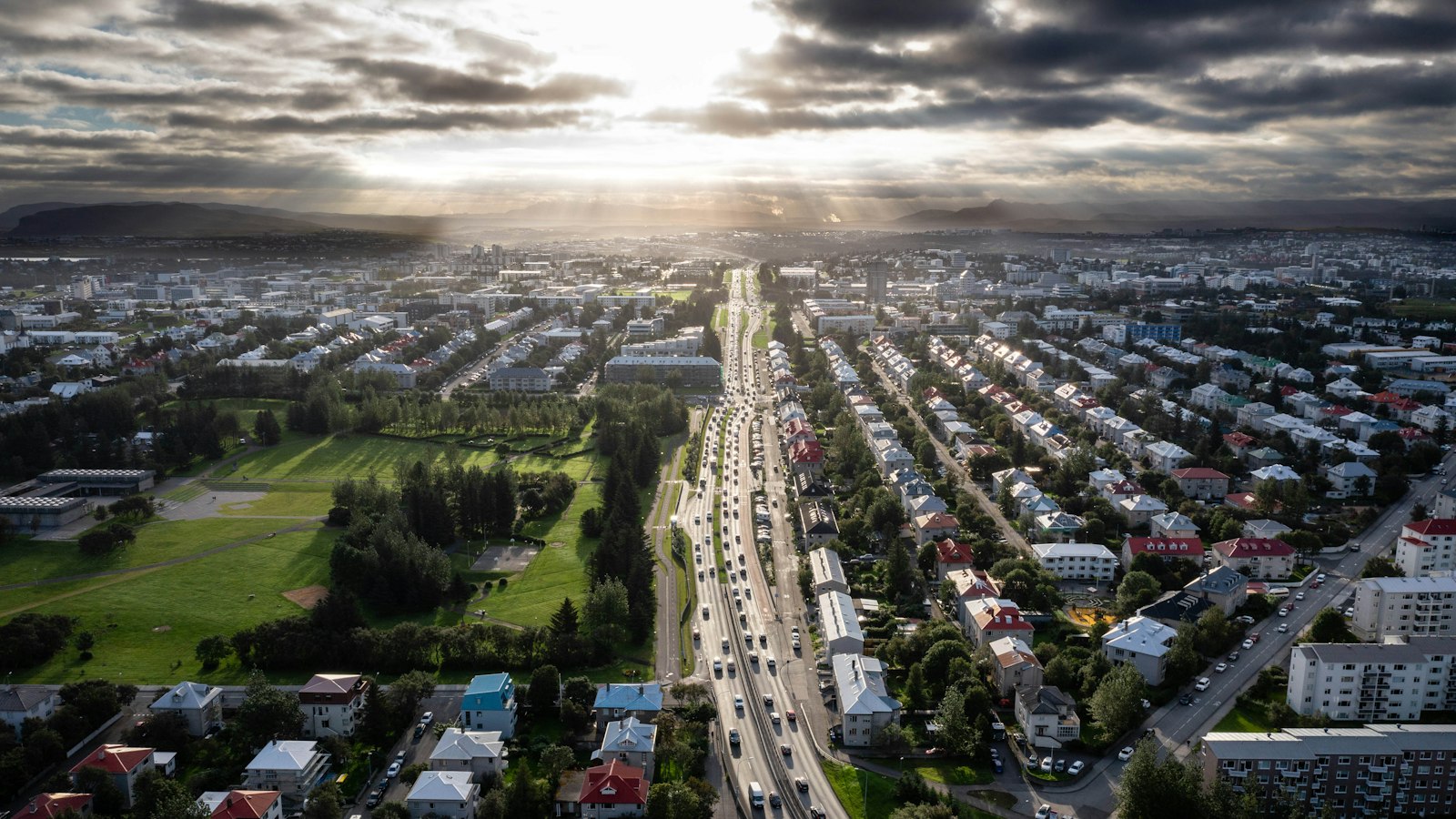
Iceland’s Southwest constituency, known in Icelandic as Suðvestur, is a political unit that shows how the country’s democracy adapts to shifting populations. It is the largest of the six multi-member constituencies that send representatives to the Althing, Iceland’s parliament, and includes all municipalities in the Capital Area except Reykjavík itself.
A modern shape for Iceland’s expanding suburbs
The Southwest constituency was formed in 2003 as part of a comprehensive overhaul of Iceland’s parliamentary election map. Before then, the Reykjanes constituency covered a wider area, but as Iceland’s population grew and suburban communities on the edges of Reykjavík expanded, there were growing imbalances in representation. Authorities regarded the older arrangement as unsuited for the emerging demographics.
A committee, formed in the late 1990s and led by Friðrik Klemenz Sophusson, studied the division of constituencies. Their report led to a constitutional amendment in 1999, which allowed for fewer constituencies and greater equality between them in population size. The law that followed in 2000 laid the basis for Suðvestur and the other five modern constituencies.
Suðvestur’s boundaries follow the Capital Region but specifically exclude Reykjavík Municipality, which instead is divided into Reykjavík North and Reykjavík South constituencies. The area is sometimes called “Kraginn,” which means “the collar,” alluding to how it wraps around the capital city.
The changing number of parliamentary seats
The Southwest constituency has seen adjustments in how many representatives it sends to the Althing. At its creation, Suðvestur was assigned 11 seats: nine based on local results, and two compensatory seats used to provide national proportionality. In the years since, as the population continued to grow relative to other parts of Iceland, the number of seats was increased, a reflection of constitutional requirements to keep the number of electors per seat within specified limits. As of the 2024 parliamentary election, it elects 12 out of 63 Althing members.
Whenever large differences in voter numbers per representative appear after an election, seats are shifted between districts. Over the past two decades, Suðvestur has benefited repeatedly from such adjustments, gaining seats from less populous regions like the Northwest.
Localities with distinct identities
The main towns in Suðvestur are Kópavogur, Hafnarfjörður, Garðabær, Mosfellsbær, Seltjarnarnes and the rural Kjósarhreppur. These municipalities are geographically and culturally varied. While Kópavogur (over 40,000 residents) and Hafnarfjörður (more than 32,000) are sizable urban communities, smaller municipalities like Seltjarnarnes and Kjósarhreppur have very different atmospheres.
Unlike many European capitals, Reykjavík stands administratively apart from its suburbs during parliamentary elections. This ensures that suburban perspectives are not overshadowed by those within the city’s direct boundaries.
Proportional representation for a changing region
Swathwest voters elect their members of parliament through the open party-list proportional representation system. This method, with some seats allocated at the local level and others from national results, aims to match parliamentary seats with voter preferences as closely as possible. Only parties crossing the 5 percent threshold nationally are eligible for compensatory seats.
Sources
- Wikipedia
- Wikipedia (Icelandic) in Icelandic


