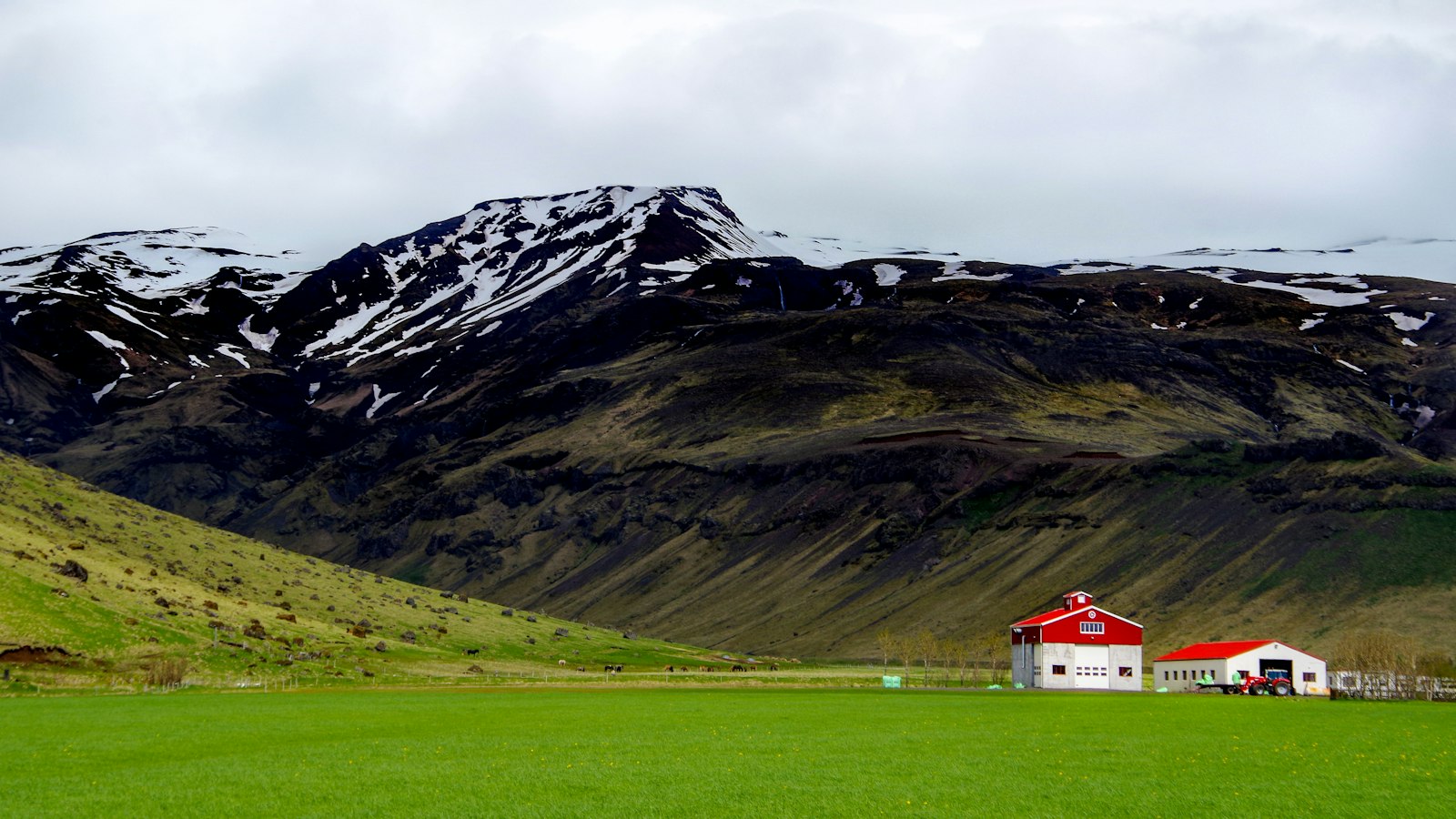
In the wide mouth of Norðurárdalur valley in Skagafjörður, northern Iceland, sits Silfrastaðir, a farm and church site with deep roots in the country’s rural history. Its land stretches from the Bóluá river in Blönduhlíð all the way out to the Kotá river at Norðurárdalur. Most of the terrain is mountainous, surrounding the Silfrastaðafjall mountain, making it a landscape both dramatic and demanding.
Today, Silfrastaðir is undergoing reforestation, as much of the area’s rugged highlands have been set aside for this purpose. This reflects ongoing changes to Icelandic land use, where once-vast sheep ranges gradually yield to forests, shifting how people interact with the land.
A site of faith and community
Silfrastaðir has long been a gathering place. The old turf church built here in 1842 was eventually moved to Árbæjarsafn, an open-air museum in Reykjavík. In its place stands an eight-sided wood church built in 1896 and consecrated on July 12 of that year. These changes mirror broader patterns in Iceland, where historic turf buildings are preserved as heritage even as local needs evolve.
Below the farm, on a spit of land, stands Silfrastaðaréttur, the local corral used for gathering sheep at sorting time. This communal structure is typical of the rural Icelandic way of life, where neighbours still co-operate to manage flocks spread over wide, rugged rangelands.
Folklore and the enduring landscape
Along Norðurárdalur, near the Norðurá river bridge, a headland called Skeljungshöfði reaches into the sandbank. Here lies Skeljungssteinn, a large stone pierced by two holes. Folktales claim the Skeljungur ghost was bound to this stone, though scientists suggest the holes may be tracks left by a tree trunk pressed into lava. The stone is now a protected monument, linking geology to the supernatural in the Icelandic imagination.
Famed poet Bólu-Hjálmar once recorded the story of Skeljungur, weaving together poetry and local myth. Historical records such as the Sturlunga Saga note that Eyjólfur ofsi Þorsteinsson and his men stopped at a cabin nearby on their way to the Flugumýri Arson, hinting that other farms might have once operated in the area, though some, like Hálfdanartunga and Krókárgerði, sold off in 1896, have faded into memory.
The past and present coexist in Silfrastaðir: ruins of old settlements, a church still in use, and traditions layered with myth. In this part of Iceland, history speaks through both its landscape and its stories.
Sources
- Wikipedia
- Wikipedia (Icelandic) in Icelandic


