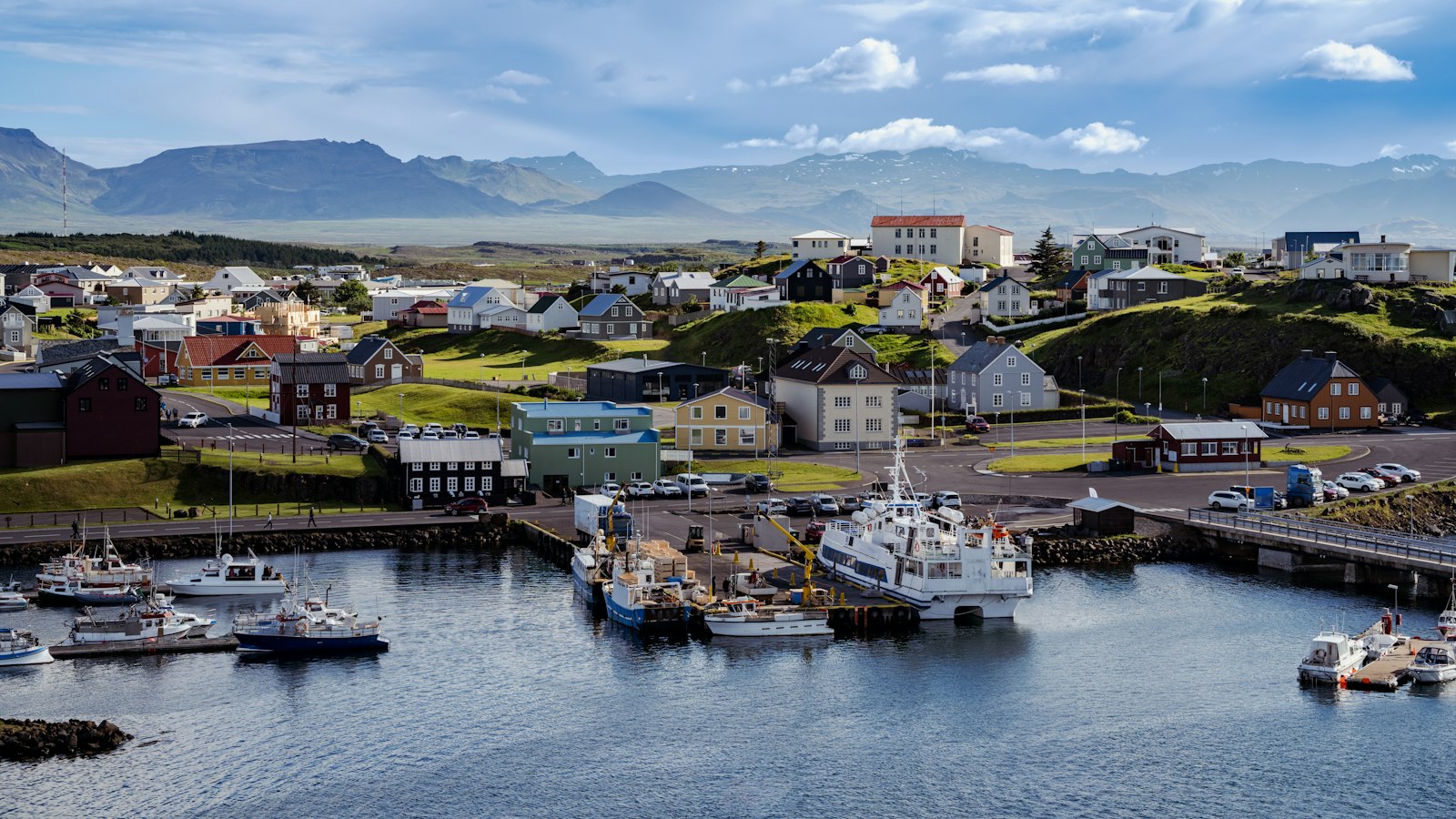
On the far eastern edge of the Skagi peninsula, sheltered from the open ocean, lies Selvík, a cove shaped by Iceland’s layered history and its enduring relationship with the sea. About 35 kilometres north of the town of Sauðárkrókur in the wider Skagafjörður region, Selvík has long offered one of the best natural landings along this stretch of coastline.
For generations, Selvík’s sheltered shore served as a natural harbour. Fishermen launched their boats from here, taking advantage of what was known as the premier landing in the area. The northern edge of the cove, near the now-abandoned site of Selnes, preserves remnants of this past: clear ruins of old fishermen’s huts still mark the landscape, silent witnesses to centuries of seasonal industry.
Trading, fishermen and sagas
Selvík’s significance was further bolstered in the early twentieth century. On 27 November 1903, the site was officially designated as a trading post. Merchants from nearby Sauðárkrókur opened branches at Selvík for a period, operating a fish processing facility. Like many harbours across the North Atlantic, Selvík also saw visiting foreign traders in earlier centuries. The name Þýskaleiði, meaning ‘German grave,’ hints at commercial activity involving outsiders, shaping the cove’s role in regional trade.
Long before these twentieth-century developments, Selvík was also the stage for events recorded in the Icelandic sagas. In 1244, during the turbulent Age of the Sturlungs, Kolbeinn ungi Arnórsson’s fleet set sail from Selvík on St. John’s Day, heading toward the Westfjords. Their journey led to an encounter in the middle of Húnaflói (the Húna Bay) with ships led by Þórður kakali Sighvatsson. The clash that followed, known as the Flóabardagi or ‘Battle of the Gulf,’ stands as the only naval battle described in the Icelandic sagas.
A cove of rescues and routine
Selvík’s relationship with the sea has not been solely shaped by battles or trade. In August 1931, this remote cove became the scene of modern maritime drama, when the seaplane Súlan was forced to make an emergency landing in Skagafjörður due to engine trouble while searching for herring. Drifting helplessly for eight hours in rough conditions, the crew managed to attract the attention of locals near Selnes with shouts. A motorboat was dispatched from shore, and the drifting aircraft was safely towed into the calm of the cove. The following day, the crew repaired the plane and continued their journey.
Today, though the bustle of foreign traders and saga-age fleets has faded, Selvík remains a working harbour. The marina in the cove still serves boats, now launching expeditions for lumpfish, a reflection of how fishing remains central to life in Iceland’s remote north.
Sources
- Wikipedia
- Wikipedia (Icelandic) in Icelandic


