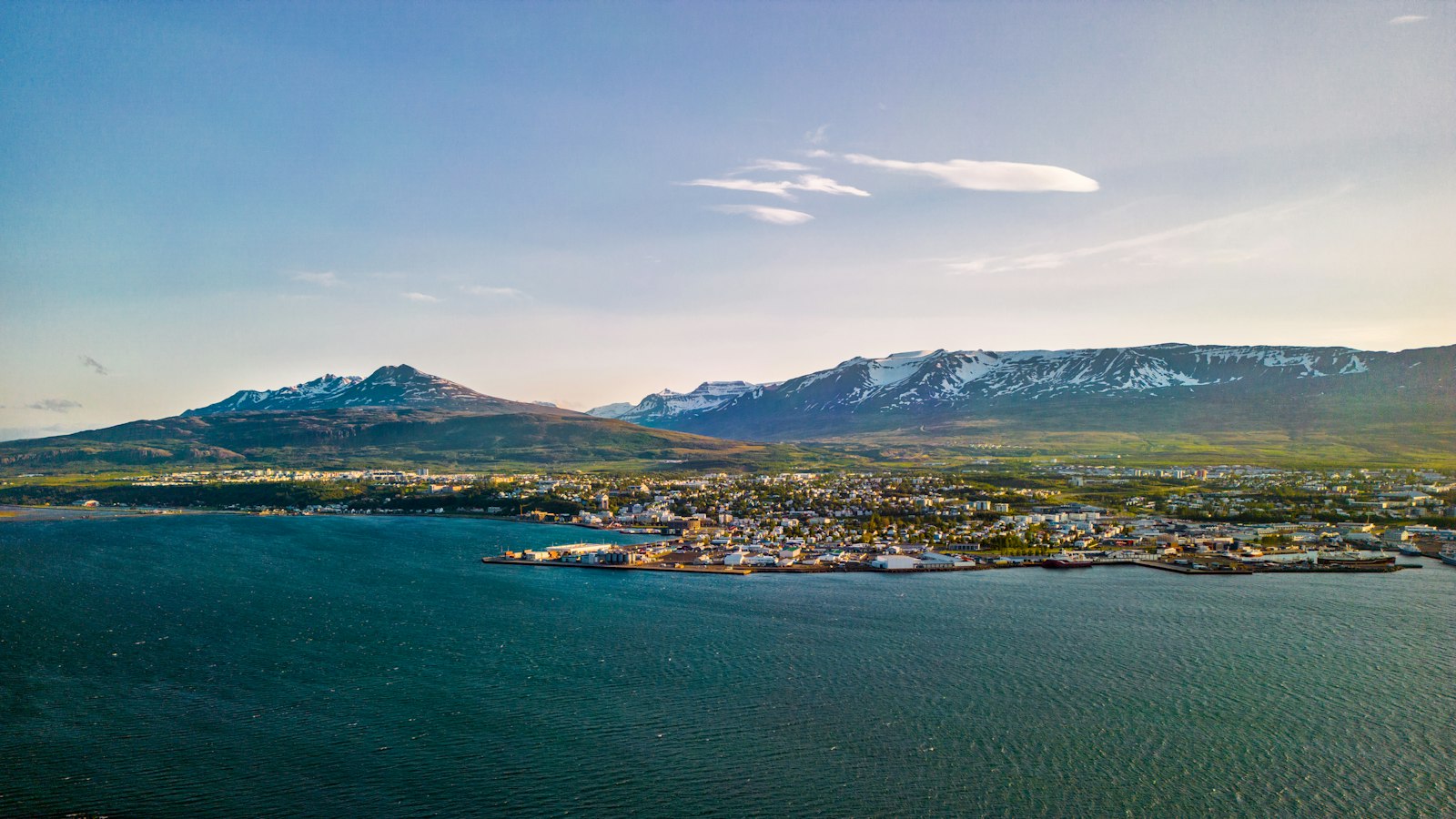
Hlíðarfjall rises to about 1,200 metres west of Akureyri, Iceland’s northern capital, and stands as one of the country’s prominent venues for winter sports. The mountain’s name is thought to derive from the old homestead and church site of Lögmannshlíð on its slopes, the word “hlíð” means “slope” in Icelandic, fitting for a location so steeped in skiing practice and lore.
From farmstead slopes to ski resort
Plans for developing Hlíðarfjall as a ski area began in 1955, when construction started on a hotel at the current base, Skíðastaðir, using timber salvaged from the old Akureyri Hospital. Opening in 1962 under the names Skíðastaðir (“Ski Place”) and Skíðahótelið (“Ski Hotel”), the building became the heart of the ski site, though it has not accommodated overnight guests since 1983. Over time, the area grew to accommodate Iceland’s second largest ski resort, and the largest ski area in the north.
Essential upgrades have marked Hlíðarfjall’s evolution. A chairlift installed in 1967 was followed by the Stropmur platter lift in 1974, raising the maximum skiing elevation to roughly 900 metres. In 2001, a modern fixed-grip quad chair replaced the original, named Fjarkinn. Parking and a mid-mountain hut (Strýtan) with a café and rest facilities arrived in 1999, expanding the resort’s offerings.
Ski lifts and the challenge of Icelandic weather
Today, Hlíðarfjall features eight ski lifts, including two quad chairlifts, with the top skiable height of 1,014 metres, reached by the Fjallkonan lift, Iceland’s highest. Frequent closures of Fjallkonan, often due to storms, avalanche risks, and staffing needs, are reminders of the uncompromising nature of Icelandic winter.
The ski area covers 14.9 kilometres of groomed pistes across 24 runs, catering to varied skill levels. The base, Skíðastaðir, at 500 metres elevation, houses practical facilities such as a ticket office, equipment rental, parking, and a café. Above, Strýtan offers a midpoint rest. Just below lies a terrain park, while to the north, a cross-country loop takes advantage of the snowy landscape. Hlíðarfjall’s latitude means little winter daylight, so floodlit slopes allow for night skiing.
During the short summer window, lifts operate on limited schedules, converting the mountain into a hub for mountain biking.
A brief world-record spotlight
In April 2024, Hlíðarfjall set the stage for a unique event when a snow-built ski jumping hill was created for a world-record attempt sponsored by Red Bull. Japanese skier Ryōyū Kobayashi made four attempts, culminating in a 291 metre (955 ft) jump, the longest ever recorded, although not officially recognised by the International Ski Federation. The temporary jump was placed to the north, above the regularly used slopes, using natural terrain and snow groomers to shape its ideal angle.
Sources
- Wikipedia
- Wikipedia (Icelandic) in Icelandic


