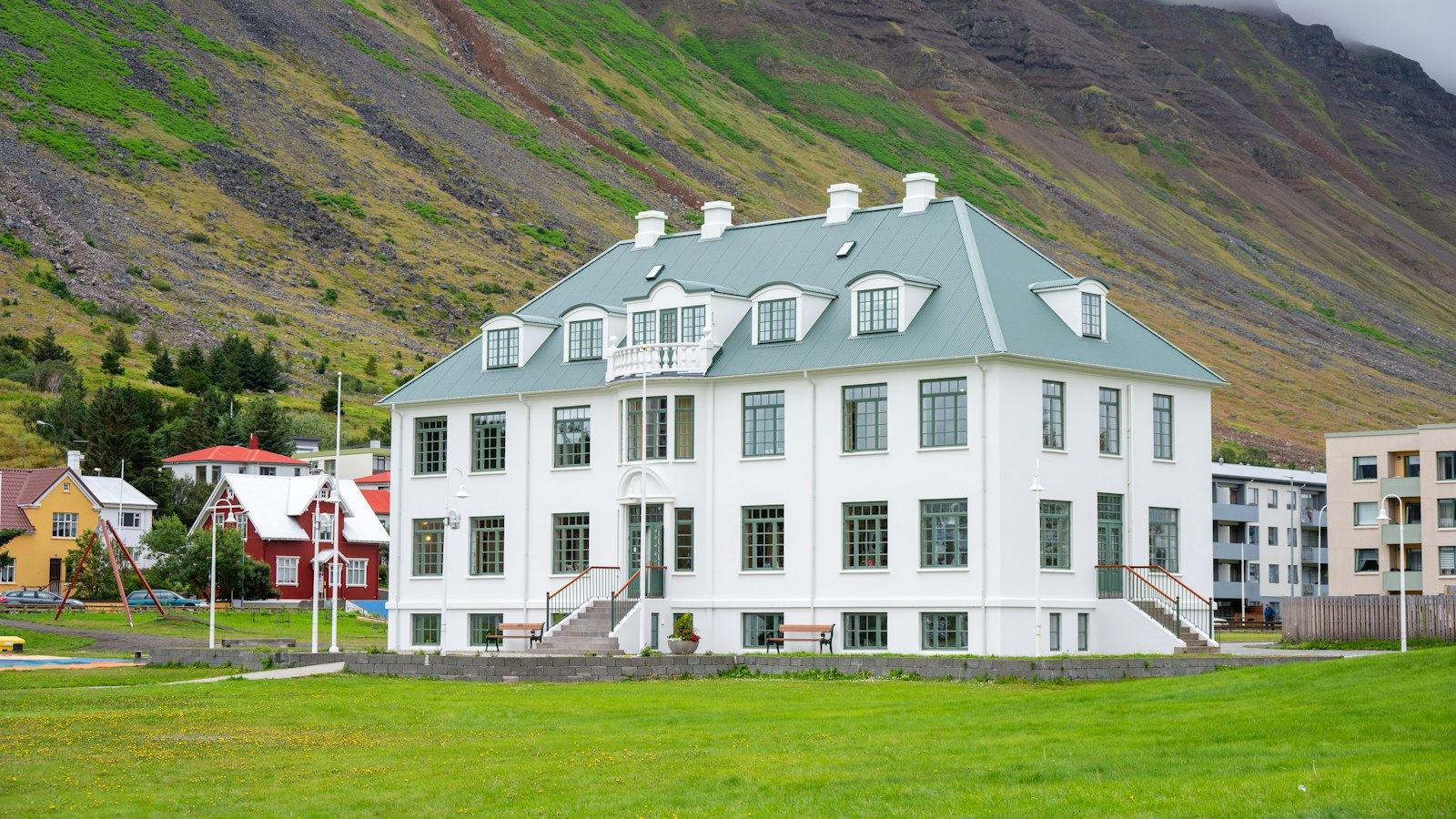
Tucked in a remote corner of northwest Iceland, Ísafjörður is both the largest town in the Vestfirðir (Westfjords) and its main hub for culture and services. With around 2,600 residents, it stands on a narrow spit of sand, or eyri, at the mouth of Skutulsfjörður and close to the vast waters of Ísafjarðardjúp. Its name means ‘ice fjord,’ a reference to the dramatic landscapes that surround it.
Fishing, foreign trade and traces of the past
The town’s roots reach back to the 9th century, when Helgi Magri Hrólfsson first settled the sheltered bay according to the Landnámabók, Iceland’s book of settlement. Those early days were shaped by fishing and farming, but from the 16th century onwards, Ísafjörður became a magnet for European merchants seeking Icelandic fish. Traders from England, France, the Netherlands and Germany arrived to buy local catch, and foreign influences shaped both trade and architecture.
Like much of the Westfjords, Ísafjörður was swept up in the tide of witch trials that marked Icelandic history in the 16th and 17th centuries. Many accused individuals were sent into exile on the wild Hornstrandir peninsula, a place now famed for its untouched nature.
In 1786, Ísafjörður was officially granted municipal status and became one of only six Icelandic trading towns at the time. Timber-frame houses from this era still stand in Neðstikaupstaður, the old Danish trading post. Buildings such as the Krambúð (1757), Faktorshús (1765), Tjöruhúsið (1781) and Turnhúsið (1784) now house restaurants, consulates and the Westfjords Heritage Museum, providing a close look at centuries-old ways of life.
Music festivals and education in a remote setting
Despite its small size, the town is known for its active cultural life. The Aldrei fór ég suður festival, launched in 2004 by the local musician Mugison and his father, has grown from a grassroots event into one of Iceland’s major music gatherings. Its name, meaning ‘I never went south,’ celebrates the pride of the Westfjords and attracts musicians from across Iceland and abroad.
Ísafjörður is also recognised for music beyond this festival. The Við Djúpið Music Festival since 2003 has brought celebrated artists and masterclasses to the town, while the local music school, the only one in the Westfjords, maintains traditions with its wind bands and student ensembles.
The town is equally engaged with education. The University Centre of the Westfjords, established in 2005, offers master’s programmes in coastal and marine management, regional development and Icelandic language studies. Accredited through collaboration with the University of Akureyri, it draws students from Iceland and abroad for research and distance learning focused on life by the sea.
Changing economies and the pull of the sea
Fishing and fish processing have long been pillars of daily life and the local economy. In the 20th century, Ísafjörður grew as a regional hub for the fishing industry, with harbour expansion and new buildings reflecting Danish architectural styles. Overfishing, stock decline and restrictions in the 1980s prompted many residents to seek jobs elsewhere, leading to population loss. Today, modern fisheries, education and a growing visitor sector share space with reminders of older times in dockside warehouses and heritage ships.
Ísafjörður remains a landing point for ferries and a starting place for trips to the wild Hornstrandir reserve. Though shaped by the chill tundra climate and the frequent winds of the Westfjords, the town’s social and cultural life continues to thrive beside the ‘ice fjord’.
Sources
- Wikipedia
- Wikipedia (Icelandic) in Icelandic


