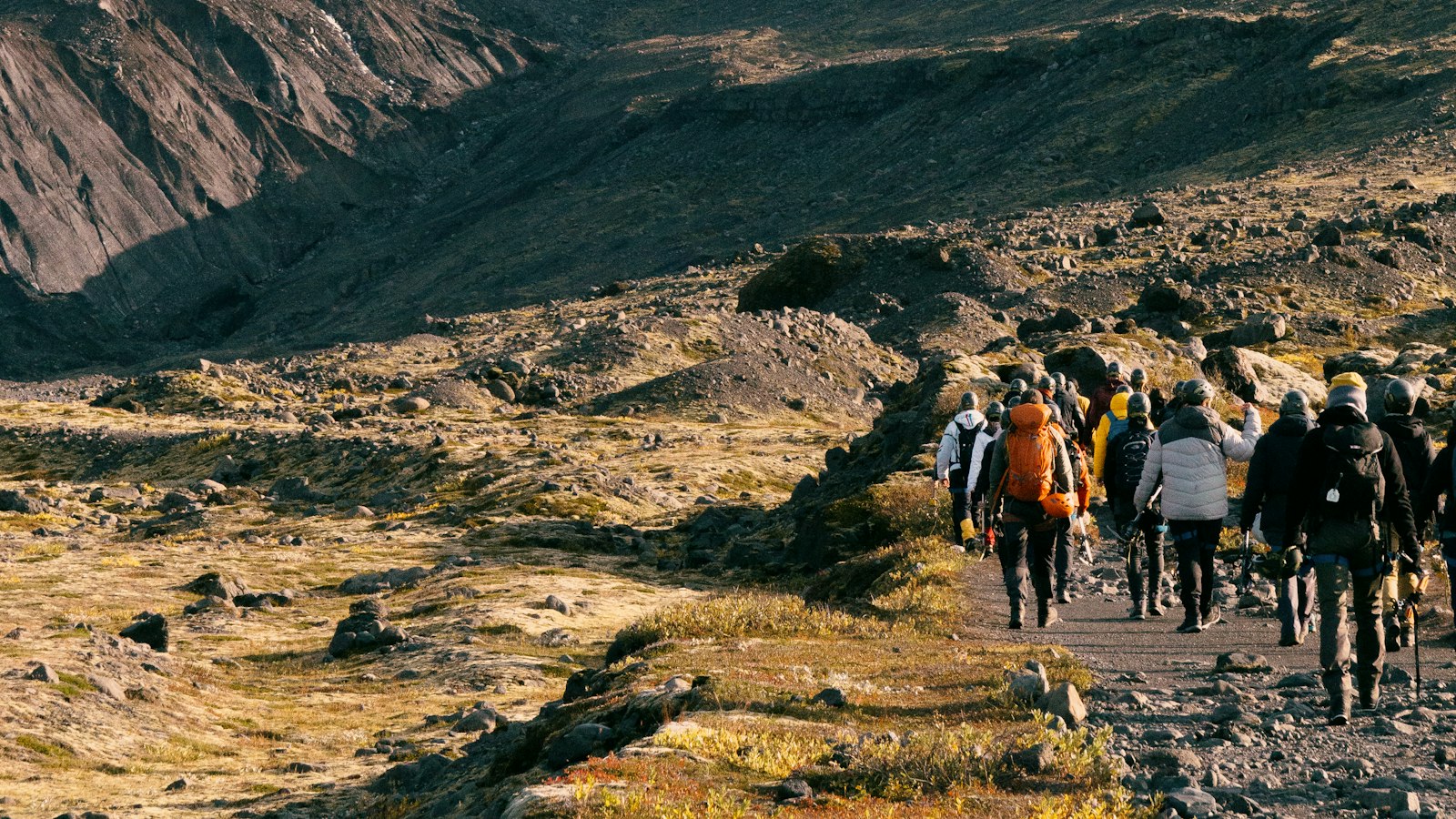
On maps, Iceland appears tucked near the Arctic Circle, yet it is not shaped by the harsh polar cold one might expect. Maritime currents swirl around this island and keep its shores milder than similar northern latitudes. The blend of oceanic influences brings both variability and surprise, sometimes all in the span of a few hours.
Unpredictable elements and daylight extremes
Iceland’s weather refuses predictability. Even in its southern lowlands, winter temperatures hover near freezing, rarely dropping far below the mark seen in many northern capitals. In the north and higher terrain, colder spells can take hold, and rare record lows have dipped to nearly minus 40 °C. Summers are usually cool and gentle, though in especially warm spells, the mercury has climbed to above 30 °C in the eastern fjords.
Winds are a forceful part of daily life. Highlands experience particularly fierce and frequent gusts, while lowland areas also face periodic blasts. Storms can move significant amounts of dust, especially in the early summer north of Vatnajökull glacier, a reminder of how much the landscape is sculpted not just by ice but by wind. Periods of intense wind and reduced visibility are not unusual, nor are sudden shifts in temperature and precipitation.
Thunder and lightning are rare, but when volcanic eruptions send ash plumes skyward, flashes of lightning can sometimes be seen within the billowing columns. Strange whirlwinds and occasional tornado-like events may occur with eruptions, though with a scattered population, such phenomena often pass without much notice.
Long days, auroras and a changing climate
For several weeks each summer, especially on the island of Grímsey at the country’s northern tip, residents and visitors witness continuous daylight. Elsewhere, the sun still dips briefly but twilight lingers for days, a trait of Iceland’s latitude. In winter, clear skies can reveal the aurora borealis, streaking colour across the polar night.
Climate change, however, is pressing fresh challenges on Iceland. Most glaciers began diminishing in the 1800s, but the pace of retreat is now accelerating. Since the turn of the millennium, more than 700 square kilometres of glacial ice have vanished. Okjökull, once a glacier in western Iceland, lost its title in 2014 after shrinking until it could no longer move, the suffix “-jökull,” meaning glacier, was removed from its name, leaving simply “Ok.”
Okjökull’s end resonated deeply. In 2019, a hundred people, including Iceland’s then-prime minister, gathered for a funeral at its former site. They placed a plaque with a message to the future, reflecting the concern that other glaciers could soon vanish as well. Scientific models forecast significant shrinkage in Iceland’s ice fields if global temperatures continue to rise, with only small caps remaining in a few centuries. Already, retreating glaciers are causing changes in the land itself, from shifting shorelines to areas of uplift.
In facing these changes, Iceland has committed to reducing emissions and decarbonizing its energy. Today, almost all electricity comes from geothermal and hydro resources, continuing the country’s tradition of drawing energy from its natural environment.


