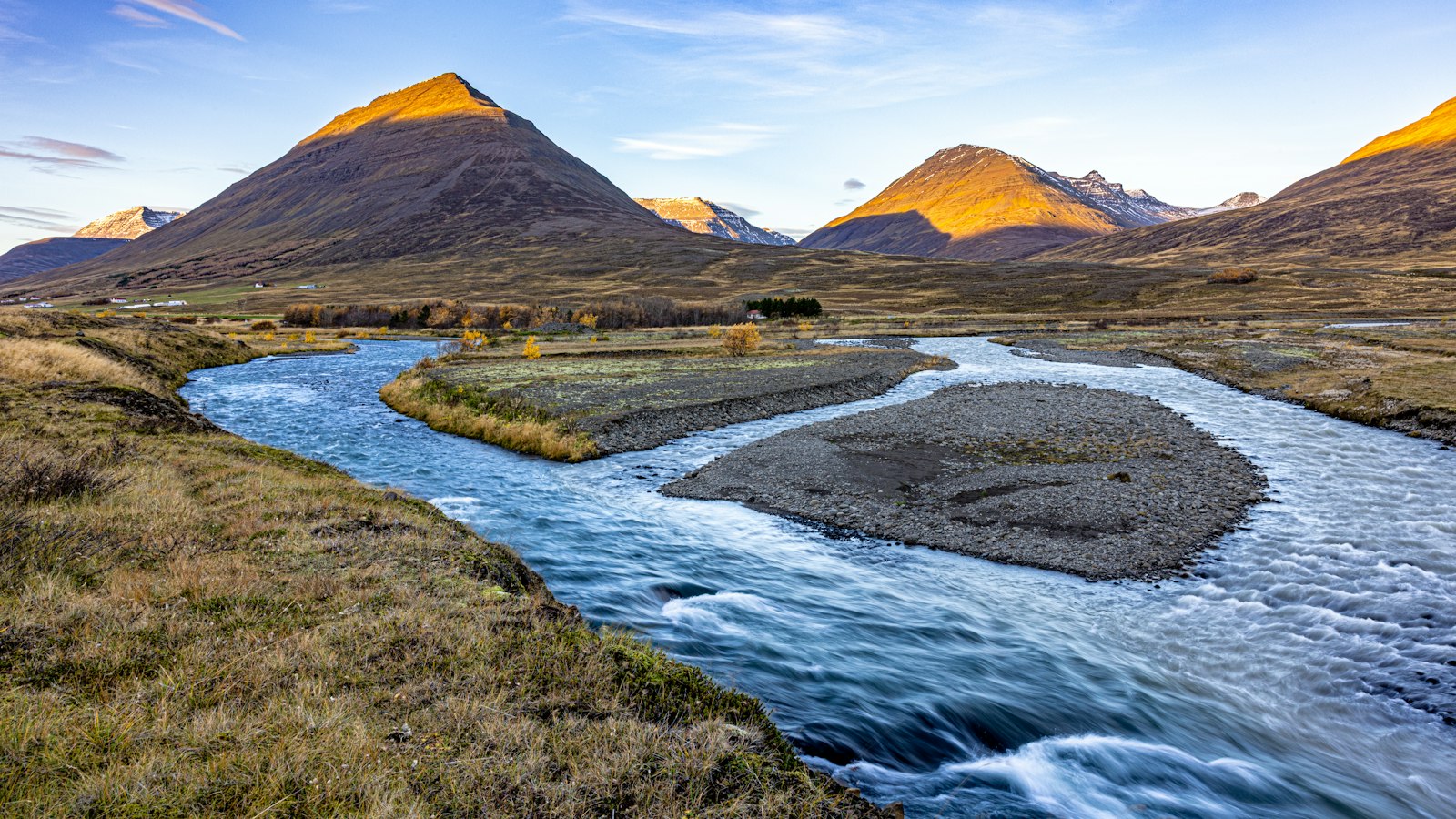
At first glance, Víðivellir appears to be like many other farms scattered across the vast landscapes of Skagafjörður in northern Iceland. Yet, beneath its quiet fields, this estate holds stories of significant events and people, connecting the saga age with the modern era.
A crossroads for history and leadership
Víðivellir has long been more than a place for farming. Historically, it was a manor where several Icelandic chieftains lived, including some county magistrates (sýslumaður) of Skagafjörður. The area’s significance was recognised early, and it once had its own church, which served the local community until it was decommissioned in the eighteenth century.
On its land lies the now-abandoned farm Örlygsstaðir, the site of one of the great battles in Icelandic medieval history. On August 21, 1238, nearly 3,000 people clashed here in what became known as the Battle of Örlygsstaðir. To mark the 750th anniversary, a memorial was put in place in 1988 as a reminder of that turbulent chapter.
Lives shaped and lost on Víðivellir’s land
The estate was also the backdrop for the last execution carried out in Skagafjörður, in 1789. A woman from the Fljót district, who had secretly given birth the previous summer, was executed at Víðivellir after her actions were discovered. Such stories linger in the memory of the area, a reminder of harsh historical customs.
Víðivellir became a centre of family life for one of Iceland’s influential families in the early 1800s. The dean Pétur Pétursson and his wife Þóra Brynjólfsdóttir lived here with their sons, who would leave a mark on Icelandic culture and society. Jón became a high court judge, Pétur became a bishop, and Brynjólfur contributed to Icelandic literature and public administration in Copenhagen. Their collective legacy lives on through a monument raised close to the farm in 1998.
Geothermal features and moments of royal notice
While Víðivellir is not in an area known for abundant hot springs, small patches of geothermal heat exist in two separate spots on the estate. This rare feature led to the construction of a swimming pool between 1937 and 1938, which was used for teaching swimming until the early 1960s.
Víðivellir’s reputation also reached outside Iceland. During King Christian X’s visit to Iceland in the summer of 1936, he and his entourage paused at the farm to share a mid-day meal in a tent set out in the fields. Moments like these bookmarked Víðivellir’s place both in local tradition and wider narratives.
From the echoes of ancient battles to the legacy of notable Icelanders, Víðivellir’s story is woven through Iceland’s history. Its landscape is a living record of how one place can bear witness to national milestones as well as daily rural life.
Sources
- Wikipedia
- Wikipedia (Icelandic) in Icelandic


