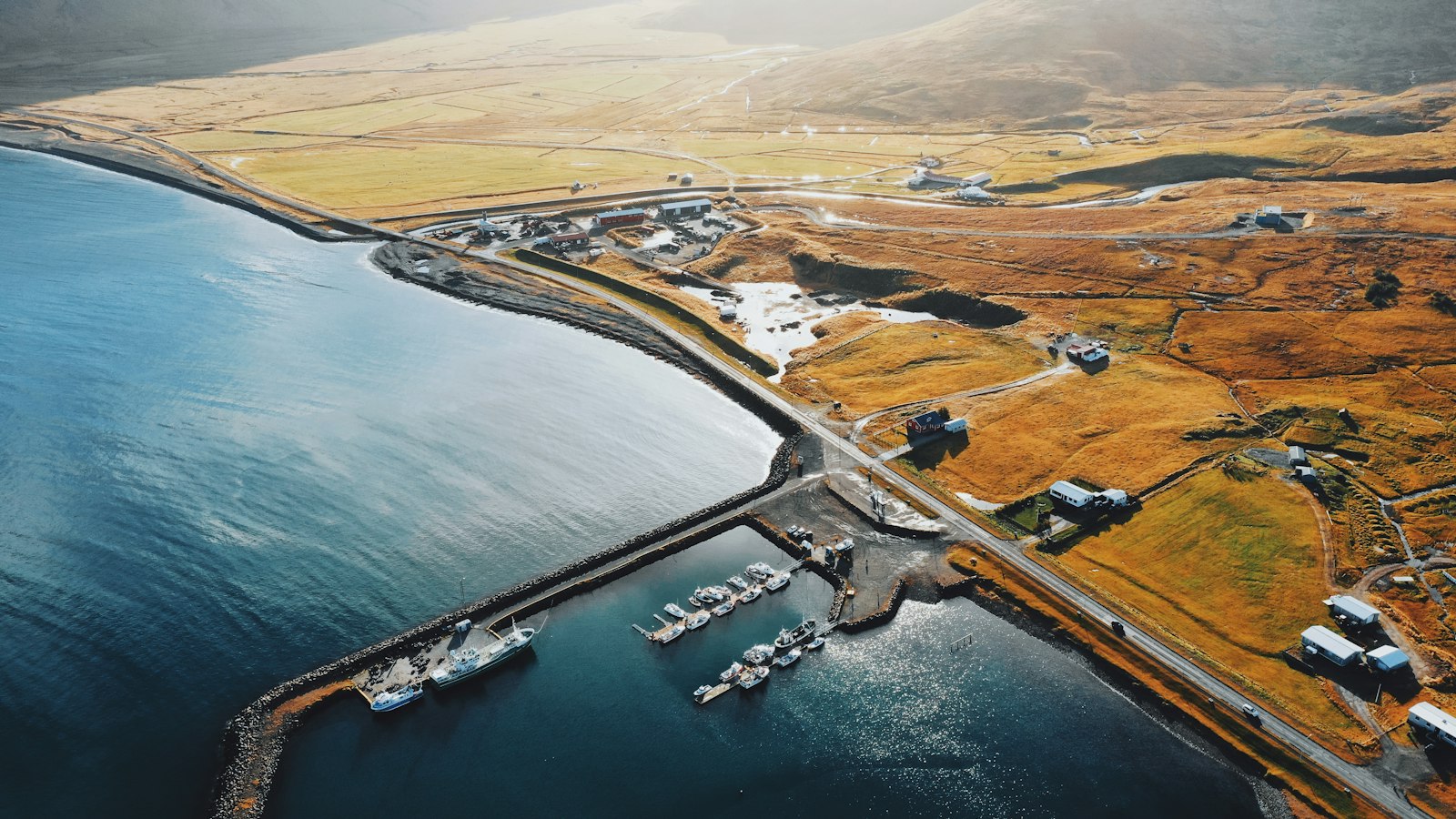
Set on the north coast of Iceland in the Fljót district of Skagafjörður, Haganesvík today is a quiet cluster of houses. But for much of its history, it was a hub of local fishing and cooperation, a small market town that reflected the rhythms of rural Icelandic life.
Fishing and the trading post era
The economic lifeblood of Haganesvík for centuries was fishing, especially shark fishing. Generations of Icelanders, living in simple worker’s cottages known as þurrabúðir, plied these northern waters. By 1897, Haganesvík was officially recognised as a trading post. This marked its transition from a seasonal fishing centre to a year-round settlement with broader commercial ties.
A key figure in this shift was Einar Baldvin Guðmundsson, a farmer from the local area of Hraun. He operated a shop in Hagaesvík from 1901, having moved his business from his home where he had run it since 1879. Einar also served as manager of the Gránufélagið trading company, bringing further connections to regional commerce. Several shop owners later pooled their efforts, jointly running the market until 1922.
Cooperatives and changing fortunes
Haganesvík was not just about fish. The village operated a slaughterhouse and a freezing facility, underlining its role as a centre for local agriculture and fisheries. The opening of the Samvinnufélag Fljótamanna (the Fljót Co-op) in 1919 marked a new cooperative spirit. This co-op managed the market well into the 1970s, when it merged into a larger Skagafjörður cooperative.
Shipping and trade depended on Haganesvík’s harbour. Historically, this was a risky prospect due to its exposure to the open sea. A concrete dock was completed in 1951, but it was later destroyed in a violent storm, a reminder of the challenges facing isolated north Icelandic settlements.
Though once home to small fishing vessels, Haganesvík witnessed change in more recent decades. Boats are now mainly stored in the town, and in spring and summer, fishers launch them to pursue lumpfish or take part in coastal fishing from Siglufjörður.
Haganesvík’s importance faded with shifts in transportation. When the main road was rerouted, the village suddenly stood outside the flow of everyday travel and commerce. The market soon moved to Ketilás, and the local mail and telephone services closed. Haganesvík’s few remaining houses are now primarily summer homes, marking its peaceful present and reflecting the resilience and adaptation seen across Iceland’s rural communities.
Sources
- Wikipedia
- Wikipedia (Icelandic) in Icelandic


