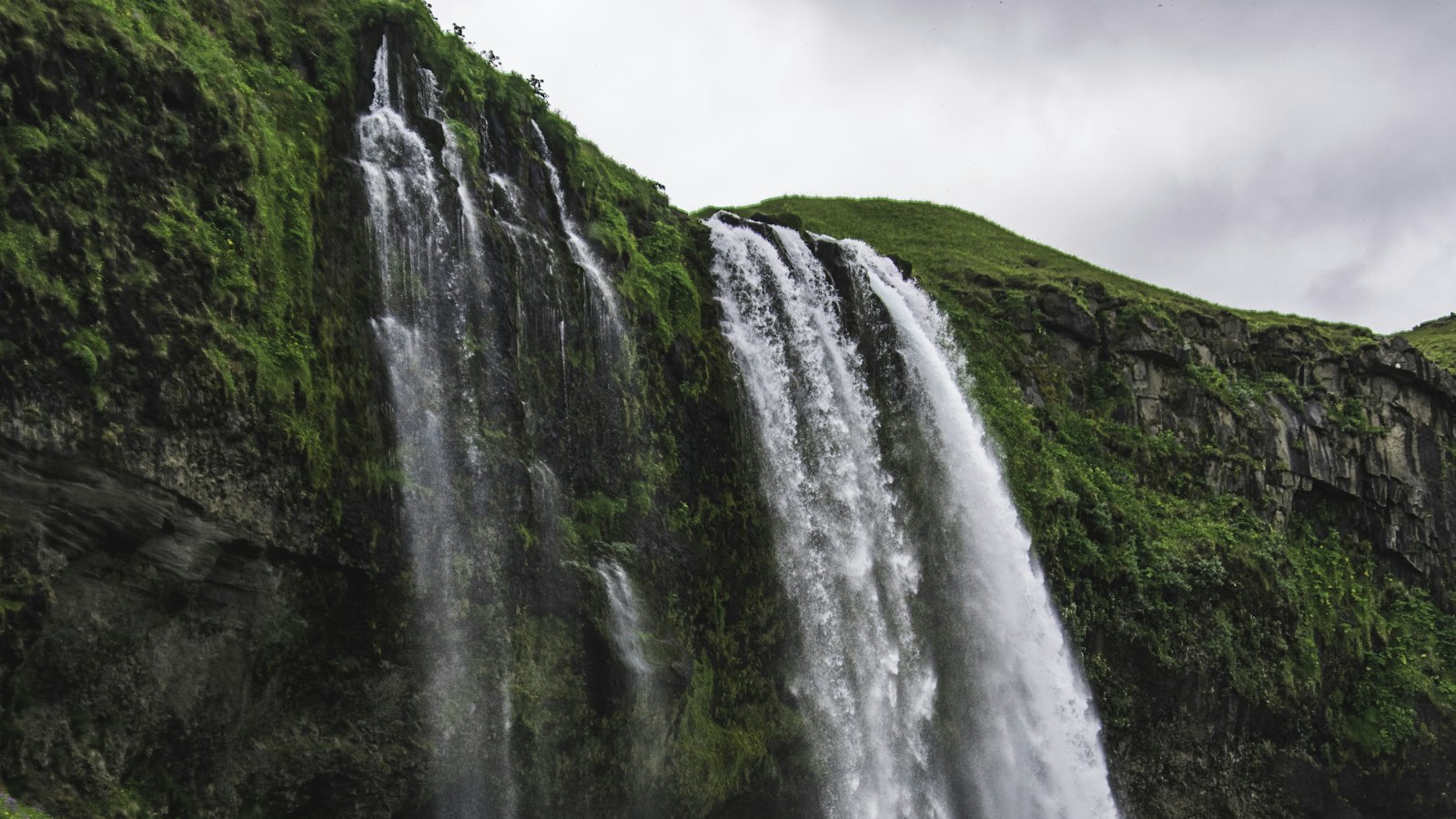
Iceland’s varied landscape is home to an extensive collection of waterfalls, each with its own distinct character. These natural features can be found throughout the island, from the volcanic highlands and glacial rivers to coastal cliffs and remote valleys.
Highlights of Iceland’s waterfalls
Selfoss in North Iceland is known for its wide, low cascade spanning 100 metres, with a series of falls among dramatic cliffs. Located about 160 kilometres from Akureyri, Selfoss is near Dettifoss, the second most powerful waterfall in Europe.
Gullfoss, or “Golden Falls,” sits along the Golden Circle route. The two-tiered waterfall drops a total of 32 metres into a deep canyon, producing a mist that often creates rainbows in the sunlight.
On the Snæfellsnes peninsula, Kirkjufellsfoss is a small fall set against the conical Mount Kirkjufell, providing a notable visual composition that varies with the season, including views of the midnight sun or northern lights.
Seljalandsfoss in South Iceland is a tall waterfall where a walking path allows visitors to pass behind the curtain of water for a different perspective. Nearby, Gljúfrabúi, or “the hidden waterfall,” is tucked inside a narrow gorge that can be accessed by wading a small stream.
Skógafoss, found on the south coast, features a 60-metre drop and a wide curtain of falling water. The ground below is flat for close viewing. The legend of a hidden settler’s treasure behind the falls adds a cultural layer, and visitors can also see the adjacent Skógar Folk Museum.
Háifoss, meaning “Tall Falls,” drops 122 metres into a valley in the Þjórsárdalur area. It is accessible by four-wheel drive or a long hike. The nearby Granni waterfall provides another significant drop close by.
Svartifoss in Skaftafell nature reserve (part of Vatnajökull National Park) is framed by black basalt columns. It is accessible via a marked trail from the Skaftafell visitor centre.
Hengifoss in East Iceland stands at 128 metres and is surrounded by red clay layers and visible fossilised trees. The trail also leads past Litlanesfoss, a smaller waterfall flowing through basalt columns.
Aldeyjarfoss in Iceland’s northern Highlands flows over a 20-metre drop surrounded by colourful and distinct basalt columns, reached by travel along F-roads typically requiring a four-wheel-drive vehicle.
Dettifoss, part of the Diamond Circle route, is regarded as the most powerful waterfall in Europe, fed by glacial meltwater and audible from kilometres away, with a prominent viewpoint on its east bank.
Goðafoss, or “Waterfall of the Gods,” sits on the Diamond Circle route as well. Its horseshoe shape and historical links to a turning point in Icelandic religion make it a culturally significant site.
Dynjandi in the remote Westfjords is the region’s largest, with a distinctive multi-tiered appearance as it falls down a mountainside. The short hike also passes several smaller waterfalls.
Hraunfossar (Lava Falls) is a series of clear water streams emerging from beneath a lava field, flowing into the Hvítá river in Borgarfjörður west Iceland. The falls stretch over a wide distance, offering a striking natural formation.