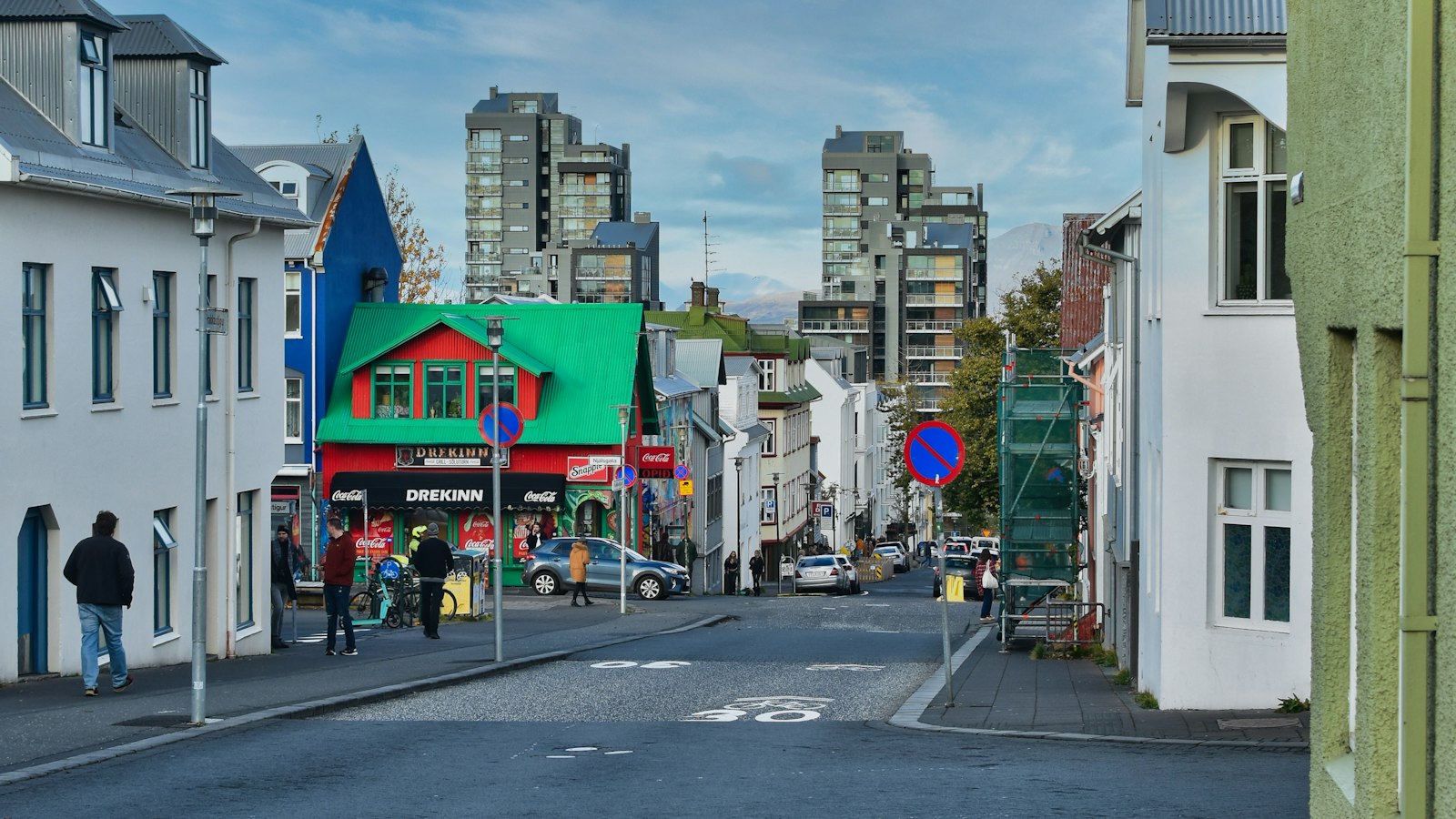
In Reykjavík, the street named Borgartún has witnessed dramatic transformation over recent decades. Once a relatively unremarkable road, it emerged as the heart of the city’s financial sector in the years before Iceland’s economic downturn. Its location, running from Snorrabraut in the west to the intersections with Laugarnesvegur and Sundlaugavegur in the east, makes it one of the capital’s busiest thoroughfares.
A mix of history and modern ambition
Borgartún is a place where contrasting slices of Reykjavík’s identity meet. The most striking modern addition is a 19-floor tower, built as part of the ambitious Höfðatorg project. Although this tower is now part of the city’s skyline, the rest of the development has not been fully realised, leaving an unusual juxtaposition of ambition and incompletion. Its position opposite a quiet residential street has prompted local discussion, with some residents voicing concerns about the clash between high-density construction and established neighbourhoods.
Not far from the new developments stands Höfði, a house constructed in 1909. Its dignified history includes serving as the residence of France’s consul at first. Höfði’s international significance was secured in 1986 when world leaders Ronald Reagan and Mikhail Gorbachev met there for the Iceland Summit, a moment that saw Reykjavík in the global spotlight. Today, Höfði is used by the local municipality primarily for official ceremonies.
The city’s civic and economic core
The western portion of Borgartún has become home to several key offices of the Reykjavík municipality, including a main service centre that consolidates civic duties. This building houses Þjóðskrá Íslands, the national registry, and Statistics Iceland, responsible for gathering and analysing national data. Many other organisations have their headquarters on or near this street, including both banks and embassies. Among them are the embassies of China and Poland, alongside leading financial institutions such as Arion Banki and Kvika Banki.
Practical life in Reykjavík is also shaped by Borgartún’s importance to public transportation. While the city’s Hlemmur station is temporarily closed for renovations, Borgartún serves as a key artery for bus services. Multiple routes now pass through this street, with stops at Rúgbrauðsgerðin and Höfðatorg acting as central transfer points for passengers traversing the city.
Borgartún offers one of Reykjavík’s sharpest contrasts: between quietly historic houses, ambitious modern architecture, and the daily operations at the heart of Iceland’s government and economy. The street stands as a microcosm of the city’s adaptation, where landmarks from different eras exist side by side.


