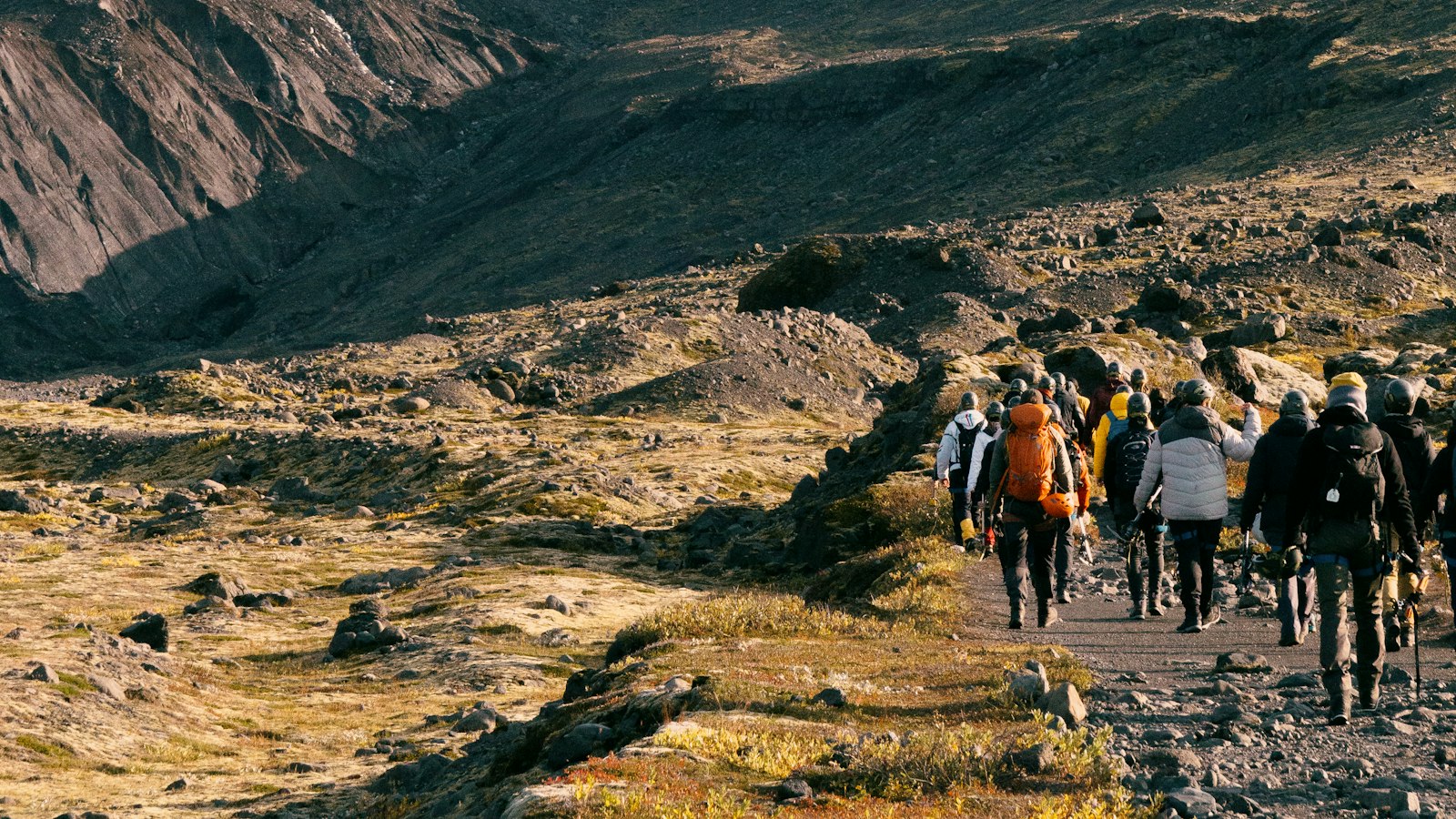
Close to the town of Höfn in southeast Iceland lies Hoffell, an area distinguished by geological activity and a complex natural past. Here, ice, rock and flora intertwine to create a rare landscape, now protected within the boundaries of Vatnajökull National Park since 2008.
The legacy of glaciers and ancient volcanoes
Perhaps the most striking feature around Hoffell is Hoffellsjökull, a large glacier that emerges from the national park, carving through bedrock as it moves. The landscape has been profoundly shaped by glacial erosion, revealing gabbro, a hard, coarse rock that originally formed far below the surface. Over thousands of years, both glacier and weather exposed these deep-seated rocks, resulting in a rugged terrain unique in Iceland.
Geologists have traced the region’s roots to a central volcano centred near Geitafell mountain. Millions of years ago, this volcano, primarily made of thick layers of basalt, hyaloclastite and rhyolite, dominated the skyline as a tall peak, potentially capped with ice long before the modern Ice Age. Today, remnants of its enormous caldera can still be detected in the hills surrounding Hoffell, and cliffs like Geitafellsbjörg are composed of solidified gabbro. This tough rock has even been quarried to become the decorative exterior of Reykjavík’s Central Bank of Iceland.
Hoffellsfjöll mountains also yield a particular mineral that once sparked international interest: Iceland spar, a clear variety of calcite. In the early twentieth century, farmer Guðmundur Jónsson discovered quantities of the crystal while searching for sheep in Hoffellsdalur. The find led to mining and the export of Iceland spar to Europe, where it was prized for its optical properties and used in scientific instruments as well as in Reykjavík’s architecture. Mining ended in 1940, but traces of the industry can still be found in the landscape and in decorative features within the University of Iceland.
An ecosystem of rare plants and northern wildlife
The rugged terrain east of Hoffellsjökull provides habitat for several plant species uncommon in Iceland. Silver saxifrage and green spleenwort cling to rocky crevices and cliffs, supported by the distinctive geology. The region is noted for its rare lichens, which flourish in the area’s birch groves and shrublands. Their conservation is one of the reasons Hoffell holds its protected status today.
Among the animals native to the area are Arctic foxes, field mice and reindeer. Hoffell is also known for its birdlife, with perching birds such as redpolls, redwings, snow buntings, ravens, wheatears, wrens and wagtails. The open land and nearby mountain slopes also attract migratory birds, including golden plovers, greylag geese and fulmars. Ancient walrus teeth and sea urchins discovered on riverbeds below the glacier add another layer to the story, as they indicate that, after the last glaciers retreated, the sea once stretched right up to the glacier’s edge.
Against this backdrop of geological history and living ecosystems, Hoffell continues to represent a dynamic intersection of natural forces and local heritage. Both quiet and enduring, the area offers a living testament to Iceland’s changing Earth.
Sources
- Wikipedia
- Wikipedia (Icelandic) in Icelandic


