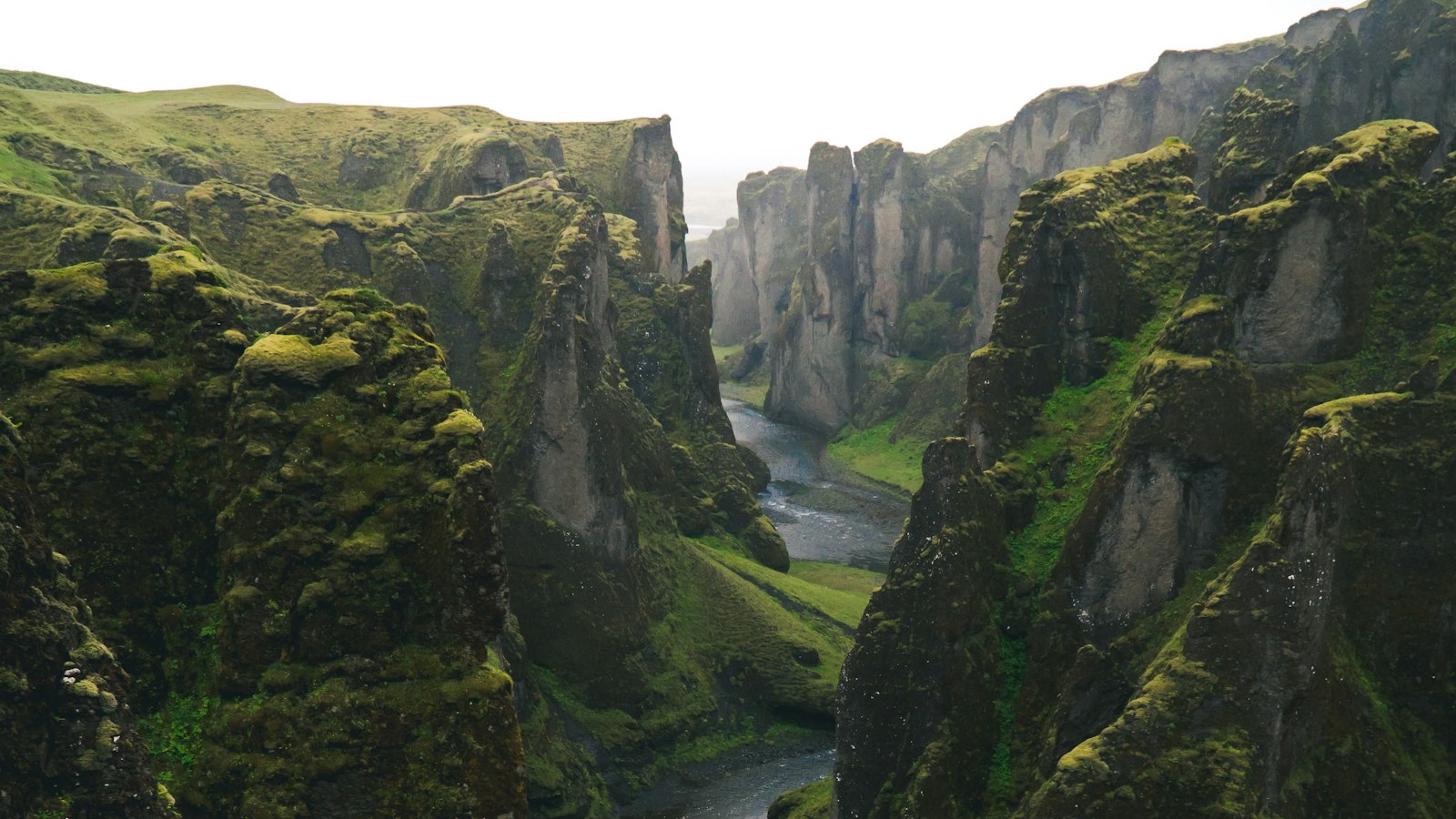
Nestled between hills and plateaus in southern Iceland, Kirkjubæjarklaustur, often simply called Klaustur, sits along the hringvegur (Ring Road), connecting travellers and farmers between Vík í Mýrdal and Höfn. With a population of around 500 inhabitants, it serves as a service centre for the wider rural region and is known for its intriguing history and landscape.
Cloistered past and enduring legends
The village’s name, Kirkjubæjarklaustur, translates as “church farm cloister” in Icelandic. Its origins trace back to the earliest days of settlement. Long before Iceland’s official conversion to Christianity, Irish monks are believed to have lived here, and the area became one of the first places inhabited by Norse settlers. In 1186, a Benedictine convent known as Kirkjubæjar Abbey was founded, remaining active until the Reformation in the 16th century.
The lore of the convent is woven into the place names and local folklore. Sites like Systrafoss (‘waterfall of the sisters’) and Systravatn (‘water of the sisters’) recall the presence of the nuns. By Systrastapi (‘sisters’ rock’), stories tell of two nuns who were executed and buried for alleged crimes ranging from blasphemy to accusations of dealing with the Devil. Folk belief holds that only one nun’s grave blooms with flowers, a subtle reckoning with past injustices.
A village marked by fire and stone
Kirkjubæjarklaustur played a minor yet memorable role in Icelandic history during the dramatic Lakagígar (Laki crater) volcanic eruptions of 1783. Jón Steingrímsson, the local priest, delivered the so-called “Fire Sermon” (‘eldmessa’) at the church. Legend has it that his words stopped the advancing lava, saving the village from destruction. The present church, consecrated in 1974, was constructed in Jón’s memory and stands as a symbol of resilience.
The distinctive landscape adds to the village’s character. Near Kirkjubæjarklaustur lies Kirkjugólf, or “church floor,” a field of exposed basalt columns resembling a manmade pavement. Formed by volcanic activity, it is reminiscent of the Giant’s Causeway in Ireland. Waterfalls such as Systrafoss and Stjórnarfoss, along with Systravatn, are landmarks tied to both natural history and local tales.
Kirkjubæjarklaustur remains a social and practical hub for the surrounding farms as well as a waypoint for those exploring the south, offering basic amenities such as a supermarket, post office and health services. It also houses a visitor centre for Vatnajökull National Park, opened in 2024, reflecting the area’s ongoing role in connecting nature, community and heritage.
Adding a modern chapter to its story, the village hosted film crews during the production of the 2014 film Interstellar, when every hotel room was reportedly booked by director Christopher Nolan’s team and actors.
Sources
- Wikipedia
- Wikipedia (Icelandic) in Icelandic


