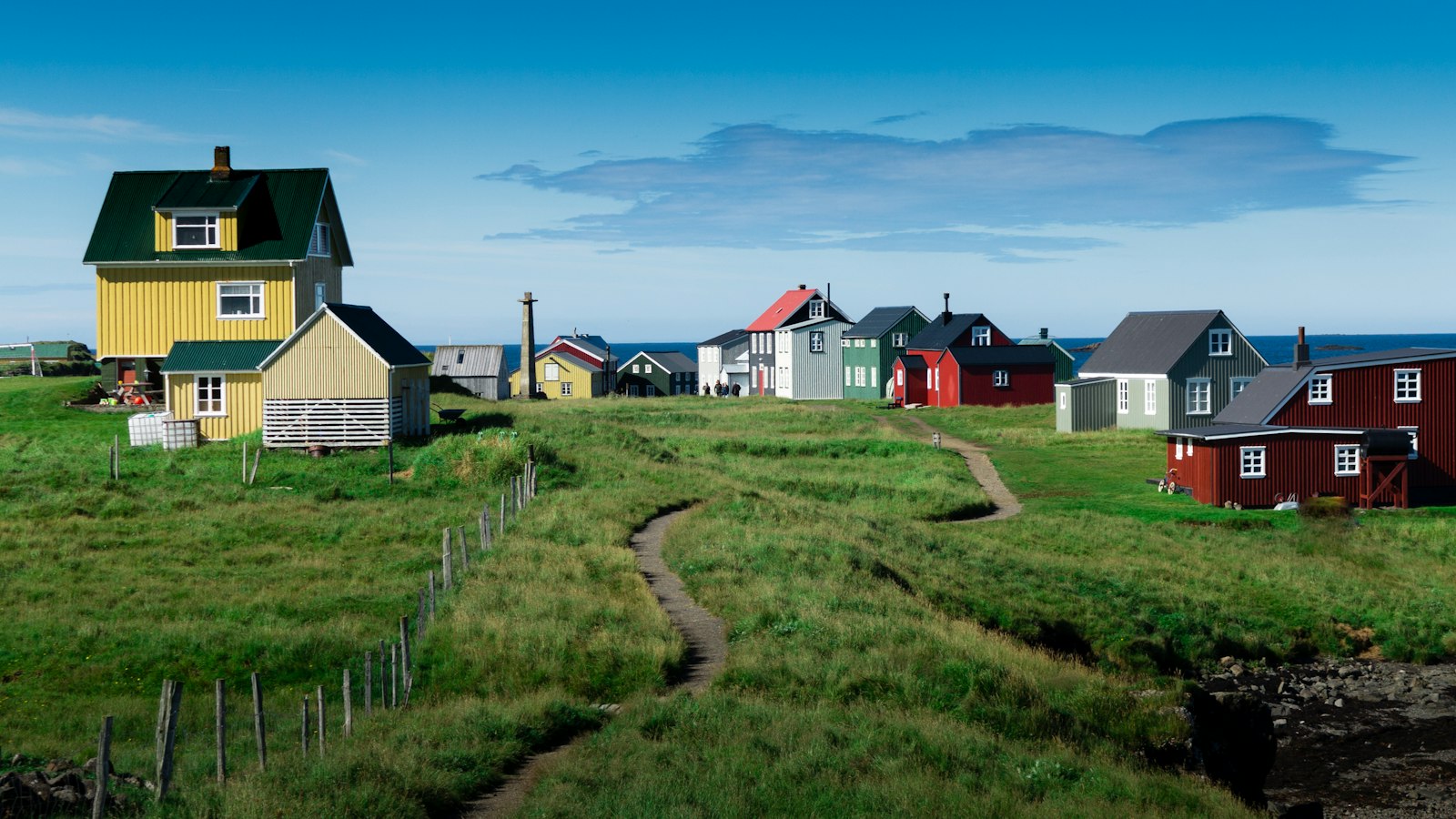
Keldur, situated in the Rangárvellir area of southern Iceland, is a remarkable site for those interested in the island’s deep past. At its heart stands a cluster of traditional turf-covered buildings that speak volumes about how Icelanders once adapted to their harsh environment.
Layers of history beneath the turf
The oldest part of Keldur’s manor house dates to the 11th century, making it the oldest standing house in Iceland. For centuries, it formed a key residence for local chieftains, including notable figures such as Jón Loftsson and his descendants. These dwellings, numbering about 20, were inhabited until as recently as 1946. Today, the site operates as a museum, preserving the layered centuries of domestic life on the farm.
One of Keldur’s most fascinating features is an underground passage, known as a jarðhus in Icelandic. Such tunnels are familiar from Iceland’s medieval literature, including the famous Njal’s saga. The Keldur passage, which leads from the main building to the farm stream, was forgotten for many years before being rediscovered in a 1998 archaeological dig.
Landscape shaped by eruption and sand
The land around Keldur has been shaped not only by human hands but also by the geology of Iceland itself. To the north looms Mt Hekla, one of Iceland’s most famous volcanoes. An eruption in 1511 laid down thick pumice deposits south and southwest of Hekla. Over time, relentless winds carried sand southwards, gradually turning once fertile land into a sandy, barren expanse. By the mid-1800s, areas that had previously supported several farms were buried beneath black volcanic sand. Archaeologists have since counted up to 18 sets of farm ruins in the area that now belongs to Keldur.
Local farmers have long struggled to preserve what arable land survives. Although the threat from drifting sand continues, recent efforts have managed to slow the loss of pasture around Keldur.
The spiritual life of the community is marked by Keldnakirkja, the village church. Keldur has had a church since its earliest days, with the current timber church, now reinforced with iron, constructed in 1875.
Keldur’s enduring turf buildings, the hidden tunnel, and the changes wrought by volcanoes all reflect how Icelanders have survived at the edge of possibility. The site’s inscription on Iceland’s tentative world heritage list highlights both its historical importance and the ingenuity of traditional Icelandic architecture.
Sources
- Wikipedia
- Wikipedia (Icelandic) in Icelandic


