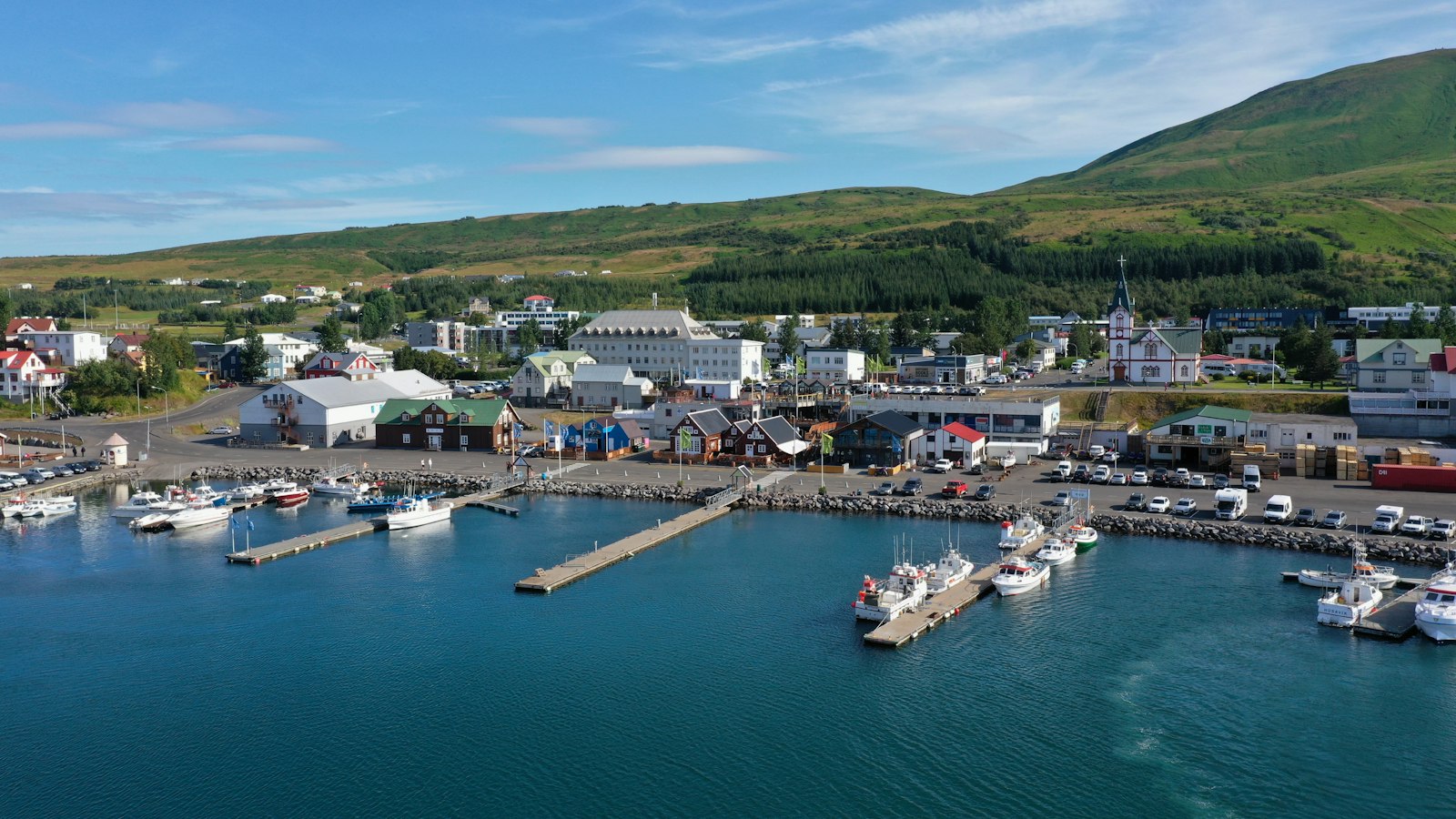
Nestled at the mouth of Eyjafjörður in the northeast of Iceland, Ólafsfjörður has long felt the influence of its dramatic coastal setting. This small town sits where the land meets both sea and mountain, and its fortunes have been closely tied to the resources and challenges of this unique geography.
A community built on fishing and herring
Fishing has stood at the heart of Ólafsfjörður’s identity for generations. In the mid-1900s, the herring industry propelled the town into rapid growth, drawing new residents and shaping daily life. By 1950, Ólafsfjörður counted 947 inhabitants, a significant increase from just 192 in 1910. Today, while herring are no longer found in the same abundance, the town still relies heavily on fishing. Local companies continue to export dried fish as far as Nigeria, and the harbor remains busy with the activity of trawlers calling this fjord home.
Tourism has also come to play a supporting role in the town’s economy, yet the rhythm of Ólafsfjörður is still strongly influenced by the sea and its catch. Nearby, limited agriculture continues in the valley, though on a much smaller scale than fishing.
Connecting through mountains
Despite its coastal location, the isolation of Ólafsfjörður was once pronounced. For much of its history, the only ways in or out were across mountain trails, on horseback, by ship, or by seaplane. The first real road access came in 1940, greatly improving the flow of people and goods. In 1991, the Múlagöng tunnel, stretching 3.4 kilometres, connected the town year-round to Dalvík to the south.
Further integration came with the 2010 opening of the 11 kilometre Héðinsfjörður Tunnels, linking Ólafsfjörður to Siglufjörður. These advances have made travel and communication far easier, particularly in winter when older mountain roads often closed due to weather. The town, once separate, became even more closely bound with its neighbours when its municipality merged with Siglufjörður in 2006, forming Fjallabyggð, which means Mountain Settlement.
Everyday life and community spirit
Ólafsfjörður’s modern life is marked by a surprising number of sports clubs and facilities for such a small population. The town offers year-round activities ranging from football and skiing to equestrian events and competitive shooting. The geothermal outdoor swimming pool, common across Icelandic towns, is open throughout the year, even during the coldest months.
The local church, Ólafsfjarðarkirkja, stands as a landmark since its opening in 1915; it was built large enough to seat two thirds of the population at that time. Outside, a monument to drowned seamen is a solemn reminder of the risks faced by fishing families. As of 1 January 2024, 762 people live in Ólafsfjörður, maintaining traditions while adapting to the opportunities presented by improved transport and community initiatives.
Sources
- Wikipedia
- Wikipedia (Icelandic) in Icelandic


