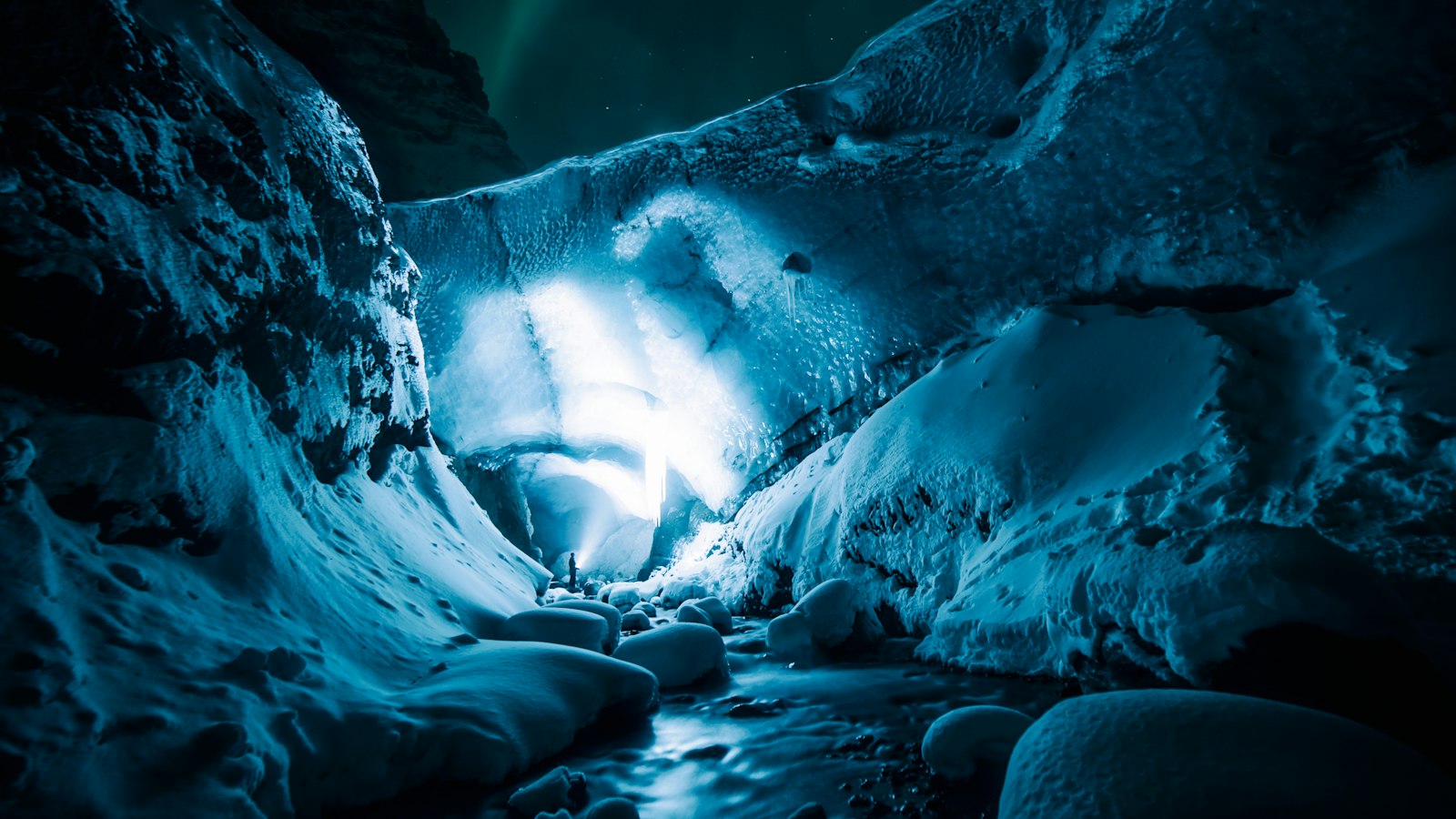
In the interior of Iceland, bordered by the country’s two largest glaciers, sits Hofsjökull. Its Icelandic name means “temple glacier,” and this mass of ice and volcanic activity defines the wild heart of the highlands. Stretching over 830 square kilometres, Hofsjökull is both the third largest glacier in Iceland and an important source for several of the nation’s rivers.
A landscape shaped by ice and fire
The glacier’s highest summit stands at 1,782 metres, while most of its base lies nearer to 600 metres above sea level. Flowing downhill from its bulk are outlet glaciers such as Múlajökull and Blöndujökull, connecting the main ice cap to the valleys below. Historically, the glacier was once called Arnarfellsjökull after a nearby mountain but is now named after the farmstead Hof in Skagafjörður.
Underneath its thick layer of ice, Hofsjökull conceals an active central volcano, including a broad caldera (or volcanic crater) clearly visible on satellite images and through ice-depth surveys. There is ongoing seismic activity beneath the glacier, which points towards a living magma chamber below. No one knows exactly when its caldera formed or when it last erupted. Most recent eruptions here, within the past 10,000 years, have been relatively small. Today, the volcano’s most visible eruptions are the lava tongues that have broken free from the glacier’s edge at different times since the end of the last Ice Age.
Source of rivers and changing climate
Hofsjökull plays a central role in Icelandic hydrology. It is the origin of some of the island’s largest rivers, including Blanda and Þjórsá, the latter being Iceland’s longest. Water from Hofsjökull travels across the lowlands to power hydroelectric plants, irrigate fields, and shape the land and lives of many communities.
Like Iceland’s other glaciers, Hofsjökull has responded to changing climate. From 1989 to 2015 it lost about 12% of its volume, approximately 25 cubic kilometres of ice. Yet, in 2015, after a wet year and a mild summer, the glacier actually gained mass, a first in two decades. Scientists model that runoff from Hofsjökull’s melting ice could increase by half before 2100, temporarily swelling rivers, before beginning to decline as the ice dwindles. Projections suggest the glacier itself may disappear entirely within two centuries.
Sources
- Wikipedia
- Wikipedia (Icelandic) in Icelandic


