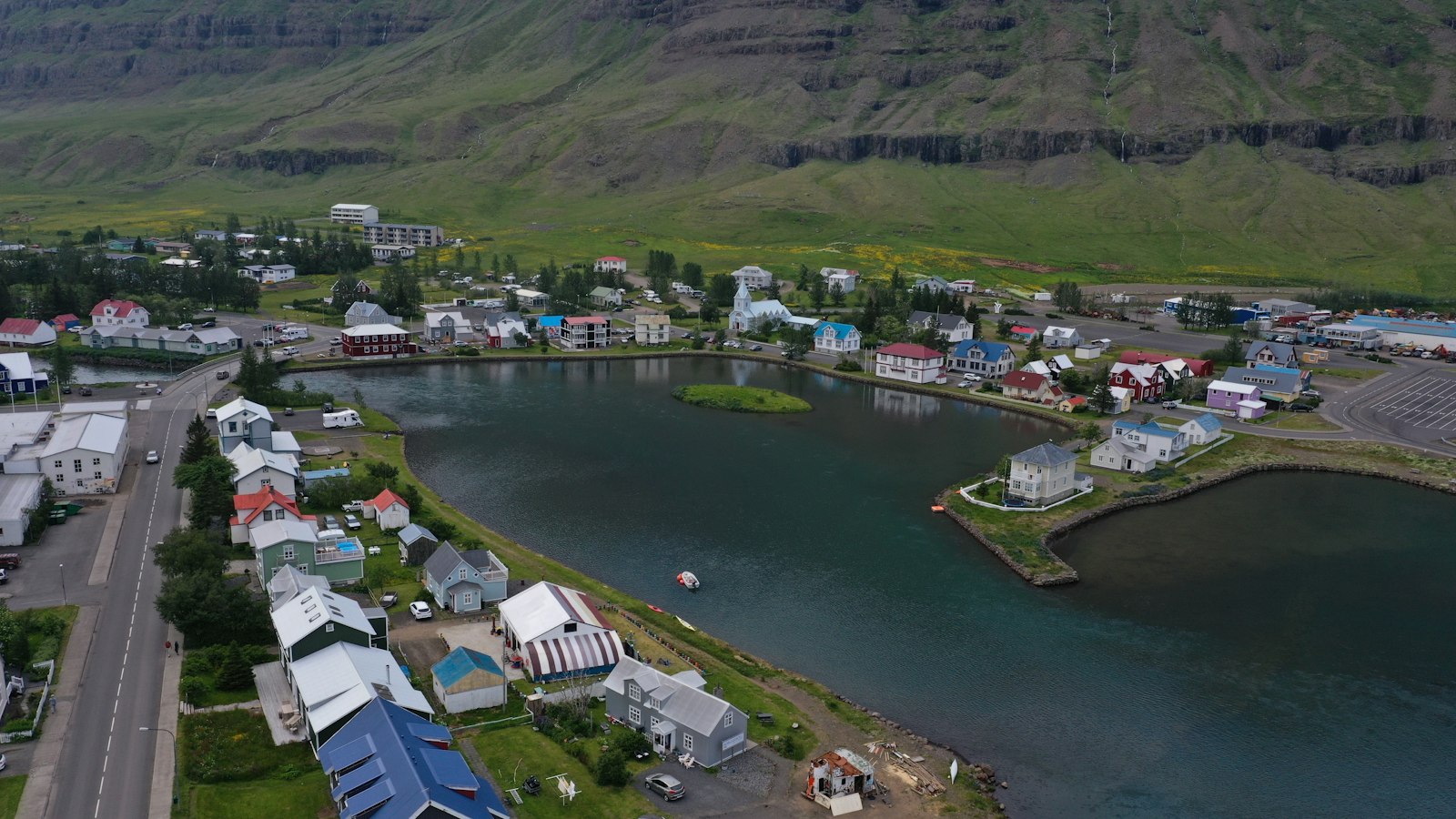
Tucked away on the shores of a slender fjord in East Iceland, Mjóifjörður stands out as the country’s smallest village. Surrounded by steep hills and frequently cloaked in clouds and mist, this settlement is nestled in the eastern region’s Fjarðabyggð municipality. The fjord’s name, meaning “narrow fjord” in Icelandic, suits both the setting and the scale of life here, only a handful of people call it home.
A place shaped by weather and waves
Mjóifjörður and the wider area are known for persistent humidity and cool temperatures throughout the year. Its climate is classified as tundra, with no monthly averages climbing above 10°C. Despite these chill conditions, even the heart of winter rarely dips below freezing. Long stretches of rain are common, with all but June seeing over 100 millimetres of precipitation. October tops the charts, averaging more than 200 millimetres. Still, local records reveal stark weather contrasts: from a biting −19.2 °C in April 1968 to a balmy 26 °C in September 1949.
Weather observations in the area are taken at Dalatangi, a coastal headland close to the village, where an automatic station monitors local conditions. This reliable presence offers insight not only for locals, but also for anyone interested in the climate of this remote fjordland.
From whaling outpost to close-knit community
More than a century ago, the isolated character of Mjóifjörður made it a hub for another form of seafaring: Norwegian-operated whaling. Vestiges of this past are woven into the local story, with old buildings and memories lining the shoreline. Though the population never grew large, the settlement retained significance as a waystation and communication point, thanks in part to the Dalatangi lighthouse.
One of the village’s most distinctive features is Mjóafjarðarkirkja, the church in the hamlet of Brekka. Built in 1892, it is crafted from wood and can seat around 100 people, far more than the current residents. A turret along the ridge and historic furnishings inside, including an altarpiece from 1871, signal the depth of its heritage. The church itself has roots going back centuries, appearing in written records from as early as 1092. A full renovation brought new life to the building in 1992, helping it remain a focal point for the area despite the dwindling local population.
Today, essential services like a small primary school, a hotel, and a camping site help support village life. The other settlements of Fjarðabyggð, Eskifjörður, Fáskrúðsfjörður, Neskaupstaður, Reyðarfjörður and Stöðvarfjörður, are all larger, each with their own character, but none match Mjóifjörður’s intimacy, endurance, or sense of seclusion.


