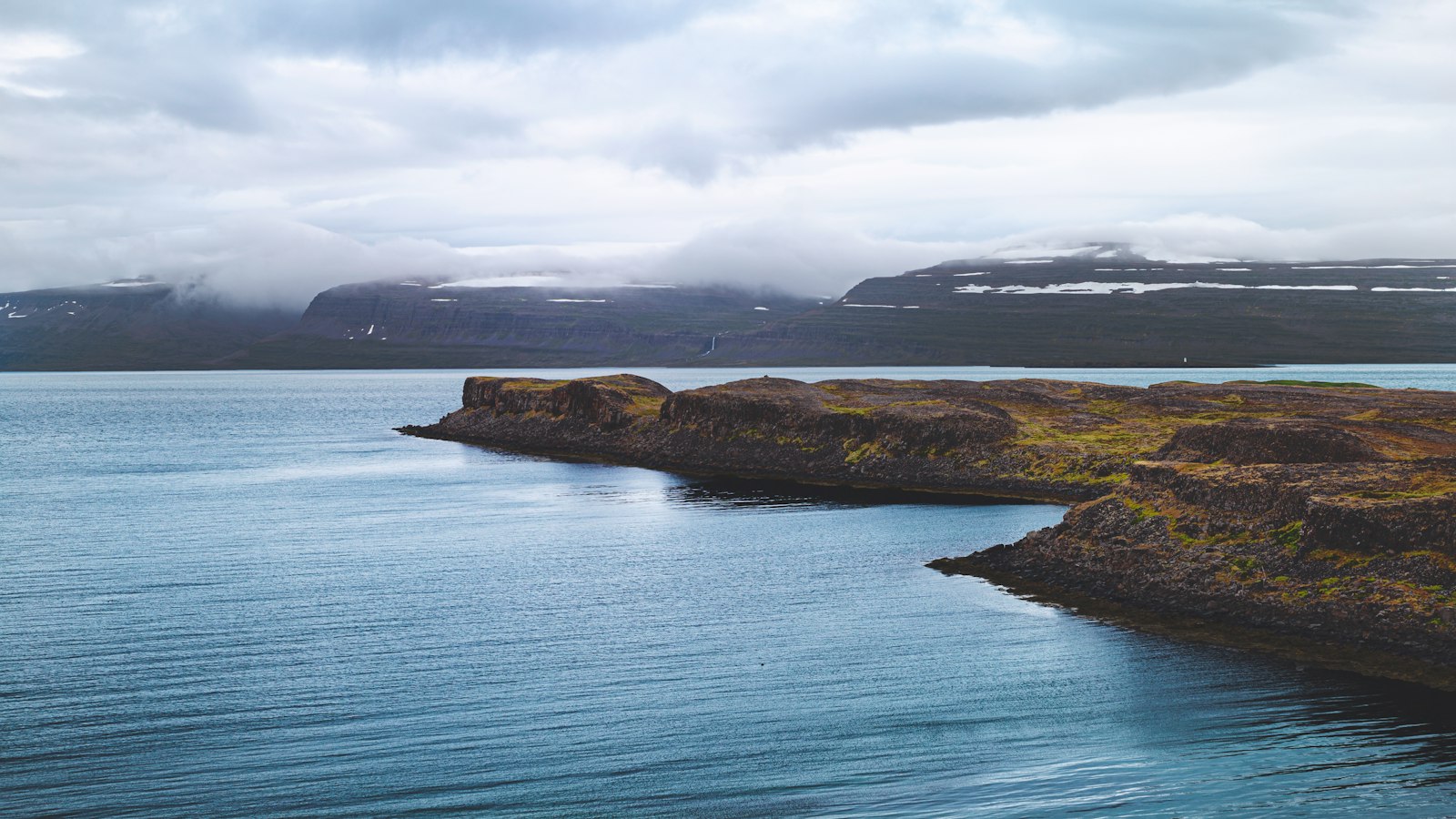
Breiðafjörður, meaning “wide fjord” in Icelandic, is a broad and shallow bay on Iceland’s west coast, separating the mountainous Westfjords from the Snæfellsnes peninsula. Stretching approximately 50 km across and 125 km in length, this bay is famous for its intricate seascape dotted with around 3,000 islands, islets, and skerries, the greatest concentration of such in the country.
Ancient bedrock and shifting tides
The geology of Breiðafjörður tells a story of time and movement. To its north, the land was created roughly 15 million years ago, while the southern coastline is less than half as old. These contrasting origins came about through volcanic and tectonic activity. The area’s bedrock, much of it basaltic lava, was formed during the late Tertiary period and then dramatically reshaped by glaciers during the last ice age. The result is a deeply indented coastline and a complex bedrock, including rare anorthosite rock found on the island of Hrappsey, a mineral also seen on the moon.
Tides bring further transformation to Breiðafjörður, with differences between high and low reaching up to 6 metres. About a quarter of all Iceland’s intertidal area is found here, supporting extensive algal forests dominated by Ascophyllum nodosum seaweed and creating rich habitats for a variety of marine life.
A haven for wildlife and human history
The biodiversity of the bay and its islands is exceptional, making it vital for both birds and marine species. It is an important nesting and migratory site for seabirds like the common eider, puffin, glaucous gull, and the rare white-tailed eagle, approximately 70 percent of Iceland’s white-tailed eagle population thrives here. Common and grey seals haul out on the skerries, and several cetacean species, such as porpoises, dolphins, orcas, and minke whales, are frequent visitors to the bay’s waters.
Breiðafjörður’s islands have a long unbroken history of human use. Flatey, now the only island with year-round inhabitants, preserves a village core of buildings from the late 19th and early 20th centuries. In the Middle Ages, Flatey was home to a monastery of Augustine monks and became a cultural centre, notably as the site where the medieval saga manuscript Flateyjarbók was written.
For centuries, islanders have relied on a combination of fishing, bird harvesting, collecting eggs and down, and seal hunting. Seaweed, especially Ascophyllum, remains an important resource, managed under a strict quota monitored by the Icelandic Marine Research Institute, with harvesting at the same locations allowed only every four or five years. The region even supports sea salt production using geothermal energy, a tradition that began locally as early as 1753.
Despite its remote and rugged appearance, Breiðafjörður has long been economically significant. Beyond fisheries and resource harvesting, the bay is a spawning ground for key fish and invertebrates. Ferry routes like the one from Stykkishólmur link the bay’s shores and connect Flatey and the Westfjords, continuing Breiðafjörður’s legacy as a point of contact and passage in west Iceland.
Sources
- Wikipedia
- Wikipedia (Icelandic) in Icelandic


