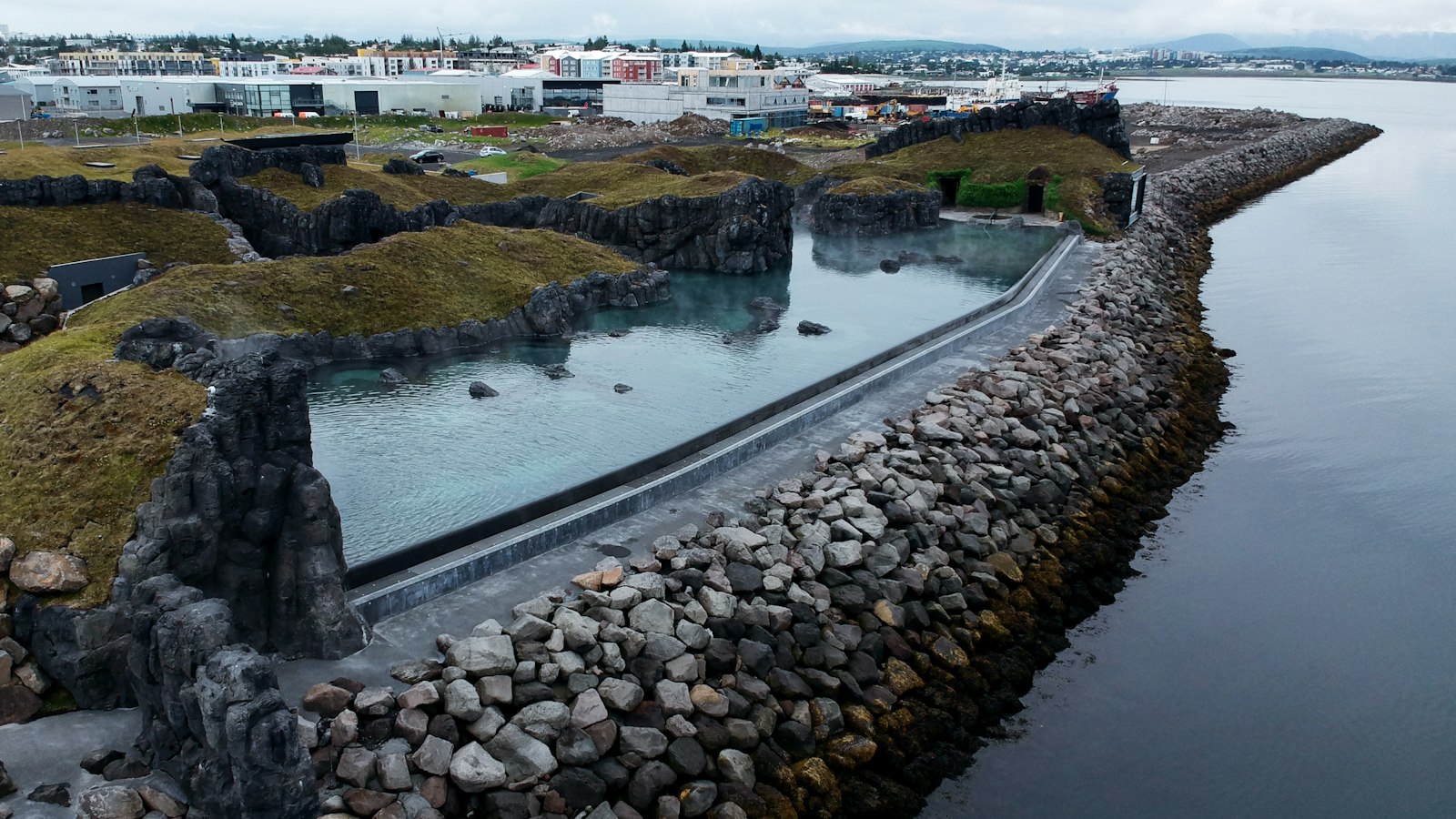
Iceland is well known for its abundant hot springs, a result of the island’s unique geothermal activity. Ranging from internationally recognised spas to simple pools deep in the countryside, these hot springs have long been popular places to relax, socialise and enjoy the surrounding landscapes.
Geothermal marvels and iconic spas
Perhaps the most famous of all Icelandic hot springs is the Blue Lagoon, located on the Reykjanes peninsula near Keflavík International Airport and Reykjavík. The Blue Lagoon’s mineral-rich, light blue waters are heated by geothermal activity and have been attracting guests since its accidental creation in 1976. The site has developed into a full resort, with hotels, restaurants and spa facilities.
The Mývatn Nature Baths in the north of Iceland are sometimes described as a more affordable counterpart to the Blue Lagoon. These baths share the same striking colour and geothermal heat, with the added appeal of spectacular natural scenery around Lake Mývatn.
For those interested in a spa by a lake, the Fontana Geothermal Baths are located at Laugarvatn near the popular Golden Circle sightseeing route. These pools sit beside the lake and offer visitors the chance to sample bread baked in geothermal-heated sand.
GeoSea Sea Baths in Húsavík stand out for being filled with mineral-rich geothermally heated seawater. The pools provide views over Skjálfandi Bay, the mountains and the ocean. Facilities include a small restaurant and modern changing areas.
Secluded pools and historic sites
Beyond the large spas are dozens of more basic hot springs, many with historical significance. Seljavallarlaug, on Iceland’s south coast near Skógafoss and Seljalandsfoss waterfalls, is a man-made pool dating from 1923, fed by naturally hot water from the hillside. The Secret Lagoon near Flúðir is one of the oldest pools in Iceland, first established in 1891 and still bubbling with geothermal water alongside a small erupting geyser.
Other remote options include Krossneslaug and Hellulaug in the Westfjords, both reached by long drives and gravel roads through dramatic scenery. Grettislaug, named after the legendary saga hero Grettir, overlooks the sea and island of Drangey in North Iceland. Guðrúnarlaug, in West Iceland, is linked to the 13th-century sagas and recently restored after a landslide kept it hidden for over a century.
Near Reykjavík, the Kvika Foot Bath offers shoreline views beside the Grótta lighthouse, while Reykjadalur (“Steam Valley”) provides a warm river for bathing after a hike through the geothermal hills near Hveragerði.
Not all geothermal areas are suitable for bathing. At Geysir, the namesake of all the world’s geysers, the water is far too hot, but the geothermal landscape is an impressive sight with erupting geysers, mud pots and fumaroles. Brimketill, a pool on Iceland’s southwest coast, is actually cold seawater rather than a hot spring, but is known for its dramatic setting on black lava.
Many of these hot springs charge a small fee, especially those with updated facilities, while others are still free and quite rustic. It’s always important to check which springs are safe for bathing before visiting.