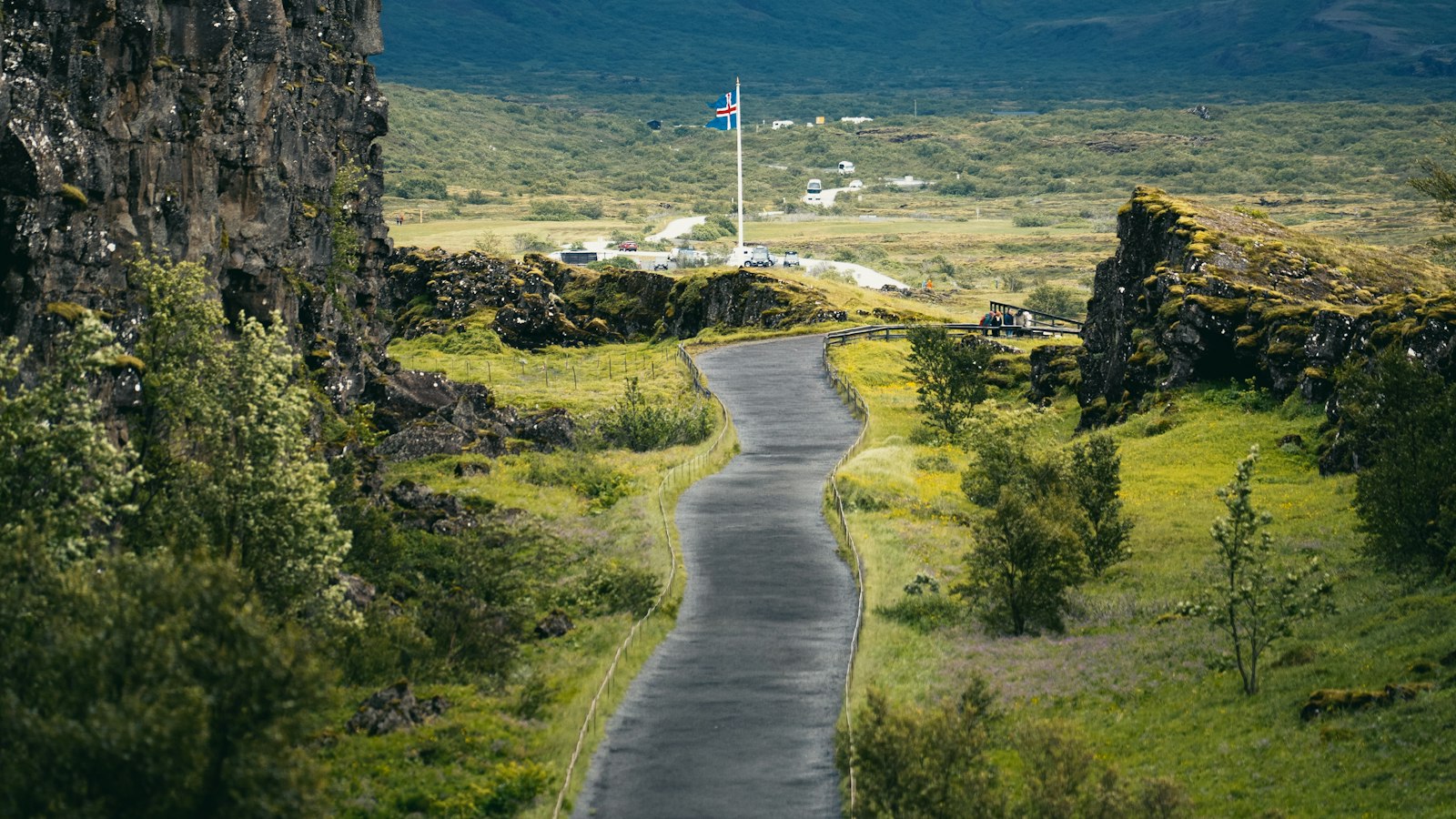
In the heart of southwestern Iceland lies a landscape that holds a unique place in the nation’s identity. Þingvellir, an expanse of grassy plains set beside Iceland’s largest natural lake and traversed by rivers and rocky gorges, is both a geological wonder and the ground where Iceland’s earliest experiments with representative governance began.
An assembly field rooted in history
More than a thousand years ago, the need for joint decision-making among scattered Norse and Celtic settlers led to the birth of a national gathering in this region. In the year 930, the Alþing, one of the world’s oldest surviving parliaments, first convened at Þingvellir. The decision came at a time when regional assemblies existed, but a unified forum was required, especially as powerful families vied for influence.
Chosen not only for its central location but also because its landowner had forfeited his property after being found guilty of murder, Þingvellir’s assembly field, whose name means “assembly fields” in Old Norse and Icelandic, became a gathering place for chieftains, traders, and families each summer. For two weeks, thousands would arrive, setting up turf-walled booths and makeshift tents. Beyond the legal proceedings, markets, storytelling, games, and news from distant farms made Þingvellir the centre of Icelandic social life.
At the heart of the assembly stood the Law Rock, or Lögberg. Here, the Lawspeaker proclaimed laws and announced rulings, while the Law Council debated and legislated on the affairs of the land. Key moments for the entire nation, calendar confirmations, legal decisions, and even the adoption of Christianity around the year 1000, were shared from this spot.
Þingvellir as national memory and symbol
Though the Alþing continued at Þingvellir until 1798, external powers gradually asserted more control, and by the 19th century the site had become more a focus of national pride and collective memory than lawmaking. It was here in 1944 that Iceland was declared a republic, and artists like Jóhannes Kjarval drew lasting inspiration from its landscape.
Þingvellir was protected as a national park by an act of parliament in 1928 and was formally established in 1930, coinciding with the 1000-year anniversary of the Alþing’s foundation. The park has since been expanded, preserving not only historical sites but the distinctive geography of the rift valley at the boundary of the North American and Eurasian tectonic plates, and its striking waterfalls and lakes.
A short walk from the church stands a national cemetery containing the graves of prominent Icelandic figures, including poets Jónas Hallgrímsson and Einar Benediktsson. The area draws Icelanders for reflection and ceremony, taking on the qualities of a secular shrine, as a political scientist suggested, a site where the nation gathers, remembers, and marks important occasions.
The modern Alþing now sits in Reykjavík, but for many, the spirit of Icelandic self-rule, community, and creativity remains tied to the fields, rocky outcrops, and stories of Þingvellir.
Sources
- Wikipedia
- Wikipedia (Icelandic) in Icelandic


