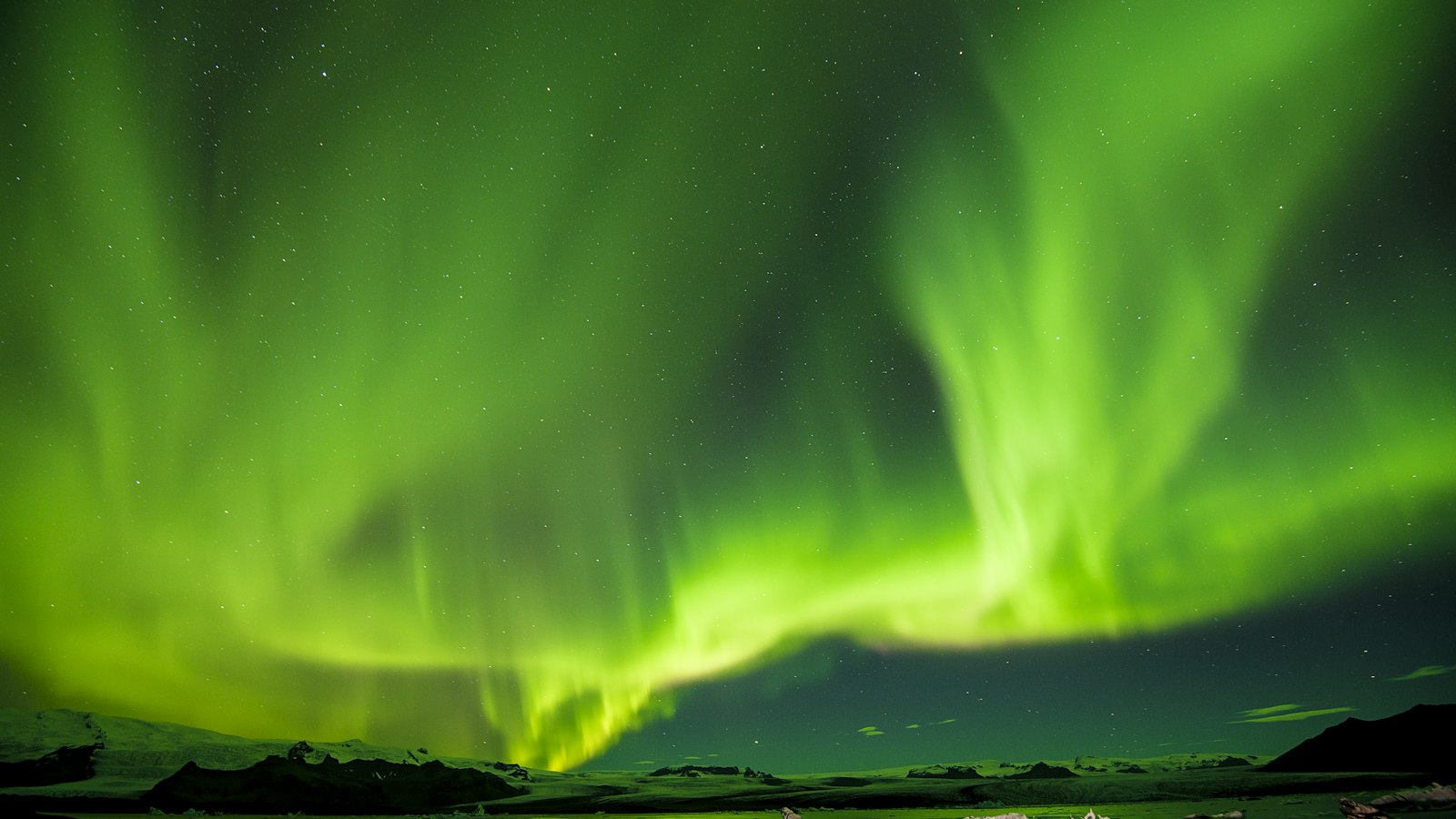
Each winter, Iceland’s skies are filled with the dancing colours of the Northern Lights, or Aurora Borealis. The phenomenon is visible from September to April, giving visitors a broad window of opportunity to see one of nature’s most famed spectacles.
Iceland’s position near the Arctic Circle means it experiences long, dark nights for much of the year. Combined with generally low levels of light pollution outside the main cities, these conditions make it one of the top destinations for viewing the Northern Lights. The aurora can often be seen for longer durations than in other northern countries.
Experiencing the aurora across Iceland
Travellers have many options to enjoy the Northern Lights. Accommodation ranges from basic cabins to luxury hotels, and some choose to camp out under the stars. There are also Northern Lights boat tours that offer a unique vantage point away from the lights of Reykjavík, the capital.
For those looking for adventure, guided experiences include horseback riding or snowmobiling under the open skies. Each offers the chance to enjoy the lights in a memorable setting, with various options available depending on one’s interests and budget.
A season of winter activities
Iceland’s winter is not only about the aurora. The season brings opportunities for skiing, snowboarding, ice climbing, and dog sledding. Both urban and rural regions offer access to Icelandic cultural events, along with a growing food and drink scene, meaning there is plenty to explore after a night spent watching the skies.