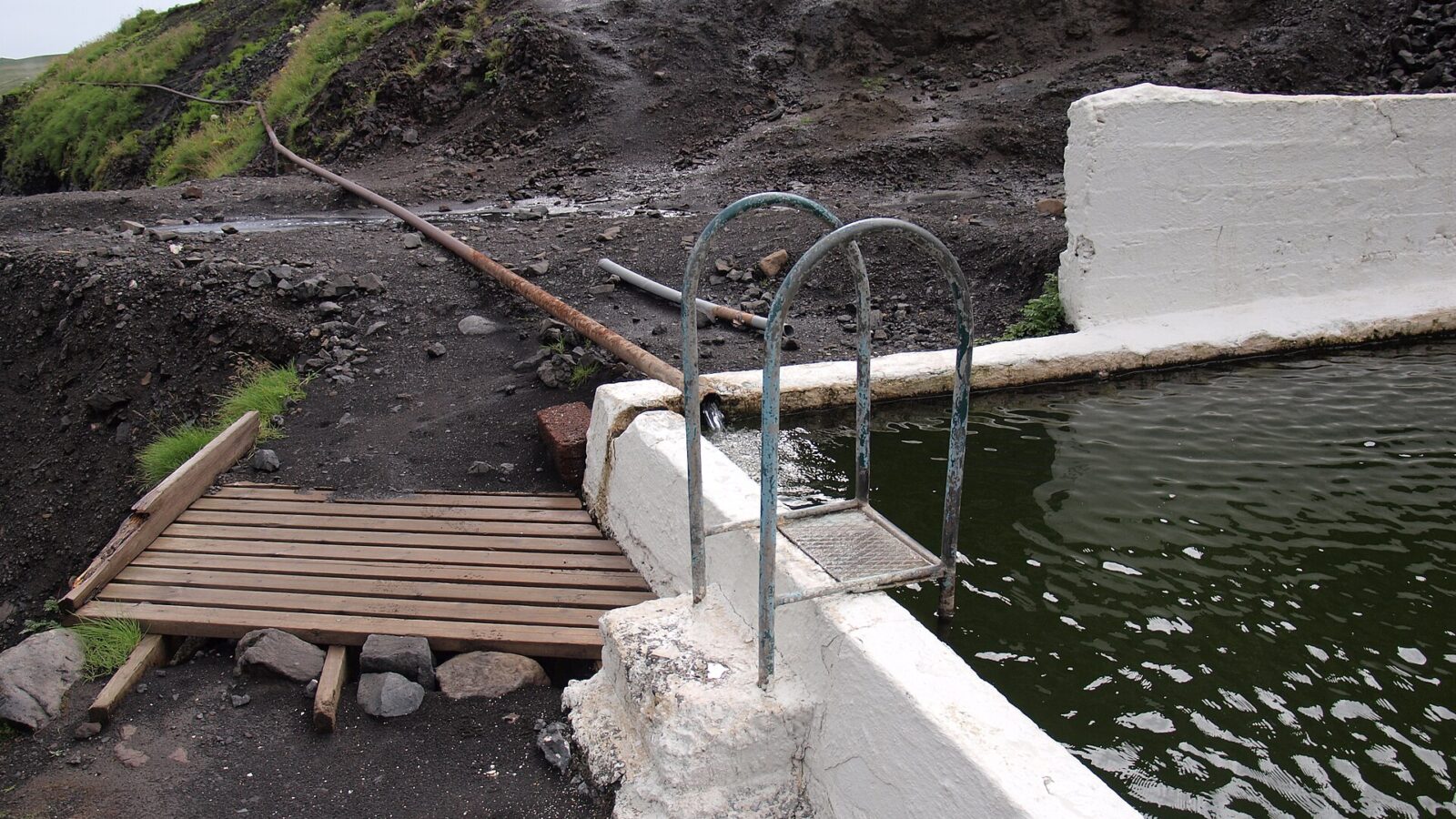
Seljavallalaug, located at 63.5662 N, 19.6076 W in the South Iceland region known as Suðurland, stands as a distinctive piece of Icelandic heritage. This 25-metre outdoor pool in Mýrdalshreppur municipality is protected for its historical significance. Constructed in 1923 not far from Seljavellir, it ranks among the oldest swimming pools in the country.
Björn Andrésson Berjaneskoti headed its construction, working with the local youth association Ungmennafélagið Eyfelling. When it was first built, Seljavallalaug measured 25 metres in length and 10 metres in width, making it the largest pool in Iceland until 1936. Its existence marked a milestone in the development of public swimming.
In 1927, the pool became the site of swimming instruction as part of the national curriculum, linking rural education to aquatic safety and skills. This coincided with the adoption of similar education policies elsewhere, such as in Vestmannaeyjar.
Although a newer pool was constructed about two kilometres closer to the valley in 1990, Seljavallalaug continues to attract swimmers who visit at their own risk and at no cost. The pool is only cleaned once every summer, so caution is needed, especially due to the accumulation of algae between cleanings.
Seljavallalaug has also endured natural challenges. Following the 2010 eruptions of Eyjafjallajökull volcano, the pool filled with volcanic ash. Early in the summer of 2011, volunteers came together, equipped with loaders and excavators, to remove the ash and restore the pool, illustrating the ongoing relationship between the site and the surrounding landscape.
Sources
- Wikidata
- Wikipedia (English)
- Wikipedia (Icelandic) in Icelandic
Image: JIP / Wikimedia Commons (CC BY-SA 3.0) · licence, original (resized) Illustrative image.
Facts last reviewed 18 October 2026. Published 19 October 2026.