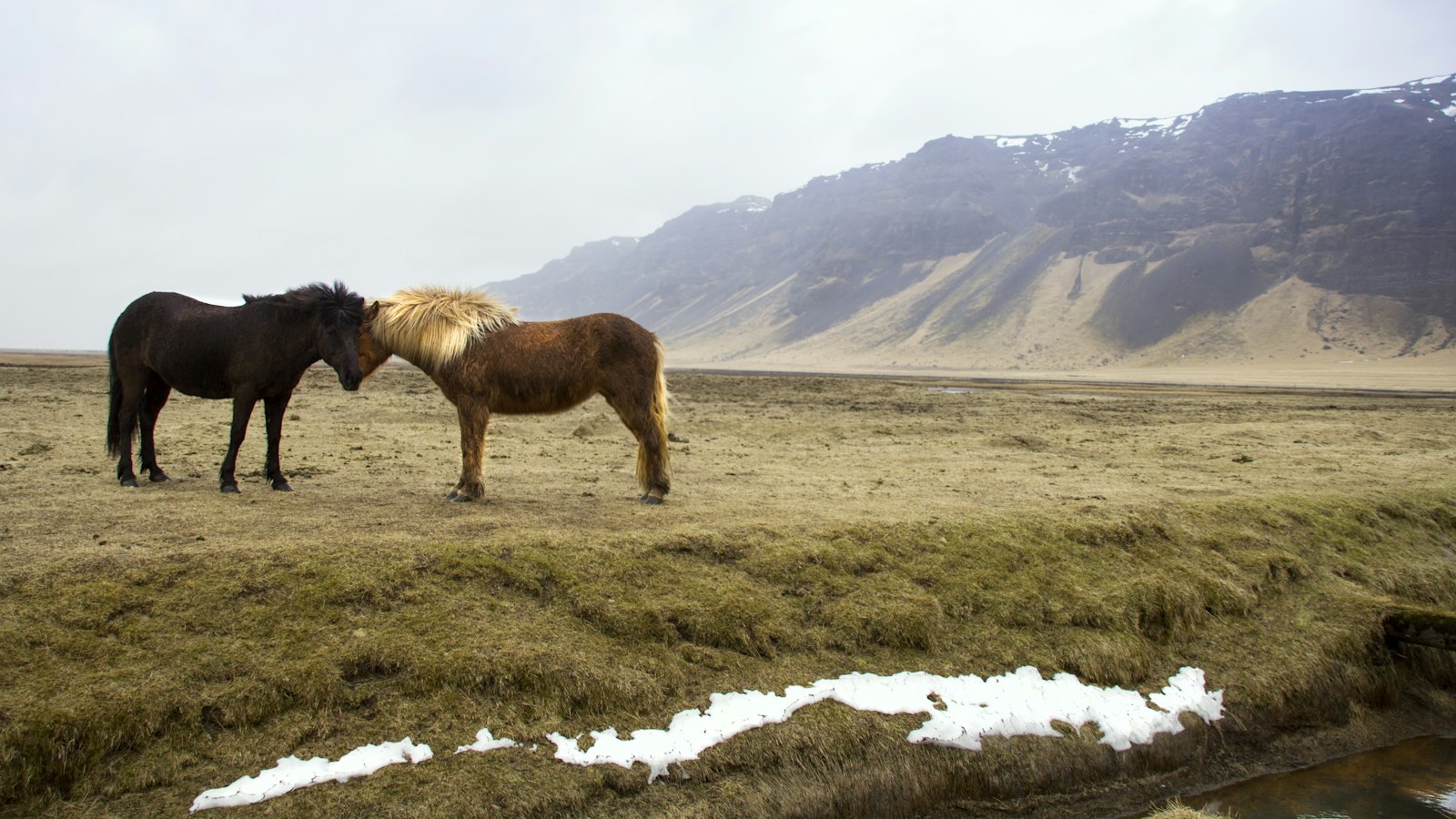
In the windswept landscapes of Iceland, one animal has become as central to the island’s life and identity as the glaciers and volcanoes: the Icelandic horse (íslenski hesturinn). These sturdy horses have roamed the countryside since Norse settlers arrived more than a thousand years ago, and they remain the only breed allowed on the island.
Adapted to a harsh environment
Generations of isolation in an unforgiving climate have shaped the Icelandic horse. Early Norse settlers brought their horses to Iceland during the ninth and tenth centuries, and subsequent arrivals introduced breeds from Ireland and Scotland. Over time, only the strongest survived the challenging weather and scarce resources. Harsh winters and natural selection made the Icelandic horse renowned for robust health, endurance and a double-layered coat that keeps it warm throughout Iceland’s coldest months.
Icelandic horses are not tall by most standards. With a typical height of 132 to 142 centimetres (13–14 hands), they are pony-sized in many countries but are always called horses in Iceland, a status that reflects their weight, spirited personality, and strength. Weighing 330–380 kilograms (730–840 lb), they are famously good-natured, friendly and calm, though a streak of independence is also part of the breed’s reputation.
Rare gaits and vivid colours
Perhaps the breed’s most distinctive feature is its movement. While most horses walk, trot and canter, the Icelandic horse is celebrated as a “five-gaited” breed. Its signature gait is the tölt, a smooth four-beat amble unmatched for comfort and speed. The tölt can be performed from slow speeds to the pace of a typical canter, allowing riders to travel over uneven ground with stability. Some horses are also capable of the flying pace (skeið or flugskeið), a two-beat gait where the horse covers ground swiftly with both legs on one side moving together. This skill is valued in racing circles and displayed in competitions, though not all Icelandic horses exhibit both extra gaits.
The breed is also remarkable for its range of coat colours, over a hundred variations are recognised in Iceland. Chestnut, bay, black, dun, gray and pinto, as well as pied, roan and many others, make Icelandic herds among the most colourful in the world. Icelandic has over 100 names to identify subtle differences in hues and patterns.
A breed protected by law
Laws protect the Icelandic horse’s purity and health. No other horses may be imported to Iceland, and once a horse leaves the island, it cannot return. This rule, along with requirements for disinfected or new equipment, helps prevent diseases that could threaten the breed’s survival. The result is a population largely untouched by equine illnesses common elsewhere.
Vital to Iceland’s farming heritage, these horses still work alongside farmers, herding sheep and offering reliable transportation across the countryside. Their long lifespans contribute to deep bonds with Icelandic families. Some live into their forties or even beyond, with mares producing foals into their late twenties. The Icelandic horse remains a living link to the island’s settlement, history and ongoing traditions.
Sources
- Wikipedia
- Wikipedia (Icelandic) in Icelandic


