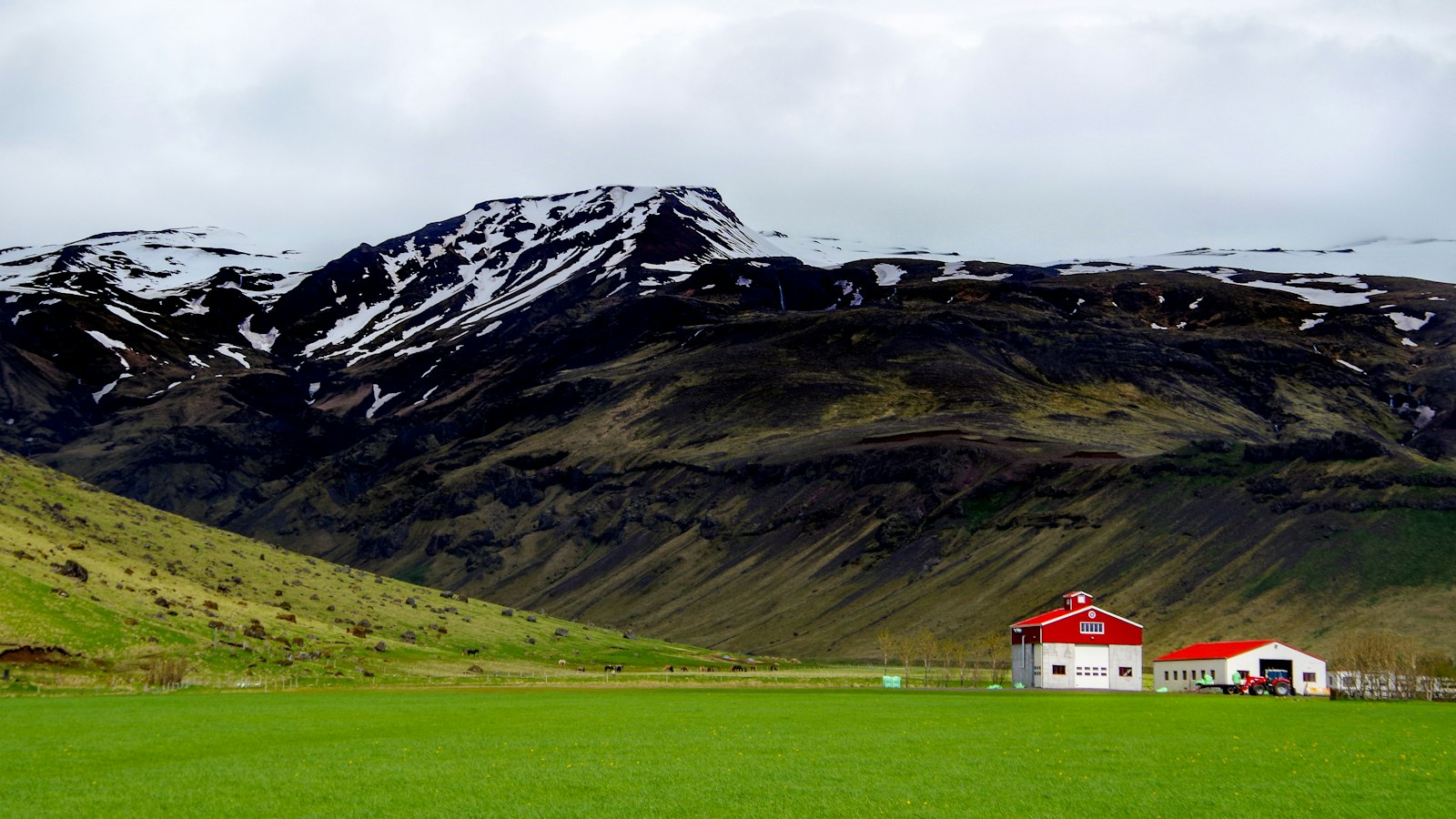
In the remote folds of Norðurárdalur, flanked by the slopes of Öxnadalsheiði in the Skagafjörður region, stands the farm known today as Fremri-Kot. Its name, history and fate mirror the evolving Icelandic landscape, a place where human settlement and nature’s will have long intertwined.
From settler legend to saga events
The farm’s earlier name, Hökustaðir, reaches back to the Landnámabók, a medieval record of Iceland’s earliest settlers. This ancient text notes that the upland plateau called Örreksheiði, its name now lost, was linked to an early settler, Þorbrandur örrek. Hökustaðir stood at the heart of this region, its story brushed by the large currents of Icelandic history.
Hökustaðir finds a place in the turbulent tales of the Sturlunga Saga, a collection chronicling 13th-century Icelandic power struggles. It was there, in autumn 1253, that the chieftain Eyjólfur ofsi Þorsteinsson paused with his men en route to the infamous Flugumýri Arson, stationing guards to keep their arrival secret as they prepared a fateful attack. Two years later, Þorgils skarði Böðvarsson also stopped at Hökustaðir on his way to the Battle of Þverárfundur, repeating the farm’s role as waystation in Iceland’s medieval drama.
Disaster and resilience
By the 16th or 17th century, Hökustaðir’s name and that of a neighbouring farm, Þorbrandsstaðir, had become Fremri-Kot (the “inner cottage”) and Ytri-Kot (“outer cottage”), possibly after landslides had left the area uninhabited for a time. Nature’s hazards are a constant presence in Norðurárdalur, and the landscape keeps its own memory.
A defining modern chapter unfolded on 6 July 1954, when heavy rain over the course of a day triggered multiple landslides through the valley. At Fremri-Kot, the damage was severe: hay fields were buried or swept away, as were the sheep shed, barns, stables, and hay lofts. The highway that threaded through this rural area was largely obliterated, and the Valagilsá river erased both its bridge and the protective levee between Fremri-Kot and neighbouring Silfrastaðaafrétt. In a striking moment of peril, the farm’s housewife, Sigurlaug Sigurlaugsdóttir, managed to get her five children out into the yard and away from the house as the slide thundered down. The main house was spared as the landslide came to a halt just above, but the sheep shed, believed safer and built higher up the slope, was destroyed.
Fremri-Kot is also remembered for the siblings raised there: poet Ólína Jónasdóttir (1885–1956), teacher Hallgrímur Jónasson (1894–1991), and school principal Frímann Ágúst Jónasson (1901–1988). Their lives and careers are testimony to the resilience and creativity shaped by both the isolation and drama of rural Iceland.
Sources
- Wikipedia
- Wikipedia (Icelandic) in Icelandic


