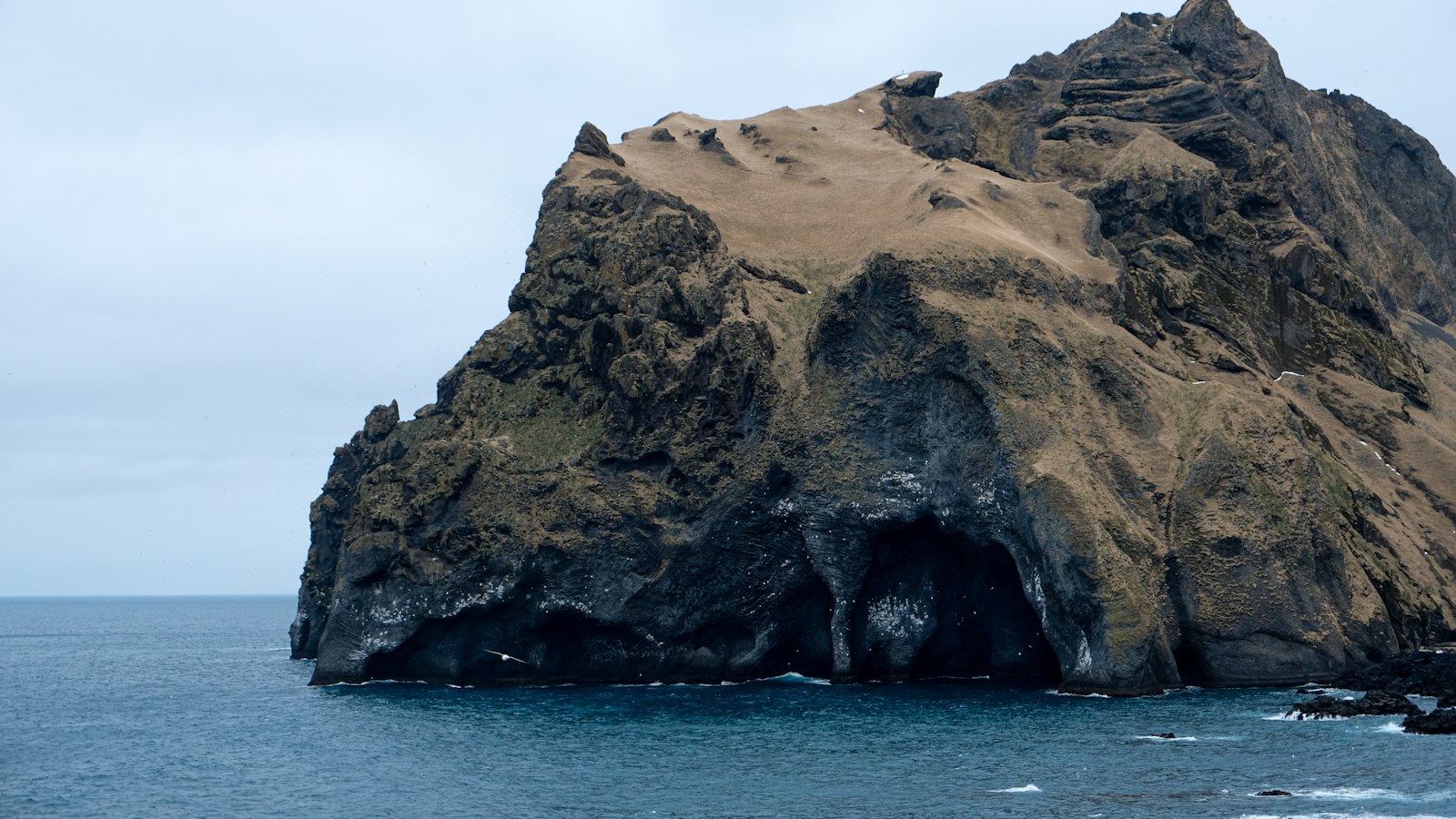
On the northwestern cliffs of Heimaey, the largest of the Westman Islands, a colossal rock formation known as Elephant Rock (Halldórsskora) stands out against the Atlantic. Its stony contour unmistakably recalls the head and trunk of an elephant, a profile shaped by the combined forces of volcanoes and weather over many centuries.
Basalt origins and volcanic shaping
The story of Elephant Rock is deeply tied to the island’s volcanic landscape. The rock consists mainly of basalt, a type of stone formed when lava cools and solidifies. Much of Heimaey’s current terrain was transformed by the eruption of Eldfell in 1973, and it is this dynamic geology that sculpted the formation. As lava from past eruptions cooled slowly, it contracted and cracked into hexagonal columns. These columnar structures, which are typical in basalt formations throughout Iceland, lend Elephant Rock its striking texture and support the illusion of an elephant’s rough hide.
Elemental forces continue to reshape Halldórsskora. For thousands of years, ocean waves have battered the rock. The constant surf has carved caves and contours into the cliff, with wind and rain further refining its features. This ongoing process of erosion has accentuated the rock’s animal-like outline and has left visible the volcanic power that forged it.
Legends and imaginative interpretations
Like many natural sites in Iceland, Elephant Rock is suffused with stories. Icelandic folklore offers varied origins for the formation. One tale suggests it was once a living elephant, enchanted or punished by divine forces. According to this version, the creature fell asleep by the water and was transformed into stone for eternity. Another explanation in local legend proposes that the shape was carved by human hands, possibly as a monument to the island’s history.
Beyond these Icelandic explanations, modern viewers sometimes see other figures in its outline. Some believe the contours recall the tentacled visage of Cthulhu, a mythic monster from American author H. P. Lovecraft’s fiction. Yet for most visitors and locals alike, the unmistakable elephant form, created by nature’s slow, persistent work, is what captures the imagination.
Set against the shifting seas and shaped by fire and folklore, Elephant Rock stands as a testament to both Iceland’s restless geology and its deep love of stories.


