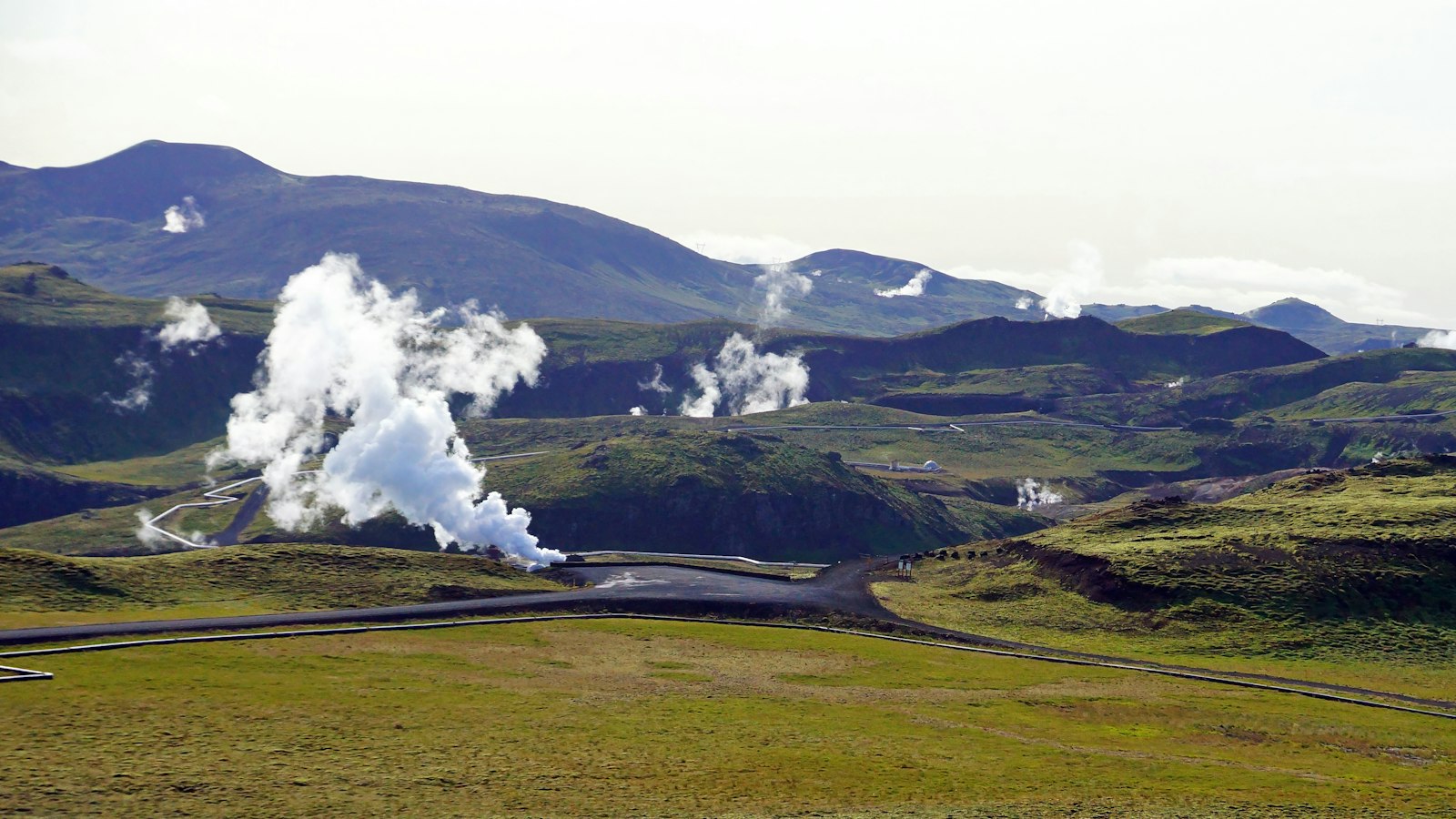
Few countries rely on renewable energy as deeply as Iceland, and at the centre of this unique achievement stands Landsvirkjun, the National Power Company of Iceland. Since its founding on 1 July 1965, Landsvirkjun has played a crucial role in shaping the nation’s energy landscape and supporting its modern development.
Developing renewable power in Iceland
The roots of Landsvirkjun lie in a collaboration between the Icelandic state and the city of Reykjavík. At the time, the company inherited three hydropower stations already operating on the Sog River. In the years that followed, more projects were developed, with hydropower stations such as Búrfell, Sigalda, Hrauneyjafoss, and Sultartangi joining the national grid. The inclusion of Akureyri as a part-owner in 1983 brought the hydropower stations on the Laxá River into Landsvirkjun’s portfolio.
Landsvirkjun’s approach to electricity generation is uniquely Icelandic. The company works with a mix of water, geothermal steam, and, since 2012, wind. In total, Landsvirkjun operates 21 power stations: 15 hydropower, three geothermal, and two wind turbines. This focus on renewable sources means that 99% of all electricity production in Iceland comes from renewable energy. Of this, Landsvirkjun is responsible for about 71% of the nation’s electricity, with its annual output reaching around 14,700 gigawatt hours.
Growth, public ownership, and innovation
From its early beginnings producing and distributing electricity, Landsvirkjun has evolved. In 2005, changes in national legislation led to its transmission division becoming an independent subsidiary, Landsnet, which now manages the high-voltage grid across Iceland. In 2007, the state of Iceland became the sole owner of Landsvirkjun, transforming it into a public partnership.
The company also has several subsidiaries, each handling aspects ranging from system operation and consultancy to insurance and telecommunications. While energy production is the main focus, Landsvirkjun invests in research across fields such as glaciology, climate, hydrology, and biology, often in collaboration with academic and scientific institutions.
Despite its dominant position, Landsvirkjun does not simply rest on tradition. In recent years, it began experimenting with wind power, erecting its first two wind turbines within the Búrfell area. The company is also involved in assessments of proposed future projects, including debates and research around the potential of an undersea electricity cable connecting Iceland to Scotland.
Organisation and people
Landsvirkjun’s direction is set by a board appointed under laws governing the company, and led by figures from Icelandic business and academia. The current CEO is Hörður Arnarson. Employing about 340 people across Iceland, Landsvirkjun remains a major employer and a key player in the country’s economic fabric.
Landsvirkjun exemplifies Iceland’s commitment to harnessing nature in a careful and forward-looking manner, reflecting both the opportunities and the debates that accompany the use of renewable energy in a modern society.
Sources
- Wikipedia
- Wikipedia (Icelandic) in Icelandic


