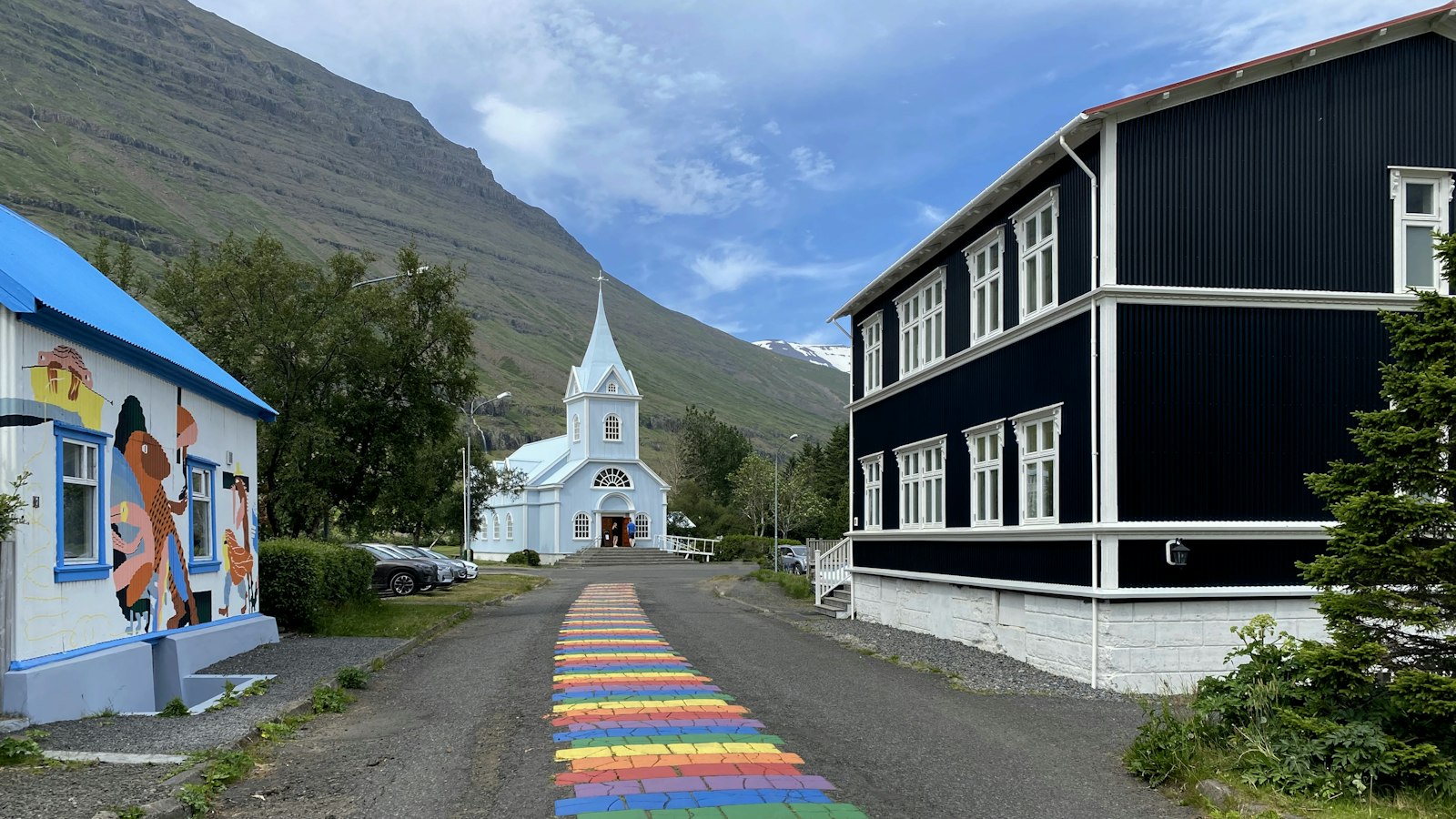
At the bottom of Seyðisfjörður in East Iceland rests the SS El Grillo, a British tanker whose life and aftermath tie together strands of wartime drama, local lore, and environmental complexity. Though it was sunk in 1944, the ship’s influence continues, woven into the fabric of local life, and beneath the fjord’s cold waters.
A wartime incident far from the front
SS El Grillo, which means “The Cricket” in Spanish, was built in 1922 in Newcastle-Upon-Tyne and operated out of Liverpool. During World War II, Iceland found itself strategically important despite its neutrality. Occupied first by Britain in 1940 and then by the United States in 1941, the island became a hub for Allied convoys and operations.
On 10 February 1944, the El Grillo was anchored at Seyðisfjörður, loaded with bunker oil. Though a merchant vessel, the ship was heavily armed, carrying anti-aircraft guns and depth charges. Three German Focke-Wulf Fw 200 “Condor” bombers, flying from occupied Norway, attacked the vessel. One bomb struck the stern, leaving the ship severely damaged but with no casualties among the 48 men on board. The captain ordered the ship to be scuttled to prevent further targeting by enemy aircraft. The sunken tanker quickly became a significant presence at the bottom of the fjord, lying upright at depths between 22 and 45 metres.
A legacy under water, and ashore
For decades, the SS El Grillo continued to leak oil into the fjord. Attempts to limit the environmental threat have been ongoing since 1952, with thousands of litres of oil pumped from the wreck, and larger clean-up operations initiated by the Icelandic government in the early 2000s. In 2002, a Norwegian contractor removed an estimated 2,000 tonnes of oil still contained within the hull. Yet periodic reports of oil slicks continue, with the most recent in August 2021.
The ship was also packed with weaponry, with regular operations since the 1970s to remove unexploded ordnance. By 2006, over 500 explosive devices had been cleared from the site, including depth charges and anti-aircraft ammunition. A gun salvaged from the wreck is now a local monument, serving as a tangible reminder of the war years in this remote part of Iceland.
Despite the challenging depth, the El Grillo is among the most popular dive sites in Iceland, attracting experienced divers interested in history and underwater exploration. The story of the ship has even inspired local traditions. In the mid-2000s, Seyðisfjörður restaurant owner Eyþór Þórisson began brewing a unique beer named after the ship, featuring a depiction of the sinking vessel on the label and sharing its wartime history with each bottle.
Sources
- Wikipedia
- Wikipedia (Icelandic) in Icelandic


