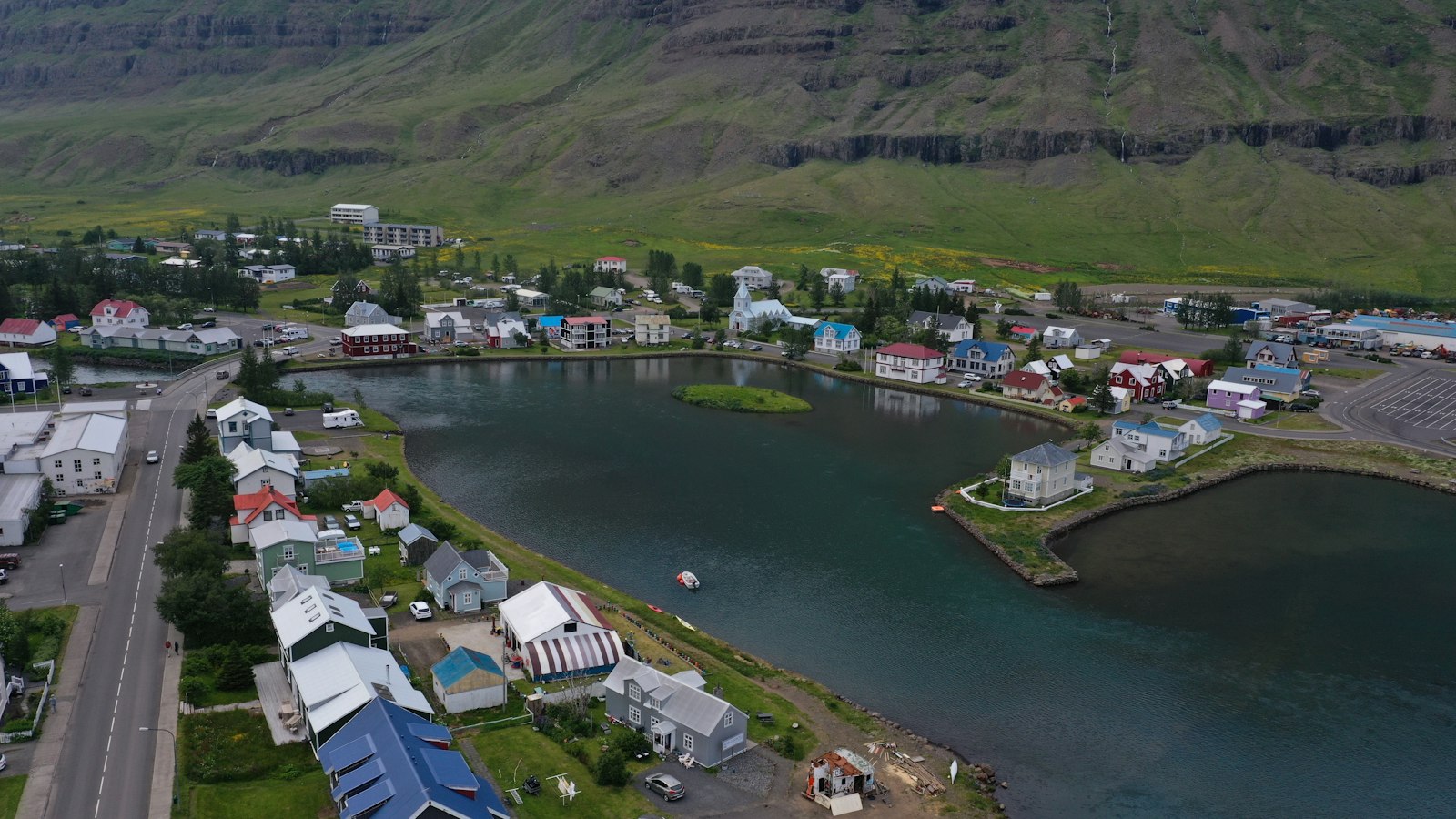
In 1889, Gunnar Gunnarsson entered the world on a remote farm in Fljótsdalur valley, far from the literary circles that would one day celebrate his name. The early years of his life were shaped by hardship: after losing his mother at a young age, Gunnar worked on his family’s land, attending small local schools when he could. These roots in rural Iceland never left him, and the landscapes of his childhood would echo throughout his writing.
At age 17, Gunnar published his first collections of poetry, already showing signs of both talent and ambition. Although his family lacked the means for a formal education, he gained entry in 1907 to Askov Folk High School in Denmark. There he resolved to write in Danish, aiming for a broader readership than Icelandic alone could afford.
A novelist across borders
Gunnar spent several years building a literary career in Denmark, facing considerable struggles as he attempted to sell his poems and stories. His breakthrough came in 1912 with the publication of the opening volume of a four-part novel, which would appear in full over the following two years. “Af Borgslægtens Historie,” translated as “Guest the One-Eyed” in English, chronicled the lives of multiple generations of Icelandic farmers, exploring themes of duty, creativity, and moral transformation. The story gained significant attention in Denmark and Germany, eventually becoming the first Icelandic narrative adapted for film.
His writings reflected the complexities of the twentieth century, with the pessimism of wartime Europe evident in his novels. In parallel, Gunnar wrote essays about Nordic cooperation and contemporary social issues, and he delivered lectures across northern Europe.
Although best known for “Guest the One-Eyed,” Gunnar’s portfolio includes “The Good Shepherd,” “The Black Cliffs,” and his monumental work “The Church on the Mountain.” He also had a deep admiration for traditional Icelandic sagas, translating the “Grettis saga” into Danish and exploring legendary figures in his fiction.
Legacy in Iceland and abroad
After decades in Denmark, Gunnar returned to Iceland in 1939, buying the Skriðuklaustur estate in the east. He built a substantial house there, designed by German architect Fritz Höger. This building was later granted to the Icelandic state and now serves as a museum and retreat for artists and scholars, managed by an institute dedicated to supporting literary work and regional development. Skriðuklaustur itself sits at a historical crossroads, having been the site of a medieval monastery that has since been explored through archaeological research.
Gunnar’s later years were spent in Reykjavík, where he undertook the task of translating his own writing into Icelandic, drawing his career full circle. Throughout his life, his books appeared in many languages and earned him multiple nominations for the Nobel Prize in Literature, notably in 1955, a year in which sharing the prize with fellow Icelander Halldór Laxness was considered.
Gunnar married Franzisca Antonia Josephine Jørgensen in 1912, a union bridging Lutheran and Catholic backgrounds. After their deaths, they were both interred on Viðey island near Reykjavík, a symbolic resting place reflecting their shared and diverse heritage.
Sources
- Wikipedia
- Wikipedia (Icelandic) in Icelandic


