On top of Öskjuhlíð hill in Reykjavík, Perlan, meaning “The Pearl” in Icelandic, stands out with its distinctive glass dome perched above six vast hot water tanks. More than just a striking piece of architecture, Perlan illustrates the interplay between Iceland’s natural resources, its commitment to science and engineering, and its dedication to telling the country’s geological story.
From practical infrastructure to public space
The roots of Perlan trace back to 1939, when Reykjavík’s first hot water tank was placed at the summit of Öskjuhlíð. This strategic location, 61 metres above sea level, provided enough pressure to send water up to the highest parts of the city, including landmark sites like Hallgrímskirkja. Over two decades, five additional tanks were added, all rebuilt in the late 1980s. Each tank can hold up to five million litres of hot water and continues to play a pivotal role in Reykjavík’s district heating system.
In 1991, these tanks became the unconventional foundation for Perlan when the building first opened its doors after a transformation envisioned by structural engineer Jón Búi Guðlaugsson and with architectural design by Ingimundur Sveinsson. The decision, largely influenced by then-mayor Davíð Oddsson, added a public dimension to what had once been simple infrastructure, turning it into a modern symbol of the city.
A centre for exploring Iceland’s nature
Inside Perlan, the focus is Iceland’s natural world. The Wonders of Iceland exhibition brings the country’s geological story to life, from glaciers, geysers and volcanoes to its unique mammals and birds. Highlights include a ten-metre replica of Látrabjarg cliff, one of Europe’s most notable seabird nesting places, and a timeline chronicling the island’s origins and evolution.
The role of water is central, highlighted by the “Water in Icelandic Nature” exhibition from the Icelandic Museum of Natural History. Here, visitors learn about how water in its many forms shapes life in Iceland.
Perlan’s immersive attractions include a 100-metre-long artificial ice cave, built inside one of the once-functional water tanks, kept at minus ten degrees Celsius. Created using approximately 400 tonnes of ice, snow, and ash, it is designed to capture the features of Iceland’s real glacier caves.
A planetarium on the premises presents Áróra, a projection show dedicated to Iceland’s famed Northern Lights, and offers journeys across the solar system and country landscapes. Multimedia features like the Lava Show and other interactive displays further connect science and Icelandic experience.
A city panorama above the tanks
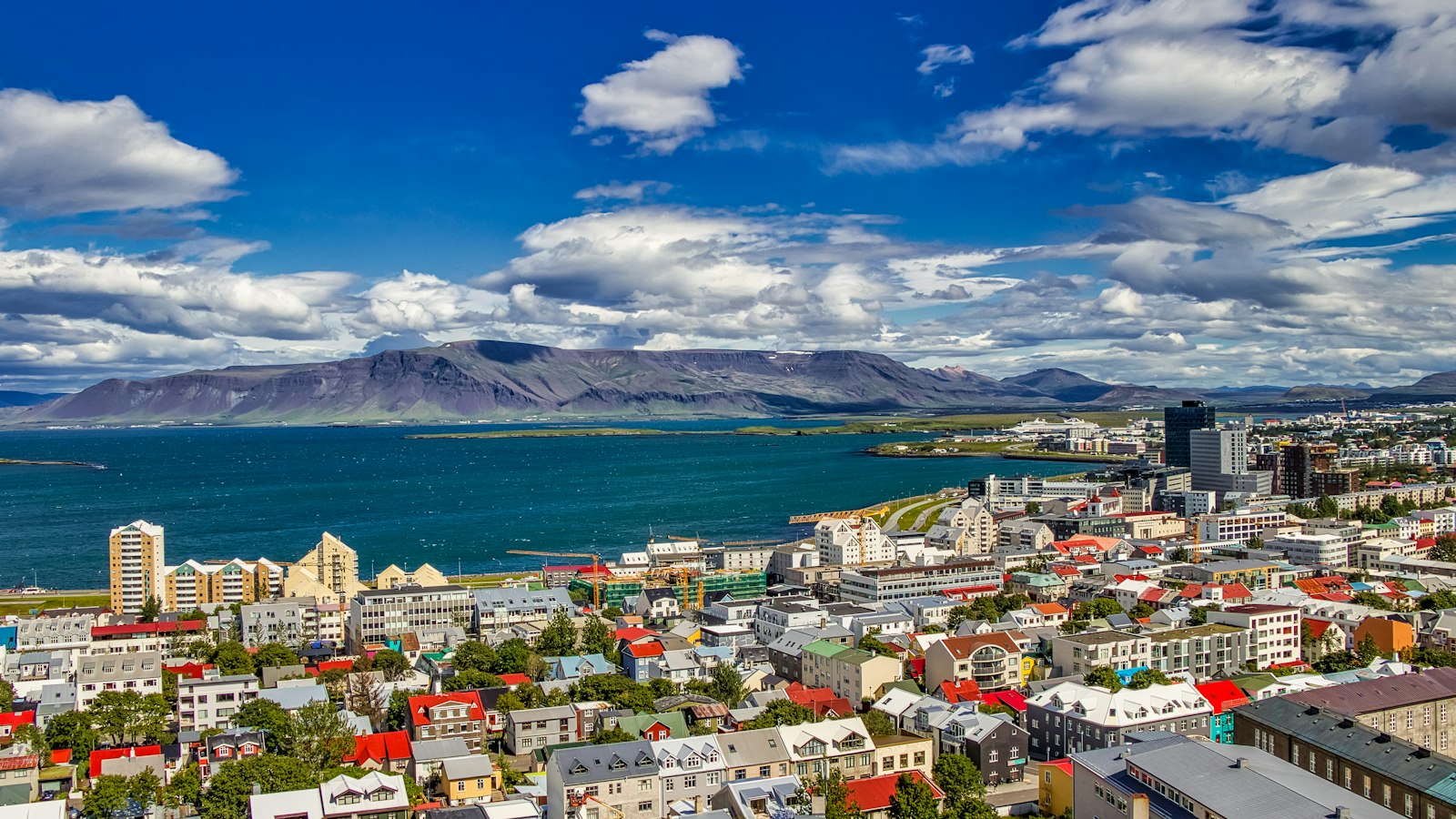
Elevated above the city, Perlan’s 360-degree observation deck reveals sweeping views over Reykjavík, the surrounding mountains, and out to Faxaflói Bay and the Atlantic. On the upper levels, a revolving restaurant and café make full use of the scenery, slowly turning to offer changing perspectives as people dine or relax.
Sources
- Wikipedia
- Wikipedia (Icelandic) in Icelandic


