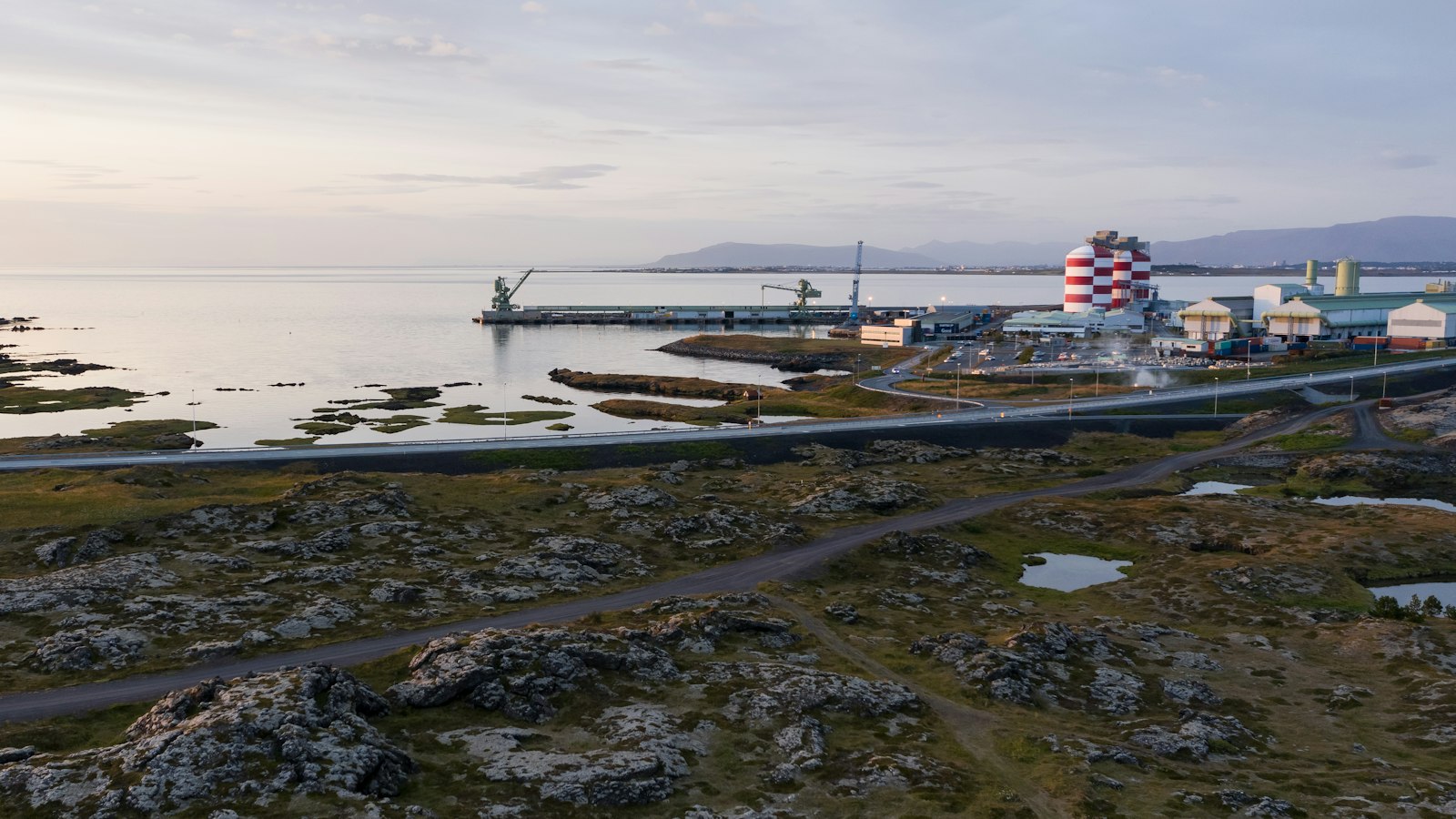
Hvalfjarðarsveit is a municipality on Iceland’s west coast where striking natural beauty sits alongside major industry. Named after Hvalfjörður (Whale Fjord), which forms its southern boundary, it covers a broad area stretching from dramatic coastlines to rolling highland borders. The municipality came into existence in June 2006 after four smaller districts combined, reflecting a wider national process of local government consolidation.
Geography carved by fjords and peaks
The southern and western edges of Hvalfjarðarsveit are shaped by three extensive bodies of water: Hvalfjörður, Faxaflói Bay and Borgarfjörður. Inland, mountains like Akrafjall, Hafnarfjall, Skarðsheiði and Botnssúlur form a line from west to east, framing the countryside. The area is dotted with lakes such as Eiðisvatn and Hvalvatn, the latter feeding the Botnsá river, where Glymur waterfall, the country’s second tallest, cascades into the head of Hvalfjörður.
Despite its vastness, the municipality remains sparsely settled. The largest cluster of homes is Melahverfi, home to just over a hundred residents as of 2016. Villages cluster in valleys and along the ring road, which curves through about 30 kilometres of this landscape between the tunnel under Hvalfjörður and the town of Borgarnes.
Industry in the rural north
What sets Hvalfjarðarsveit apart is the coexistence of open country and one of Iceland’s key industrial zones: Grundartangi, located on the outer part of Hvalfjörður. The port, which has operated since the late 1970s, is managed collectively by neighbouring communities. Its presence has shaped the local economy, hosting Iceland’s largest heavy industry cluster.
The area’s industrial profile grew with the start of a ferrosilicon plant in 1979, today one of the world’s top producers, owned by Elkem under China National Bluestar Group. In 1998, Norðurál, part of Century Aluminum, opened an aluminium smelter on the same site. Another company, Silicor Materials, has laid plans for a facility dedicated to producing solar silicon. These industries have brought economic significance to this rural region, but also sparked debate about environmental emissions, especially sulphur dioxide and fluorine, which have raised concerns locally.
Among its notable citizens, Hvalfjarðarsveit counts Pétur Ottesen, a farmer and parliamentarian active in national life from the late nineteenth into the mid-twentieth century.
Sources
- Wikipedia
- Wikipedia (Icelandic) in Icelandic


