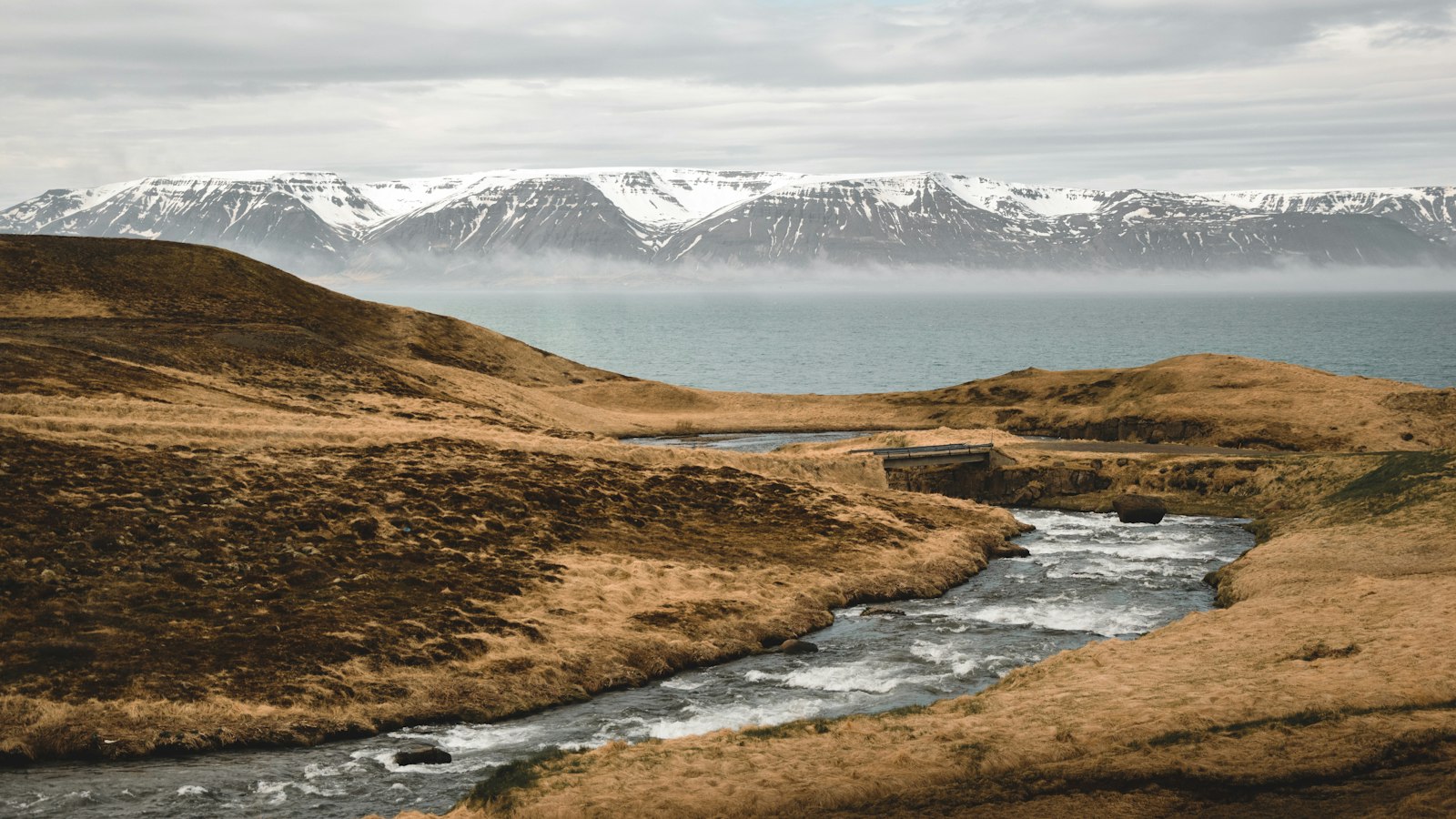
Nestled on the eastern side of the Austari-Jökulsá river in northern Iceland’s Skagafjörður region lies Ábær, an abandoned farmstead surrounded by rugged hills and deep flows. The name Ábær itself is remarkable in Icelandic geography, a rare case among numerous places called Árbær elsewhere in the country. Ábær draws its name from its distinctive location: not beside one but between two rivers, with tributaries meeting to form the Ábæjardalur valley before flowing past the site. The name is rooted in the Old Norse phrase “Bær millum á”, the farm between rivers.
Written Icelandic records suggest that Ábær’s name became clearly established after some confusion shortly following the year 1100, settling on this unique title. Centuries earlier, according to the medieval Landnámabók, the valley had been settled by Önundur the wise, a figure connected with the earliest days of Icelandic habitation.
A church with local character and a yearly tradition
Despite the farm being deserted since 1941, Ábær is still marked by its small but memorable church. The church, built of concrete and designed by Guðjón Samúelsson, the State Architect of Iceland, was completed and consecrated in 1922. Building materials were sourced locally from Skagafjörður, while the church wood had a longer journey. Previously part of a church in Ábær built in 1842, the timber had been transported from Akureyri to another valley called Leyningsdalur, hauled over the steep and formidable Nýjabæjarfjall mountain. Such efforts underscore the determination and collaborative spirit often required for life in rural Iceland.
For a time, Ábær parish was overseen by the priests at Goðdalir, before shifting to the parish of Mælifell in 1907. Though the farmstead is now silent, the church maintains a ritual presence: every Verslunarmannahelgin (Merchant’s Weekend) in August, a service is led where, on occasion, over a hundred people gather. Afterwards, coffee is served at the nearby site of Merkigil, which itself was abandoned in 1997.
A spirit in Icelandic folklore
Ábær has also found its place in Iceland’s folklore. The Ábær ghost, a female apparition known locally as the Ábæjar-Skotta, is said to have once haunted the area. Stories from inner Skagafjörður recount her mischief and malice, blaming her for killing livestock, frightening residents, and in some tales, causing death.
Today, Ábær remains uninhabited, but its name and stories endure in local life. One restaurant in the nearby town of Sauðárkrókur, today known as N1 Ábær, derives its name from the farm. The site’s legacy, from its rare name to its folklore and the concrete church that remains standing against the elements, continues to echo through Iceland’s north.
Sources
- Wikipedia
- Wikipedia (Icelandic) in Icelandic


