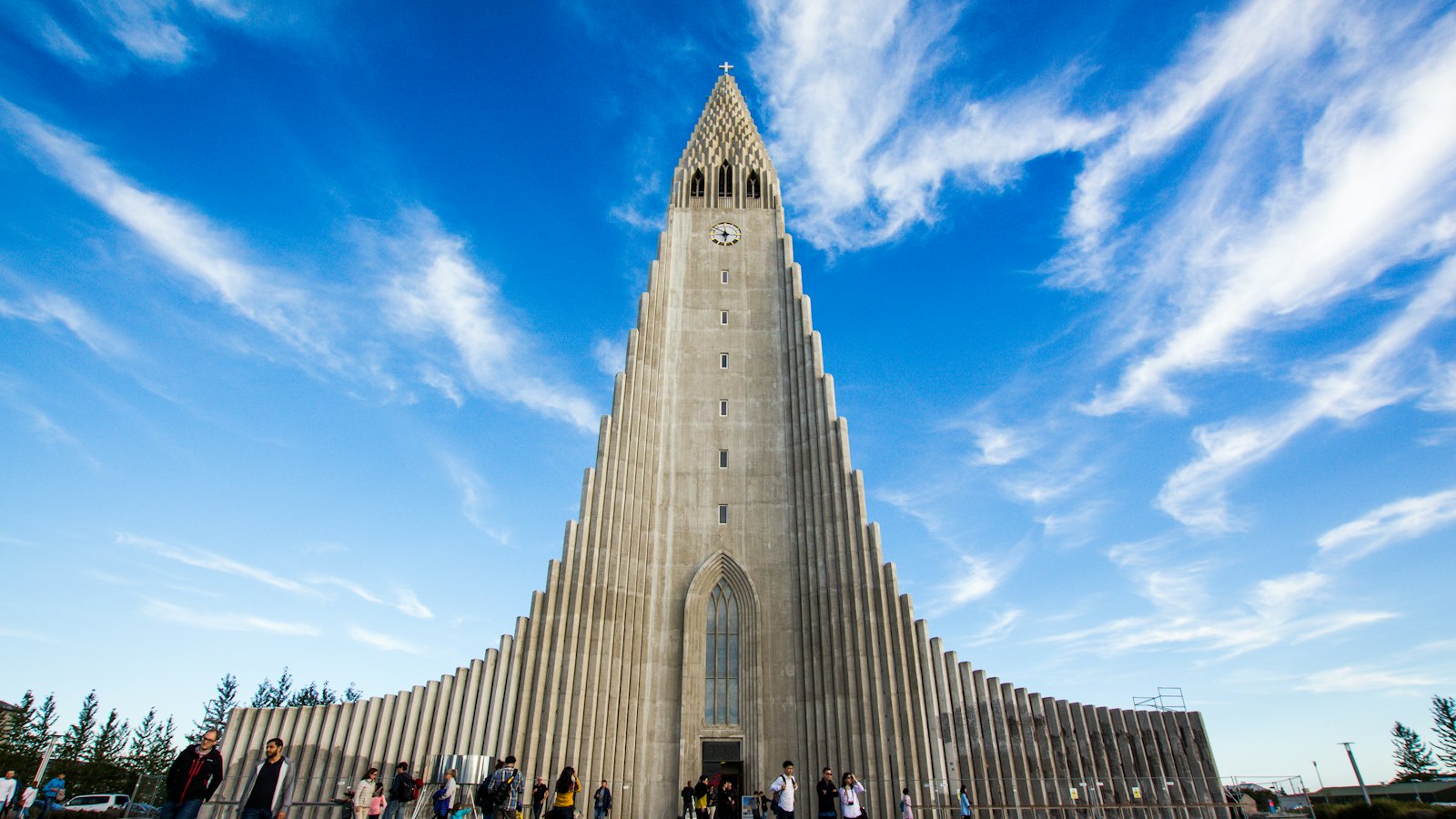
Iceland, though considered one of the world’s most secular countries, is dotted with over 350 churches across its towns and countryside. Despite low church attendance, these churches remain closely connected to local culture and community life. Their architecture, materials, and stories often reflect Iceland’s landscape and history.
Modern and historic churches in towns and cities
Hallgrímskirkja in Reykjavík is Iceland’s most prominent church. Designed by Guðjón Samúelsson and named after 17th-century poet Hallgrímur Pétursson, its structure was inspired by Icelandic mountains, glaciers, and lava flows. Construction took decades, finishing in 1986. The church’s pipe organ, with over 5,000 pipes, is a highlight, and the tower provides panoramic city views.
Akureyrakirkja, or Akureyri Church, is another Samúelsson design. Its bold form is a key feature in Akureyri in North Iceland. The stained glass windows inside have an unusual history, having originally belonged to Coventry Cathedral before arriving, unintentionally, in Akureyri after being moved away in wartime.
Distinct churches in rural Iceland
Búðakirkja, or the Black Church at Búðir on Snæfellsnes Peninsula, is a small wooden church with a deep black paint that stands out against the coastal landscape. Its dramatic setting draws both visitors and photographers, especially at sunset and in winter. It is a frequent choice for weddings, so visitors are encouraged to be considerate of special occasions.
Hvalsneskirkja is a stone church built in 1887 on the Reykjanes Peninsula near Reykjavík. Its use of local stone and driftwood for interior decoration gives it a distinctive appearance among Iceland’s mostly wooden churches. The colourful steeple and accessible location make it a common stop when entering or leaving the capital area.
Bláa kirkjan (the Blue Church) in Seyðisfjörður, East Iceland, was moved to its present location in 1920. Its pastel blue colour and setting in a fjord-side fishing village make it a favourite for visitors. The church hosts performances during the annual LungA arts festival in July and is open for visits in summer.
Hofskirkja, near Hof and Skaftafell National Park in the southeast, is one of Iceland’s last turf churches. Its turf roof blends into the landscape, making it a striking example of traditional building methods. The church and its cemetery are protected, with guidelines in place for quiet visits and respect for the site.
Heimaey Stave Church stands on the grassy Skansinn area of Vestmannaeyjar’s harbour. It was gifted by Norway in 2000 and is a replica of the first church built on the islands. Used for special ceremonies as well as regular services, it also marks local historical events such as the volcanic eruption on Heimaey.
Sæbólskirkja, near Sæból beach, is set in the Westfjords and is noted for its remote location. The surroundings are popular for birdwatching and hiking, making the journey to the church as memorable as the building itself.
From Reykjavík to isolated fjords, Iceland’s churches are linked to local traditions and natural surroundings. Their diversity highlights the country’s architectural creativity and rich cultural history.