Arion bank has agreed to pay a 280 million króna fine following a settlement with the financial supervisory unit of the Central Bank of Iceland. The settlement, signed today, closes a supervisory review into the bank’s failures to detect and report clients’ attempts to influence share prices, and into its reporting of suspicious transactions and compliance and governance procedures. The story was first reported by Viðskiptablaðið and detailed by the Central Bank of Iceland in its official announcement.
The Central Bank’s financial supervisor found that Arion bank had breached Article 16(2) of the EU Regulation 596/2014 on market abuse (MAR), as currently incorporated in Icelandic law. The bank was also found to have broken several provisions of Act No. 115/2021 on markets in financial instruments. According to the supervisor, Arion bank failed to properly identify and timely notify regulators when there was reason to suspect market abuse, and did not have sufficiently effective systems and procedures in place to detect and report such activities.
The review also highlighted shortcomings in the bank’s governance of securities products and in ensuring that staff providing investment services possessed the necessary knowledge and competence to fulfil legal duties. Specifically, the supervisor found faults in Arion bank’s assessment of whether securities-based derivatives were suitable for clients and in staff’s awareness of risks from August 2023 through September 2024.
The case arose after the supervisor found suspicious trading behaviour by two Arion bank clients. In fourteen instances, one client told various staff members he intended his transactions to raise or support share prices or to avoid a margin call, while another client had explained by telephone that his share purchases were meant to support the share price. The supervisor said such comments were clear red flags for possible market abuse, yet Arion bank staff did not pass these concerns to their compliance function or report the suspicious trades in a timely manner.
In fact, the suspicious activities by one client were not reported to the supervisor at all, and those linked to the second client only came to the supervisor’s attention more than seven months after the relevant information had been disclosed to bank staff. The Central Bank concluded this pointed not to a single employee’s problem but to a systematic failure within Arion bank. The inspection that led to these findings started in April 2024.
When deciding on the amount of the fine, the supervisor took into account the seriousness and scope of Arion bank’s breaches, the bank’s status in the Icelandic financial market, and the impact on investor protection and market integrity. The penalty was partly reduced due to delays at the supervisor not caused by either party, as well as Arion bank’s cooperation and its voluntary remedial actions. The settlement was made under the relevant provisions of Icelandic law on markets in financial instruments and measures against market abuse, as outlined by the Central Bank of Iceland.
Background
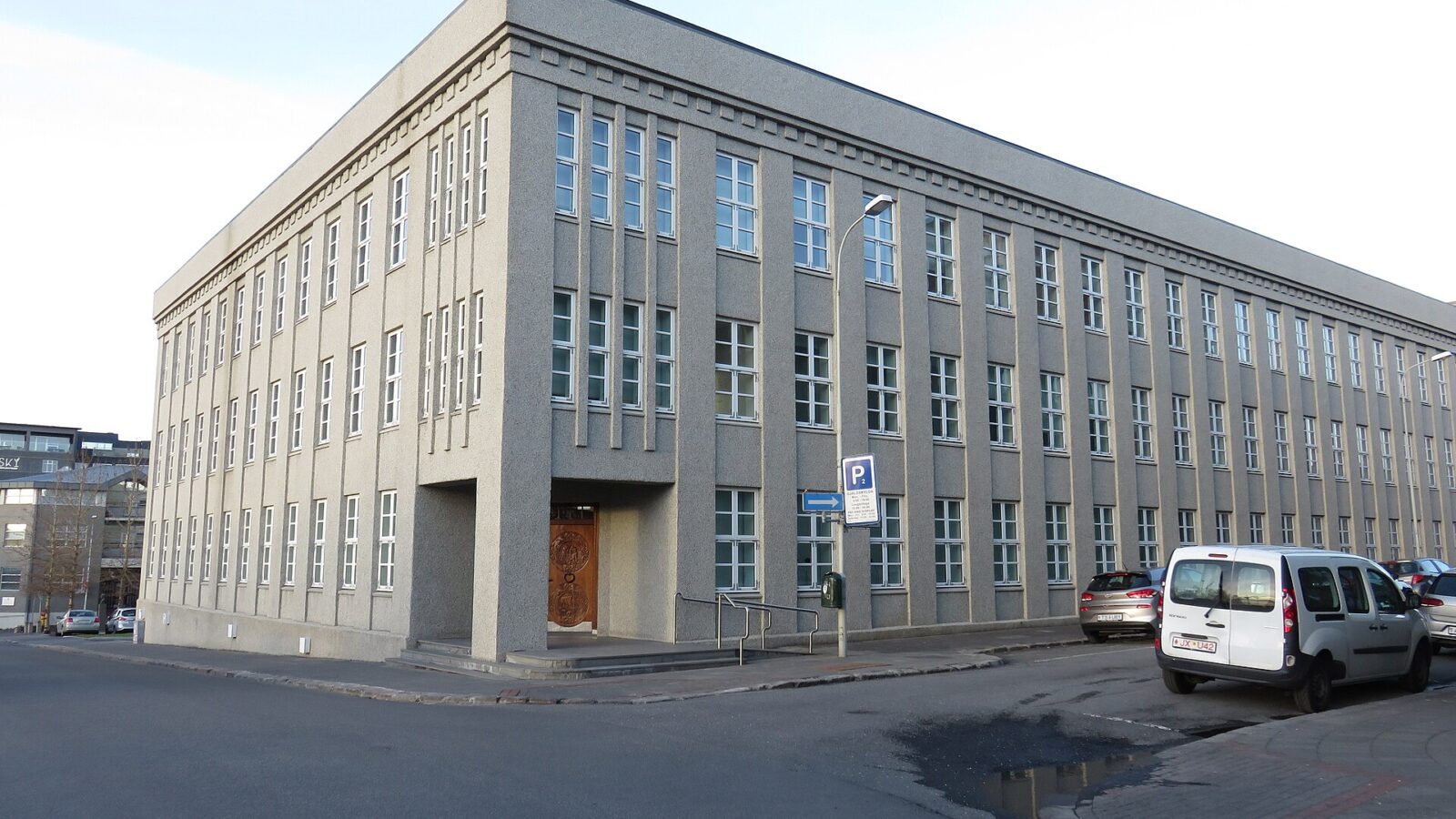
Arion bank, previously Nýja Kaupþing, traces its history to 1930 and operates thirteen branches in Reykjavík and other major Icelandic towns. Since 2010, it has been majority-owned by Kaupskil and partially by the Icelandic State Financial Investments. The Central Bank of Iceland, established in 1961 and owned by the Icelandic government, merged with the country’s financial supervisory authority in 2020 and now oversees banking supervision.
Sources
Links: tilkynningu
- Seðlabanki Íslands (Central Bank of Iceland) in Icelandic
- Viðskiptablaðið (first reported) in Icelandic
- mbl.is in Icelandic
Image: Antony-22 / Wikimedia Commons (CC BY-SA 4.0) · licence, original (resized) Illustrative image.