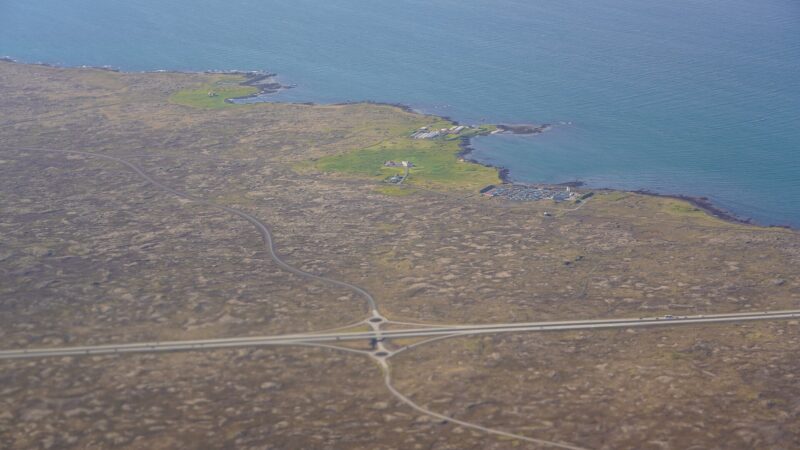
A borehole reaching a depth of 1,504 metres was drilled at Grundartangi in West Iceland, RÚV reported. The drilling was carried out to investigate whether the underground rock formations at that location are suitable for storing carbon dioxide (CO2).
Investigations into the geological formations at Grundartangi are ongoing, as researchers assess if they are appropriate for permanent CO2 storage. RÚV was the first outlet to report on the drilling and on the broader studies into the site’s suitability.
Background: Permanent carbon storage in Icelandic rocks
CarbFix is an Icelandic company established in 2007 that has developed a method to permanently store CO2 by dissolving it in water and injecting it into basaltic rocks underground, where it turns into stable carbonate minerals. Its projects operate near geothermal plants and include sites such as the Orca direct air capture facility and the CO2 Seastone project in Iceland. The process involves dissolving the captured CO2 in water prior to or during injection into suitable rock types, which leads to the CO2 becoming permanently trapped as carbonate minerals.
Sources
- RÚV (first reported) in Icelandic
- RÚV English
Image: U.S. Navy photo by Petty Officer 1st Class Novalee Manzella / Wikimedia Commons (Public domain), original (resized) Illustrative image.